Showing posts with label Roosevelt Island. Show all posts

Thursday, December 07, 2006

Eyed Elator

And now for some non-bird blogging...

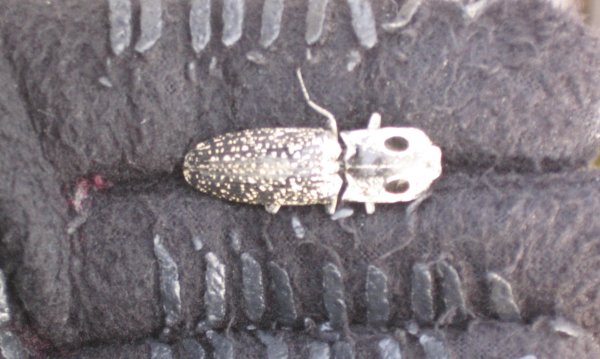
This insect is an Eyed Elator, also known as Wide-Eyed Elator and Eyed Click Beetle (Alaus oculatus). It belongs to the family Elateridae, the click beetles. Eyed Elators are common through much of the eastern United States and can be found almost year-round in the south, though they are most common in spring. Its larvae are hosted by rotting wood.

This individual was on the boardwalk trail on Roosevelt Island earlier this week. It was already dead, so photographing it was easy. As measured by the grip patches on my glove, it is about 40 mm or a little over 1.5 inches in length. The false eye spots are very distinctive.

I was able to identify this insect by browsing through the responses and photographs on What's That Bug?

Wednesday, November 08, 2006

Conservation Foe Defeated

Among the 28 pickups that allowed Democrats to retake a majority in the House of Representatives was a victory in the 11th Congressional District of California. This district has been represented by Richard Pombo, a Republican who has repeatedly tried to undermine the Endangered Species Act and give away mineral rights to corporations. In Washington, DC, he tried to sell off Roosevelt Island - a National Park - to real estate developers to build luxury homes. He was defeated by Democrat Jerry McNerney, 53% to 47%.

In significant local races, Adrian Fenty won the DC mayoral election, Ben Cardin defeated Michael Steele for Senate in Maryland, Michael O'Malley unseated Bob Ehrlich as Governor of Maryland, and the Virginia Senate race will require a recount, though Jim Webb is leading George Allen. Maryland approved the ballot question to restrict sales of public lands.

Tuesday, May 02, 2006

Birds at Roosevelt Island

Yesterday morning I took an early trip to check out migration at Roosevelt Island. There continues to be very little migration because of persistant northerly winds, but there are still birds moving through. Baltimore orioles, yellow-rumped warblers, and cedar waxwings filled the trees on both sides of the footbridge that leads to the island. I heard my first yellow-billed cuckoo and house wren of the year.

On the boardwalk I heard both waterthrushes, the Louisiana and the northern. (The latter was a first-of-the-year.) These two warblers can be difficult to tell apart by sight. Both have brown backs, light breasts with brown streaking, and white supercilia. Visual identification requires close attention to details: the Louisiana has a brighter eyebrow; the northern may have a yellowish wash on the breast and light streaking on the neck. Given that the birds are skulkers, these details can be hard to see. The identification is made easier by attention to the songs. Both have a somewhat similarly complex structure of whistled notes followed by chatter, but emphasize different parts of the song. The northern's song grows in volume and emphasizes the end of the song; it gives the impression of being three-parted. The Louisiana, on the other hand, emphasizes the long whistles at the beginning of the song, and drops in both pitch and volume as the song goes on. (For samples, see the CLO links above, and these additional links: Northern (2) (3); Louisiana. See Giff Beaton's Warbler page for more images.)

Towards the end of my walk, I heard one song that I could not identify. It was pretty clearly from a warbler - a thin, high-pitched note repeated several times. Eventually, using CDs, I narrowed it down to being either a blackpoll or a Cape May. It sounded more like the latter, but I am hesitant to call it based on sound alone, since I have no experience with the species and it is a rather uncommon migrant in this area. So I will leave it as a "maybe."

SPECIES SEEN: 44

Canada Goose
Wood Duck
Mallard
Turkey Vulture
Osprey
Red-shouldered Hawk
Ring-billed Gull
Rock Pigeon
Mourning Dove
Yellow-billed Cuckoo
Red-bellied Woodpecker
Downy Woodpecker
Pileated Woodpecker
Eastern Phoebe
Great Crested Flycatcher
Northern Rough-winged Swallow
Barn Swallow
Cedar Waxwing
Carolina Wren
House Wren
Gray Catbird
Wood Thrush
American Robin
Blue-gray Gnatcatcher
Carolina Chickadee
Tufted Titmouse
Blue Jay
American Crow
European Starling
House Sparrow
American Goldfinch
Northern Parula
Yellow Warbler
Yellow-rumped Warbler
Black-throated Green Warbler
Northern Waterthrush
Louisiana Waterthrush
Scarlet Tanager
White-throated Sparrow
Northern Cardinal
Red-winged Blackbird
Common Grackle
Brown-headed Cowbird
Baltimore Oriole

Thursday, April 06, 2006

Return of the Wildflowers

One aspect of early spring that always excites me greatly is the return of wildflowers. I am not talking here about the many cultured blossoms that are among the leading indicators of spring's return, such as crocuses and daffodils. I am talking about the delicate and short-lived flowers that bloom spontaneously in meadows and on forest floors.

Cherry blossoms are rightly celebrated here for their dazzling display. In this post I would like to highlight some of their wild cousins. Below are some wildflowers that I noticed on my walk through Roosevelt Island on Wednesday evening. In addition to the flowers displayed here, I saw a patch of Virginia Bluebells. Unfortunately I could not get close enough to them for a good picture.

This flowering tree, on the south end of Roosevelt Island, is either a hawthorne or an apple. The two genera are closely related. I suspect hawthorne, because the dark tips on the stamens seems to be more of a hawthorne characteristic, from what I see in the field guides. I am willing to be corrected on that point.

Mayapples are sprouting all over the forest floor.

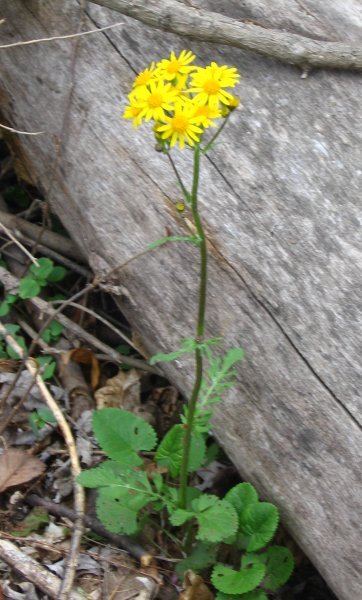
This Golden Ragwort was near the boardwalk in the wooded swamp. Ragworts are part of the aster family, which includes daisies, goldenrod, and similar species.

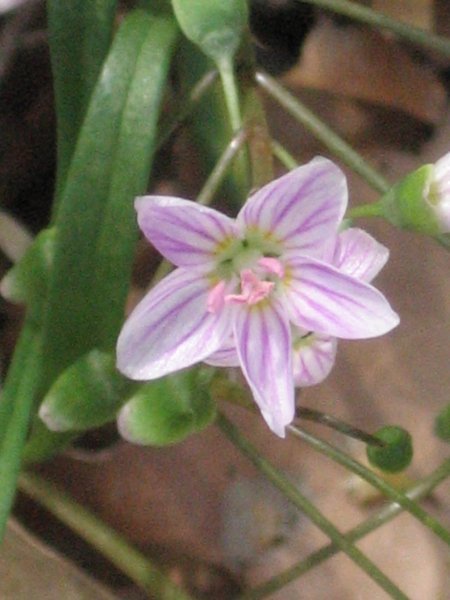
A small patch of Spring Beauties was on the western side of the island. This photograph does not quite show how delicate these flowers are. The stems are so thin that it is a wonder that they can hold up the flowers at their tips. Indeed, a lot of them were slumped over. What first caught my attention about this flower were the thin purple veins on the petals.

A robin led me to this flower. I noticed a robin digging in the vegetation at the side of the trail. After the robin scurried off, I went over to see what it was doing, and I found a small patch of these flowers. This is a Trout Lily, also known as a Dogtooth Violet or Yellow Adder's Tongue. I suspect the name Trout Lily is derived from the brown and white mottling on the leaves.

Roosevelt Island

Roosevelt Island occupies a special place in the Washington birding itinerary. It does not quite ranking with the big sites like Rock Creek Park, Kenilworth, or the Arboretum. But it has a wildness about it not seen in most other small D.C. parks, and it combines an array of habitats within a very small space. One can pass through tidal marsh, bottomland forest, and upland forest all within an hour's walk.

The first thing that impressed me about the island this evening was its dryness. At left I have placed a photograph of a muddy patch this evening. That muddy patch is usually covered with standing water. The trail I followed to take that picture is usually impassable because of muddy conditions; today it was bone-dry.

At the end of the island and in the marsh, there were swarms of swallows. Almost all of these were northern rough-winged swallows, a species I had not seen since last July. They darted back and forth across the water in the typical swallow fashion, flying swiftly, then suddenly reversing course. At times, they seemed to stop in midair before changing direction. Among them were a few slightly smaller swallows with more deeply notched tails, white throats, and brown neck bands; these were bank swallows.

A few killdeer were in the marsh. While these are not entirely unexpected at Roosevelt Island, I usually do not see shorebirds (killdeer or otherwise) at this location. Wood ducks, both on the riverbank and in the marsh, were another pleasing sighting. Several hermit thrushes flocked around the Roosevelt Memorial near the entrance.

At right: blurry footage of a large, crested woodpecker.

Along my walk, I found a red-shouldered hawk nest. Or, perhaps it is better to say that the nesting red-shouldered hawk found me. As I passed by the nest, the proud parent starting calling vociferously. I stood off a bit where I was less conspicuous and watched through my binoculars as it shook its feathers and shifted position on the eggs. I will have to check back there to see if they hatch.

The pair that is nesting at Roosevelt Island is one of several breeding pairs in the District. Other pairs of breeding red-shouldered hawks have territories in Rock Creek Park, Kenilworth, and the National Arboretum. There may be another pair in the Catholic University area, and possibly another along the canal. While the species may be declining overall, it seems to be thriving in D.C.

SPECIES SEEN: 31

Double-crested Cormorant
Great Blue Heron
Canada Goose
Wood Duck
Mallard
American Black Duck
Red-shouldered Hawk
Killdeer
Rock Pigeon
Mourning Dove
Red-bellied Woodpecker
Downy Woodpecker
Northern Flicker
Pileated Woodpecker
Northern Rough-winged Swallow
Bank Swallow
Golden-crowned Kinglet
Carolina Wren
Northern Mockingbird
Hermit Thrush
American Robin
Carolina Chickadee
American Crow
European Starling
Song Sparrow
Swamp Sparrow
White-throated Sparrow
Dark-eyed Junco
Northern Cardinal
Red-winged Blackbird
Common Grackle

Thursday, January 05, 2006

Roosevelt Island

Early this afternoon I visited Roosevelt Island for a bird walk around the marsh and wooded swamp. On a good day in winter one can observe all six local species of woodpeckers. Today was such a good day, as pileated woodpecker, yellow-bellied sapsucker, and hairy woodpecker made appearances alongside the more commonly seen red-bellied woodpecker, downy woodpecker, and northern flicker.

Early on, I turned up a couple brown creepers among the ivy tangles on the western trail. When I reached the marsh (pictured at right), several house finches and some feisty Carolina wrens were there to meet me. One red-winged blackbird - unusual for January in DC - was at the bridge, and a small flock of them was foraging on the other end of the marsh.

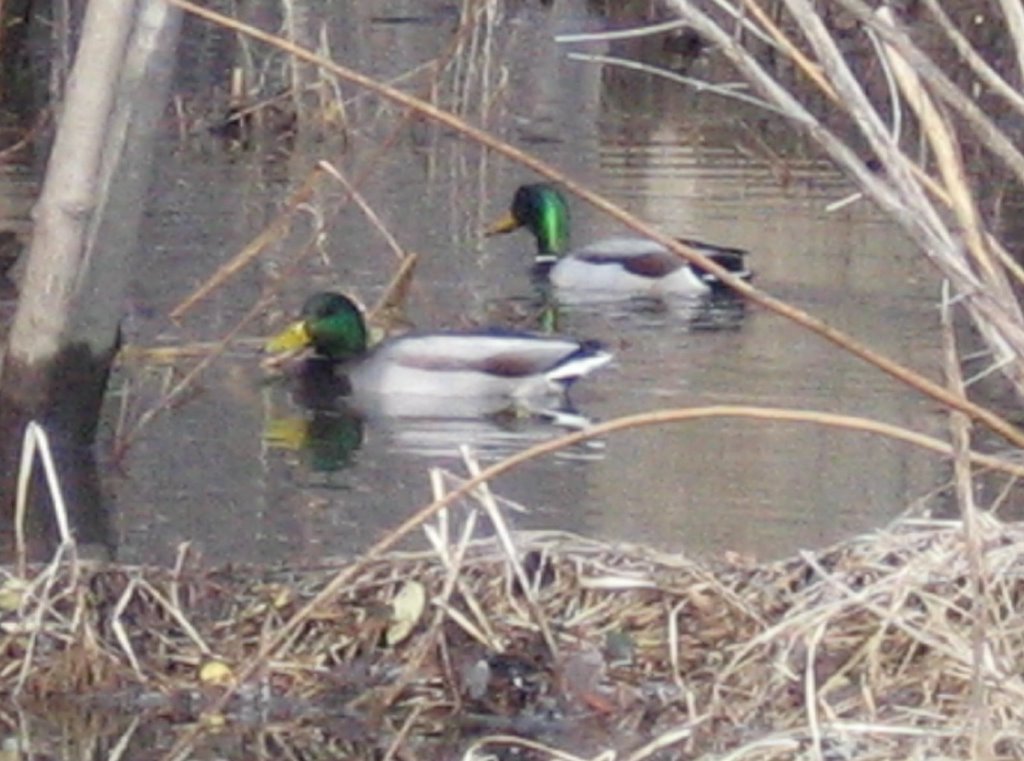
Water levels in the marsh and woods were quite high today, thanks to the recent rains. Mallards (pictured below) made the most of the extra water.
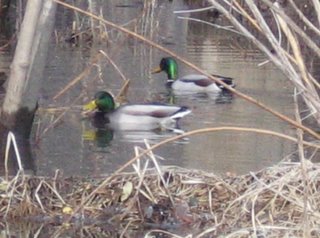
Near the northern end of the boardwalk there was another burst of avian activity. It started with the appearance of a yellow-bellied sapsucker, which mewed vociferously. (Yes, this woodpecker does sound a bit like a cat.) Soon the trail was full of sparrows, including a few swamp sparrows. More brown creepers appeared, along with some white-breasted nuthatches. One first-winter eastern phoebe perched on a low branch close to the water. This bird must have come north in the last week or so as insects would have been scarce during the last two weeks of December. Finally, a winter wren popped up from under a branch pile and perched on a fallen log; it stayed up long enough for me to get a good look at its delicately streaked plumage. A little later it sang a short bit of its song, one of my favorite bird songs.
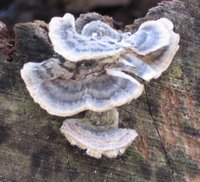
The many fallen logs and overall damp conditions make Roosevelt Island an excellent spot to observe fungi, as well as birds and animals. One example is at right.


SPECIES SEEN: 31

Canada Goose
Mallard
Black Vulture
Turkey Vulture
Red-shouldered Hawk
Ring-billed Gull
Mourning Dove
Red-bellied Woodpecker
Yellow-bellied Sapsucker
Downy Woodpecker
Hairy Woodpecker
Northern Flicker
Pileated Woodpecker
Eastern Phoebe
Carolina Wren
Winter Wren
Carolina Chickadee
Tufted Titmouse
White-breasted Nuthatch
Brown Creeper
Blue Jay
American Crow
European Starling
House Finch
American Goldfinch
Eastern Towhee
Song Sparrow
Swamp Sparrow
White-throated Sparrow
Northern Cardinal
Red-winged Blackbird

Wednesday, October 19, 2005

Field Trip: Roosevelt Island

Theodore Roosevelt Island is a 91-acre park near the Virginia shore of the Potomac River. A memorial to the former president sits at the northwest corner of the island; the rest of it consists of woods and marsh, with several trails running its length. In September, this small national park avoided a sale to developers engineered by Rep. Richard Pombo (R-Cal.) only after substantial public outcry at the local level. I suppose he thought he could get away with this because many do not know of the park's existence, but in fact many people do use the island - joggers, students from Georgetown, families out for a stroll, and birdwatchers.

This morning I made myself part of the last category on my walk around the island. It was another beautiful morning to be out walking; though I could see my breath at first, it really was not cold. There were several lively patches of bird activity in the usual spots near the southern bathroom building, around the bridge over the marsh, and then in the wooded swamp along the boardwalk.

Three or four male black-throated blue warblers gave great views at close range. I saw at least two in the first patch; one of these was foraging on the ground. The black-throated blue is one of my favorite warblers, and probably one of my favorite birds. A golden-crowned kinglet and a flock of yellow-rumped warblers (common throughout the island today) were in the same area.

A little further on, at the bridge, I found a singing Lincoln's sparrow. Singing seems a bit unusual at this time of year, but I have heard other migrants sing during the fall. The song initially confused me into thinking I was hearing a house finch, though it did not sound quite right; it was only after hearing the song a few times that I finally saw the singer. Another possible Lincoln's was a little further along the boardwalk, appearing and disappearing among the marsh grasses. In this area it became difficult to track the sparrow individuals because of a large number of red-winged blackbirds - now in winter plumage - and another flock of yellow-rumps.

Moving along, I found a black-throated green warbler and two or three blue-headed vireos in the wooded swamp, as well as more yellow-rumps. An eastern phoebe pursued insects near the northern end of the boardwalk. Finally a ruby-crowned kinglet near the Roosevelt memorial rounded out the morning.

SPECIES SEEN: 33

Mallard
Turkey Vulture
Ring-billed Gull
Mourning Dove
Chimney Swift
Red-bellied Woodpecker
Downy Woodpecker
Northern Flicker
Pileated Woodpecker
Eastern Phoebe
Tree Swallow
Golden-crowned Kinglet
Ruby-crowned Kinglet
Carolina Wren
House Wren
American Robin
Carolina Chickadee
Tufted Titmouse
White-breasted Nuthatch
Blue Jay
American Crow
European Starling
House Sparrow
Blue-headed Vireo
Black-throated Blue Warbler
Yellow-rumped Warbler
Black-throated Green Warbler
Song Sparrow
Lincoln's Sparrow
White-throated Sparrow
Northern Cardinal
Red-winged Blackbird
Common Grackle