Tuesday, October 31, 2006

Birds of the Mid-Atlantic #26: Crows and Ravens

As Halloween is upon us, our thoughts turn to birds with spooky reputations. Owls, because of their nocturnal habits and otherworldly calls, are a Halloween staple. Vultures, with their preference for carrion, are a harbinger of death. Few birds seems as ominous as crows and ravens. Like vultures, their plumage is funereal black and they will eat carrion. Crows will gather in large flocks to roost; such roosts may hold hundreds or thousands of birds. Their reputation is such that the collective name for a gathering of crows is a "murder" and that for ravens is an "unkindness." These dark birds are sometimes symbols for impending death, as in Edgar Allen Poe's The Raven:

But the Raven still beguiling all my fancy into smiling,
Straight I wheeled a cushioned seat in front of bird and bust and door;
Then, upon the velvet sinking, I betook myself to linking
Fancy unto fancy, thinking what this ominous bird of yore, 70
What this grim, ungainly, ghastly, gaunt, and ominous bird of yore
Meant in croaking "Nevermore."

Crows and ravens are part of the family Corvidae. In North America, this family also includes jays and magpies in addition to its larger, darker members. Despite the familiar fable, members of this family are among the most intelligent of birds. They are known to use strategems to acquire food; jays, for example, will lure smaller songbirds away from their nests with imitations of hawk calls. Some studies suggest intelligence on the level of great apes. Crow intelligence is the reason that attempts to scare these birds from farms and gardens rarely work for long.

American Crow / Peter S. Weber (USGS)

The Mid-Atlantic region boasts three of these large, black birds: the American Crow, the Fish Crow, and the Common Raven. American Crows may be found throughout the region; these are the common crows whose caws may be heard in almost any neighborhood. Fish Crows are birds of the coastal plain. They may be found in marshes and along rivers; their distinctive call is a nasal nuh-uh. Common Ravens inhabit the western mountainous provinces; they may be found as far east as the piedmont, but rarely. They have wedge-shaped tails and emit a deep croaking sound instead of a caw. (This is not to be confused with a guttural croaking noise that American Crows sometimes make.)
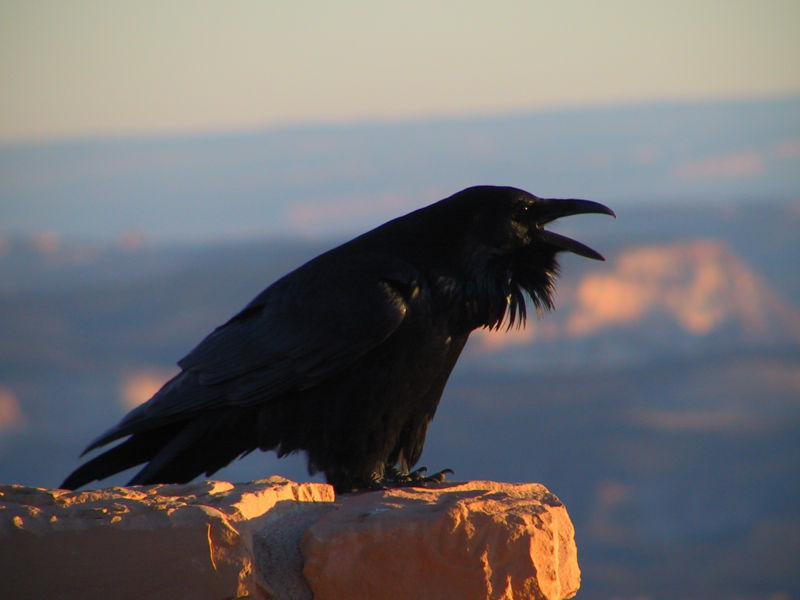
Common Raven / US NPS

Unfortunately, our local crow population have been hit hard by the outbreak of West Nile Virus. American Crows seem to be particularly susceptible, but corvids as a group suffer a higher death rate when exposed to the virus. The graph below, derived from Christmas Bird Count results in the DC area, gives a sense of their decline in the past decade.

Because of recent worries about West Nile Virus and highly-pathogenic poultry flu in humans, crows again are becoming ominous signs. Only now, it is the dead crows rather than the living ones that are a cause for worry. With both diseases, birds are under a greater threat than humans.

Note: Audubon at Home has some good suggestions for making Halloween less wasteful.

Crossposted at Blue Ridge Gazette.

Tags:

Monday, October 30, 2006

Burdock and Kinglets

I came across the following photograph recently (via Birderblog). This golden-crowned kinglet is caught in a burdock plant. Burdock is an invasive species from Europe. It disperses its seeds via round seed balls with hooked spikes. These hooked spikes latch onto passing animals for distribution. For larger animals, these seed heads are a relatively harmless annoyance. For small birds, they pose a hazard, and may be life-threatening.

The photo above was taken by John Idzikowski; see his site for the complete story behind the photograph. For more on burdock, see here and here.

Meddling

During the past six years, many of us have suspected that the Bush administration was dragging its heals when it came to protecting endangered species. Despite the show of support for the ivory-billed woodpecker, in most cases administration officials declined to act on requests for protection under the Endangered Species Act, especially where such protection would conflict with the interests of powerful donors. We thought that this was another case of ideology impeding reality-based policy. Now, thanks to the Freedom of Information Act, there is some documentation for this suspicion.

Julie MacDonald, the deputy assistant secretary of the interior for fish and wildlife and parks, has blocked requests from scientists on the interior staff to protect species such as the Gunnison Sage Grouse. In many cases she criticized their reports for not taking sufficient account of complaints by land owners and others who wanted to use public lands that were needed by the declining species.

MacDonald said that she does not make the decision on whether to federally protect a species, because the head of the Fish and Wildlife Service has that responsibility. But MacDonald said that she had made her feelings clear in an array of documents; overruled scientists' conclusions in areas where she has authority, such as designating critical habitat; and mocked rank-and-file employees' recommendations....

"A lot of times when I first read a document I think, 'This is a joke, this is just not right.' So I'll ask questions,' " said MacDonald, a civil engineer by training who worked at the California Resources Agency before joining the Interior Department in 2002. "These documents have tremendous economic and social implications for people."

The result is that the Bush administration has designated far fewer species under the Endangered Species Act than the two previous administrations: about 10 per year, compared to 64 per year under Clinton and 59 per year under the first Bush. The decline has certainly not been because of a lack of species to consider. The Red Knot, for example, has suffered a catastrophic decline in the past decade and yet has been unable to make the list. Instead, as the linked article makes clear, political appointees at the top are exhibiting undue deference to industry.

Sunday, October 29, 2006

A New Birder's World

The magazine Birder's World is celebrating its 20th anniversary, and its editors have redesigned the layout in honor of the celebration. Since I am new to Birder's World, I cannot compare the new design to the old one. However, it is clean and attractive, and information is easy to find. The regular features are all present - reader questions, birding news, columns on bird identification and biology, and book reviews. The Northern Hawk Owl on the cover commands attention. One feature, "Hotspots Near You," which highlights small county and state parks in urban areas, included a D.C.-area site, Huntley Meadows.

As part of its 20th anniversary celebration, a Birder's World staffer made a trip around North America (i.e., the ABA area) to find the 20 most wanted birds, as voted by Birder's World's readership. Here is the list of species:

  1. Ivory-billed Woodpecker
  2. Painted Bunting
  3. Snowy Owl
  4. California Condor
  5. Whooping Crane
  6. Great Gray Owl
  7. Atlantic Puffin
  8. Elf Owl
  9. Violet-crowned Hummingbird
  10. Magnificent Hummingbird
  11. Elegant Trogon
  12. Gyrfalcon
  13. Bohemian Waxwing
  14. Arctic Loon
  15. Horned Puffin
  16. Red-cockaded Woodpecker
  17. Kirtland's Warbler
  18. Harlequin Duck
  19. Northern Hawk Owl
  20. Blue-throated Hummingbird
Others have picked nits with other aspects of the list. It is not the list I would have created, but I would love to see all of the birds listed there. The first species seemed the most out of place to me. For all but a tiny group of researchers, the ivory-billed woodpecker that leads the list is largely hypothetical. All other species can definitely be seen, even if with difficulty in some cases. I have seen two of these birds, snowy owl and harlequin duck.

Another 20th anniversary feature was a retrospective album of photographs from past issues. It has some great ones, such as a brooding killdeer that appears to have multiple legs and a Thayer's Gull with a sea star hanging out of its bill. The magazine includes a section of reader-submitted photographs in each issue. Some of these are quite striking as well, especially one of a turkey in flight.

Overall, the magazine seems geared to an intermediate birding audience. The articles assume some knowledge, such as what "lores" are. In contrast to the American Birding Association's Birding, however, Birder's World deals with problems that are more likely to face the average birder. Birding sometimes seems more suited to people who travel constantly to remote locations, while Birder's World seems like it could appeal to travelers and non-travelers.

The Birder's World website includes a forum for birders. It is fairly modest in membership compared to BirdForum, but seems to have a heavier proportion of North American birders.

Sparrows and Hawks at the Arboretum

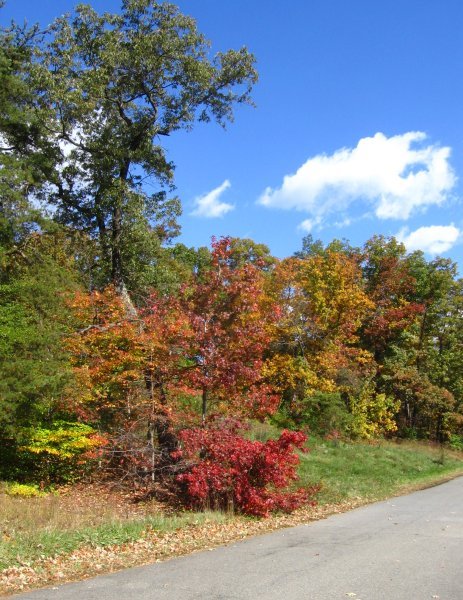
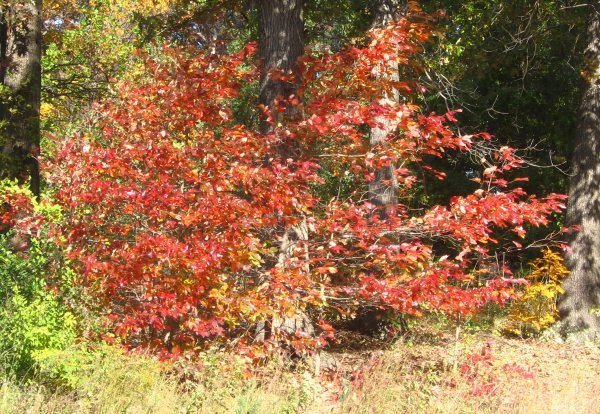
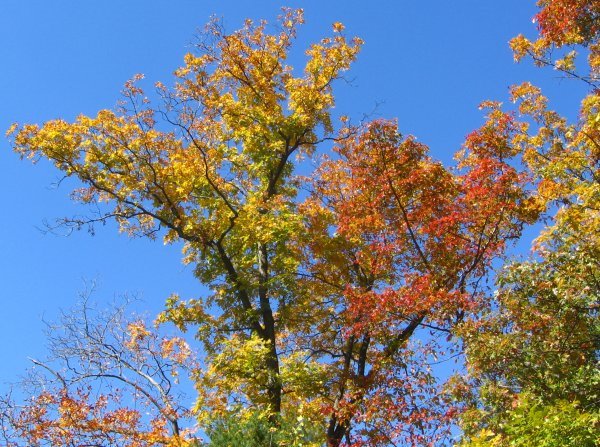
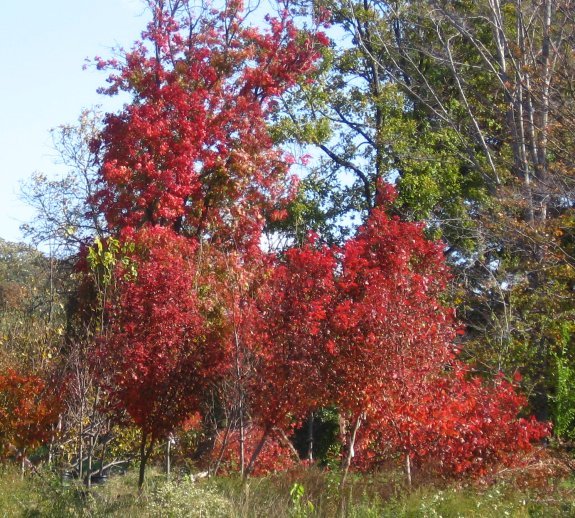
This morning I visited the National Arboretum to see some birds and enjoy the foliage. Several bird species are moving through in large numbers. Ruby-crowned kinglets were all over the Arboretum, in every bush and tree. Hermit thrushes were also plentiful. Several made me think they were other thrush species, but all turned out to be hermit thrushes in the end. Dark-eyed juncos are also back in large numbers; today I saw my first of the fall.

I was surprised to see a blue-headed vireo lingering in the Azalea Garden; I thought I had missed this species for the fall. I was also surprised to see two fox sparrows. (Usually I do not see fox sparrows until later in the fall.) These two birds let me watch for a long time as they thrashed about in the open. Like white-throated sparrows, fox sparrows noisily kick leaves behind them as they forage.

The meadows around the columns were very productive this morning. As I walked through them, a merlin whizzed overhead. It was followed by a sharp-shinned hawk, which turned several circles over the field before moving on. The Arboretum is replanting grass in a large section next to the columns. The bare ground here was being worked by palm warblers and eastern phoebes. Together the two species made for a flurry of tail-pumping.

Just before I left, I saw a very large flock of chipping sparrows just inside the treeline in the patch of woods near the bonsai display. There were about 50-60 of them in total - one of the larger chipping sparrow flocks that I have seen at the Arboretum. They forage in the grass and then duck back into the woods for cover.

Today was another beautiful day to be out, thanks to a string of good weather. Last week I thought that fall migration was winding down, but it looks like it still has some surprises left.

SPECIES SEEN: 33

Black Vulture
Turkey Vulture
Sharp-shinned Hawk
Merlin
Ring-billed Gull
Rock Pigeon
Mourning Dove
Red-bellied Woodpecker
Yellow-bellied Sapsucker
Downy Woodpecker
Hairy Woodpecker
Northern Flicker
Eastern Phoebe
Ruby-crowned Kinglet
Carolina Wren
Northern Mockingbird
Hermit Thrush
American Robin
Tufted Titmouse
White-breasted Nuthatch
Blue Jay
American Crow
European Starling
Blue-headed Vireo
Palm Warbler
Eastern Towhee
Chipping Sparrow
Fox Sparrow
Song Sparrow
White-throated Sparrow
Dark-eyed Junco
Northern Cardinal
Common Grackle