
 Posts


 Baird's Sandpiper on Nest / USFWS Photo
News about birds and birding
- Increasing the amount of red on a male barn swallow's breast will increase the bird's testosterone. Biologists suspect the hormonal change is a result of increased attention from females and hostility from rival males.
- Europe has had difficulty producing a common management strategy for its great cormorant population because of disagreement among the various stakeholders. Fishermen have been pushing for cormorant culls because they believe that cormorants are eating all the fish.
- Two recent announcements from the Cornell: First, the CLO website is getting a new design, and the lab wants input from users. Second, eBird has a lot of geographic gaps; birders with sightings from those areas can help make the database more useful.
 An oil spill near Uruguay has killed at least 100 penguins, with more dead and injured birds washing ashore every day.
- A new genetic map of bird species in the UK indicates that related species tend to decline simultaneously.
- Three California condors were released back into the wild; three others are still being treated for lead poisoning.
- Cleanup and reuse of polluted cropland in California may put thousands of shorebirds at risk.
- Senators Dole and Burr want federal legislation to restore off-road vehicle access to Cape Hatteras National Seashore; currently access is blocked to protect nesting shorebirds.
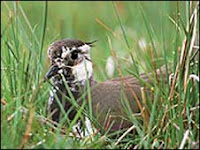 Floods in the UK wiped out hundreds of lapwing, redshank, and snipe nests.
- Yellow wagtails nest on the ground twice per year. For the first nest, they prefer wheat crops; for the second they prefer potato crops.
- Scientists have found a new nightjar species in Nepal. Sykes's Nightjar (Caprimulgus mahrattensis) was found near the Koshi River and also breeds in Pakistan and northwestern India.
- Teachers at an elementary incorporated a killdeer nest on campus into lessons for students about birds and conservation.
- Wildlife police blotter: a boat owner knocked down 30 nests and killed 186 "mud swallows"; 31 birds were killed when teenagers released dogs on them; a man was charged for shooting ducks with a pellet gun; someone shot an arrow through a goose.
- A Long Island woman was quarantined because she was covered with bird mites. The mites spread into her home from a bird nest in her bathroom vent.


- Tetrapod Zoology: 2007: a good year for terror birds and mega-ducks
- 10,000 Birds: The REAL red, red Robin
- Behind the Bins: The Importance of Sparrows
- Birdfreak: Murphy’s Laws of Birding
- Greatest Auk: Billions and Billions
- Drawing the Motmot: Bobolink Babylon
- OC Birding: Note-taking
- Tails of Birding: Colorful Blackbirds - the Baltimore Oriole
- Permafrost in eastern Siberia contains about 500 Gigatons of frozen carbon deposits; if the permafrost thaws, the carbon would start to be released into the atmosphere, eventually reaching a rate of several trillion pounds per year. Frozen carbon deposits near the poles are one of many potential feedback mechanisms that could warm the climate higher and faster than current predictions.
- The Greenland Ice Sheet is melting faster than previously calculated and freshwater runoff will double by 2100.
- A new atlas tracks recent changes to Africa's landscape. Among other things, it shows a 50% decrease in glaciers at Mount Kilimanjaro and the Rwenzori mountains.
- A major challenge for conserving global biodiversity is that conservationists lack data for areas undergoing the greatest biodiversity loss.
- Enviroblog: Lead: Bad for brains, bad for society


