Showing posts with label Extinct Birds. Show all posts

Monday, September 01, 2014

Passenger Pigeons and Conservation

Martha in 1911. From Arbor Day and Bird Day (1922).
Today marks the 100th anniversary of the death of Martha, the last Passenger Pigeon. Martha likely hatched in captivity sometime in the 1880s and at some point landed in a small collection of Passenger Pigeons at the Cincinnati Zoo. In 1910, she became the last pigeon left in their collection, and by her death in 1914, she was the last known Passenger Pigeon in captivity or in the wild.

In truth, Passenger Pigeons had been extinct in the wild for some time. The last recorded sighting was a wild pigeon shot in Ohio in 1900. By then the species had already been scarce for about a decade.

This was all the more shocking because Passenger Pigeons had once been so abundant, with a total North American population numbering in the billions. Early ornithologists such as John James Audubon remarked on the vast migratory flocks that could take days to pass. The pigeons bred around the Great Lakes region in vast communal nesting colonies. As late as the mid-19th century, Passenger Pigeons were still abundant. However, changes in technology made it easier for market hunters to locate flocks and nesting colones and ship thousands of carcasses to cities for sale as food.

The rapid decline and extinction of the Passenger Pigeon that followed was one of several events that inspired the early conservation movement. Federal laws such as the Lacey Act of 1900 and the Migratory Bird Treaty Act of 1918 were too late to help the Passenger Pigeon but have protected other birds since then. They, along with the Endangered Species Act, can continue to protect birds (and other wildlife) as long as their protections remain in place and are enforced. The anniversary of Martha's death should serve as a reminder that no matter how secure or abundant a species may appear, it can disappear rapidly under the right combination of circumstances.

Some links on Passenger Pigeons:

Monday, March 19, 2012

Hunting the Passenger Pigeon

The Detroit News has a great article on the demise of the Passenger Pigeon, with a focus on events in Michigan when the birds were still plentiful. People working for William B. Mershon, who was disturbed by the pace of slaughter, documented one mass killing in 1878:
The pigeon kill in 1878 outside of Petoskey, Mich., was considered the last big slaughter of pigeons which led to their extinction. By the 1860s there was a group of 500 men who called themselves "professional pigeoners." Their killing methods, the railroad, and the advent of the telegraph which kept them aware at all times of the flocks, ensured the pigeons' doom. However, most people who killed pigeons were farmers and their families....

The pigeoners poured into Petoskey. Mershon's friend noted from the hotel register that they came from New York, Wisconsin, Pennsylvania, Michigan, Maryland, Iowa, Virginia, Ohio, Texas, Illinois, Maine, Minnesota and Missouri. The pigeoners hurried about town, comparing market reports, discussing the price for squabs and quotes for live birds. They established packing houses and wagons with teams for hauling out dead birds. Locals would be hired for these jobs as well as being trained on trapping and killing birds.

The pigeons arrived by the millions to roost and the pigeoners were stretched out alongside the birds for 40 miles. They killed birds from daylight to dark, hauling wagon after wagon of dead and live birds for 50 days. It was estimated that they may have killed a billion birds.

Mershon's men rode horses up and down the line, breaking traps, harassing the pigeoners, prodding the lone overworked sheriff to prevent illegal slaughter. They were seen as a nuisance and chased off with shotguns.

Eventually by summer it was over. They wrote about their efforts "to check the slaughter" in a Chicago publication, American Field Magazine. A music professor and friend of Mershon's, H.B. Roney, who led the group, said that the work was futile: four against 2,000 (professionals and locals).
Read the rest.

Mershon later wrote a book, The Passenger Pigeon, which compiled historical accounts, life histories, and notes on the status of the then-vanishing species. That book is available, free, on OpenLibrary.org.

(via 10,000 Birds)

Thursday, August 25, 2011

Avian Ancestors

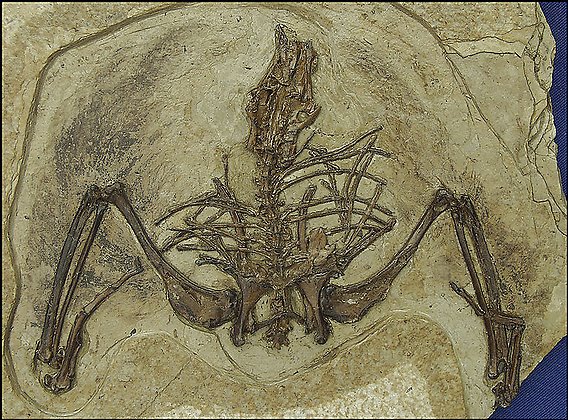
Over at LiveScience there is a new gallery of images of avian ancestors and dinosaurs with various bird-like traits. The images are mostly artists' conceptions, with a skeletal reconstruction or fossil photograph here or there. There are some that look clearly like birds, but there are a lot more with a classic bipedal dinosaur shape, but with feathers attached. As I looked over the galleries, I was thinking about how much the image of dinosaurs has changed from what I learned when I was growing up. Back then, dinosaurs were portrayed as blandly colored and scaly, more like giant monochrome lizards than anything remotely bird-like. A large part of that has to do with recent discoveries like Gansus yumenensis and Epidexipteryx hui. Some also is a result of re-conceiving how dinosaurs looked and acted. Either way, it is fascinating to think about how bird ancestors evolved and separated from dinosaurs.

One caveat about the gallery is that it does not seem to take account of the recent revision to Archaeopteryx's status as a bird ancestor.

Thursday, July 28, 2011

Taxonomic Revisions To Iconic Species: Wood Warblers and Fossil Birds

Yesterday the AOU published its 52nd Supplement to the AOU Checklist (pdf). Each year, the supplement contains additions, splits, lumps, and other revisions made by the AOU's checklist committee at its spring meeting. There are a number of significant changes in this year's supplement. One of them is a split in the moorhens: the Eurasian form retains the name Common Moorhen (Gallinula chloropus), while the American birds become Common Gallinule (Gallinula galeata).

Formerly Dendroica coronata, now Setophaga coronata / Photo by Frank Miles (USFWS)
The change likely to cause the most controversy is a full-scale revision of the wood warbler family (Parulidae). The move has been rumored for almost a year since the publication of a proposed reclassification of the family based on genetic analysis. I have avoided talking about the proposed changes since I do not have access to the original research informing the changes, but there are several summaries on the web. A good discussion of the reasoning behind the changes is at Biological Ramblings. There are some additional diagrams of the changes on David Sibley's blog. The short version is that genetic relationships do not match the traditional division of the wood warbler family into genera. The result is a reordering of the genera, with some being folded into others.

Here is the ordering of the wood warbler genera as they now stand:
  • Seiurus: This genus has one species, Ovenbird, which is unlike most of the other warblers in its appearance and habits.
  • Helmitheros: Another genus with one species, Worm-eating Warbler.
  • Parkesia: The two waterthrush species, which were split from Seiurus last year.
  • Vermivora: This genus lost several species to a split last year and now contains only the extinct Bachman's Warbler and the closely-related Blue-winged and Golden-winged Warblers.
  • Mniotilta: One species, Black-and-white Warbler.
  • Protonotaria: One species, Prothonotary Warbler.
  • Limnothylpis: Yet another genus with only one species, this time Swainson's Warbler.
  • Oreothlypis: This genus was created last year with most of the former Vermivora warblers and two members of the Parula genus.
  • Leucopeza: One species, the possibly-extinct Semper's Warbler.
  • Oporornis: Most of the former members of this genus were moved into the genus below; it now contains only the Connecticut Warbler, which has the unusual habit (for a warbler) of walking on the ground.
  • Geothlypis: Traditionally this genus only the yellowthroats. Now it also contains the species exiled from Oporornis (like Mourning and Kentucky Warblers).
  • Setophaga: While originally this was a small genus, containing only the American Redstart, it now contains all of genus Dendroica and two species of genus Parula, as well as the Hooded Warbler. Even though this is basically the old Dendroica genus, it is called Setophaga because that name has priority (i.e., it was published earlier in the historical record). The move results is an old situation where the family Parulidae no longer has a matching genus Parula, and the name Dendroica disappears from the checklist.
  • Myiothlypis: One species in North America, Buff-rumped Warbler. There are more species in this genus, but most of them are in South America.
  • Basileuterus: This is another Neotropical genus. This genus and Myiothlyis were traditionally considered a single genus.
  • Cardellina: This genus contains the Red-faced Warbler, as well as two members from Wilsonia and two from Ergaticus
  • Myioborus: These are the Neotropical redstarts and whitestarts. 
  • Zeledonia: Wrenthrush, a Neotropical species.
  • Icteria: One species, Yellow-breasted Chat, an oddball among warblers.
  • Xenoligea: One species, White-winged Warbler.
  • Microligea: One Neotropical species, Green-tailed Warbler.
  • Teretistris: Two Neotropical species.
The last few genera, including the Yellow-breasted Chat, may not belong in Parulidae at all, but the AOU has held off reclassifying them, perhaps until there is better evidence about where they truly belong.

Over the past few months, several people have contacted me out of concern about the changes, especially the removal of the name Dendroica from the official taxonomy. I have been using the name "dendroica" as an internet handle since 2005, on this blog, on Twitter, and elsewhere, so I am sad to see that it will not longer match a warbler genus. At the same time, taxonomy is constantly subject to revision as new relationships are discovered, and the best available science today may be overturned tomorrow.

On the same day that the AOU published its checklist supplement revising the wood warbler family, another iconic species had its traditional placement questioned. A newly-discovered fossil species, named Xiaotingia, suggests that Archaeopteryx may not belong to the bird lineage, but to a parallel group, the deinonychosaurs. Ed Yong explains the consequences of such a change:
Meanwhile, others have noted that Archaeopteryx has many features that are only found among the deinonychosaurs. For example, they share a distinctive hip bone, and they both have a large hole above their noses (the “premaxillary fenestra”) that other birds and dinosaurs lack. Any many of the features that supposedly characterise Archaeopteryx and other birds, such as feathers, a wishbone and long powerful forearms, are also found in deinonychosaurs.

This is more than just a matter of shuffling cards. Archaeopteryx’s position has been so sacrosanct that its body had guided many of our ideas about the origins of birds. It grounds our understanding of this group. For example, it was previously thought that most primitive birds and their closest dinosaur relatives had lightly built skulls, which might have been useful for flight. “Instead, our study suggests that primitive birds had robust and rigid skulls,” says Xu.

“Our study also suggests that most primitive birds were herbivorous animals,” he says. “Previous studies which suggested that flight evolved in the [meat-eating] context (such as wings evolving for catching prey) need reconsideration.” Witmer writes, “Clearly, without the safety net of good old Archaeopteryx at the base of the birds, we’ve got some fresh work to do.”

But Gerald Mayr, who studies fossil birds at Germany’s Sneckenburg Museum, is unimpressed with the new discovery. “I fear that it is a bit hyped and that the conclusions are not as novel as the authors claim,” he says. Mayr is one of several palaeontologists who think that the deinonychosaurs are actually birds themselves. According to him, they’re flightless members of a group that includes Archaeopteryx and modern birds, like smaller extinct versions of today’s ostriches and emus.
See his blog for pictures of the new species, Xiaotingia, and diagrams of the new proposed taxonomy.

Whether or not the authors are correct in their placement of Archaeopteryx among the deinonychosaurs, it is clear that there were a lot of proto-birds and bird-like creatures and deciding which deserve to be called "birds" and which "dinosaurs" is not necessarily easy. There are relatively few fossils at that point in the lineage, so there is potential for one or two discoveries to disrupt the current alignment. Wherever Archaeopteryx belongs on the new taxonomic tree, I think it is still safe to see it as symbolic of the evolutionary relationship between birds and dinosaurs, even if it does not belong in the direct lineage of modern birds.

Tuesday, May 11, 2010

Archaeopteryx Shows Its Feathers

A scan of an Archaeopteryx fossil showed that the fossil still contains bits of feather in addition to feather imprints and skeleton.

The details were obtained by firing intense X-rays at the sample generated by a so-called synchrotron radiation source at the Stanford Linear Accelerator in California, US.

Dr Uwe Bergmann, who led the X-ray scanning experiment at SLAC, said: "People have never used a technique this sensitive on Archaeopteryx before....

Another member of the team, Dr Phil Manning, from Manchester University, believes that the study shows there's now a new way to study long-extinct creatures....

As well as identifying the feathers the research team also found that the creature's bones have a chemical composition similar to those of birds lving today.

"To me that's quite exciting," said Dr Wogelius. "It establishes a nutrient link between a and modern birds. If you have a pet bird such as a budgie or a paraquet the key nutrients to get right for your pet's health are copper and zinc."
Unfortunately some feathers and tissue were probably chipped or washed off in the process of preparing the specimen for display. The authors argue for changing preparation techniques to preserve more of the soft tissue remains.

Saturday, March 13, 2010

DNA from Fossil Eggshells

One item that I did not see in time for yesterday's Loose Feathers post is the news that scientists have isolated DNA from the fossilized eggshells of extinct elephant birds.
"We were really surprised to discover that ancient DNA is well-preserved in fossil eggshells, particularly the heaviest bird to have existed the elephant bird called Aepyornis, which is now extinct," said Murdoch doctoral student Charlotte Oskam, who undertook the research.

"Researchers have tried unsuccessfully to isolate DNA from fossil eggshell for years -- it just turned out that they were using a method designed for bone that was not suitable for fossil eggshell."

The new study published this week in the scientific journal Proceedings of the Royal Society B describes how DNA up to 19,000 years old is an excellent source of ancient DNA especially in warmer climates such as Australia.
The research team hopes to use the same methods for ancient moa eggshells to study how humans and moas interacted. Extracting DNA from fossil remains could probably clarify some taxonomic relationships as well.

If you wish to read about this study in more detail, you can read the paper for free on the Royal Society's website.

Wednesday, September 16, 2009

A Man-eating Bird?

Haast's Eagle attacking New Zealand moas / Artwork: John Megahan

A recent examination of fossils from the extinct Haast's Eagle (Harpagornis moorei) found that this massive raptor could hunt large animals rather than just scavenging.
It was at first thought to be a scavenger because its bill was similar to a vulture's with hoods over its nostrils to stop flesh blocking its air passages as it rooted around inside carcasses.

But a re-examination of skeletons using modern technology, including CAT scans, by researchers at Canterbury Museum in Christchurch and the University of New South Wales in Australia showed it had a strong enough pelvis to support a killing blow as it dived at speeds of up to 80kph.

With a wingspan of up to three metres and weighing 18kg, the female was twice as big as the largest living eagle, the Steller's sea eagle.

And the bird's talons were as big as a tiger's claws.
That sounds scary. But did it actually eat humans? The answer is maybe. Haast's Eagle most likely evolved to prey on moas, as depicted in the artist's conception above. Large flightless moas inhabited New Zealand prior to the arrival of humans and became extinct soon afterward. If a Haast's Eagle could kill a moa, most likely it had the ability to kill humans as well. That would seem to confirm an ancient Maori legend about a large raptor that could eat humans. However, I find it doubtful that Haast's Eagles ate humans very frequently as it failed to outlast its main source of prey. Even if the eagles killed some humans, they did not kill enough to maintain the species.

As an aside, the image at the top of the article comes from an article in PLoS Biology (summary) several years ago that explored the genetic relationships among the Haast's Eagle and other raptors. This giant raptor is most closely related to Australia's Little Eagle (Aquila morphnoides), a species slightly smaller than a Red-tailed Hawk (Buteo jamaicensis). (Take a look at this image comparing the feet of a Haast's Eagle and a Little Eagle.) The Haast's Eagle is more distantly related to other members of the Aquila genus, including North America's Golden Eagle (Aquila chrysaetos). This puts Haast's Eagle among the true eagles rather than the fish eagles.

Thanks to Chris Clarke for the links.

Saturday, August 29, 2009

Extinct Iridescence

Photo credit: Jakob Vinther/Yale University

A study announced this week determined that some ancient birds had iridescent black feathers, much like modern grackles or starlings. The analysis is based not on some new discovery but on fossils that had been stored in a museum collection. The example shown above, one of the fossils used in the study, does not look particularly glossy or black, at least not to my eye. However, ornithologists were able to reconstruct its original appearance based on the structure of pigmentation.
"[The arrangement of melanosomes] implies that this guy had a black plumage with a very glossy metallic, coppery, greenish, or bluish sheen to it," said Prum, whose new research appears online today in the journal Biology Letters.

The exact details of the iridescent color depend on how light would have reflected off the melanosomes and the layer of keratin, or protein, just above them. The keratin layer decomposed during fossilization.

"What you see is a beautifully smooth surface made of the melanosomes packed together," Prum said.

"And that beautiful smooth surface is the kind of uniform layer that characterizes the melanin distribution within an iridescent feather. We don't see that in a crow or other plain black bird."
The linked article includes a note of caution from another ornithologist to the effect that fossils provide incomplete information about an organism's color. The loss of keratin in particular might change how a fossil appears in the lab. However, it is still and interesting finding, and I am excited at the prospect of more accurate depictions of these long-extinct animals.

Wednesday, August 12, 2009

Back From the Dead

The Tasman Booby was long thought to be extinct. Polynesian settlers wiped out much of its population in the 13th century, and what was known to remain of its population was hunted to extinction by European sailors in the 18th century. Both sets of hunters considered the booby a valuable food source. As it turns out, this species was not actually extinct. However, they did not survive as a small remnant population but as a subspecies of the Masked Booby.

Researchers had long suspected that the "extinct" Tasman booby and the living masked booby of the North Tasman Sea were closely related. The birds have similar male and female body shapes and characteristically long wings, for starters.

But it was only when a group of naturalists, paleontologists, and geneticists pooled their expertise that these suspicions could be put to the test, said Tammy Steeves of the University of Canterbury in New Zealand, who led the new study.

The researchers compared fossilized and modern bones and DNA from specimens identified as Tasman and masked boobies.

Physically, the fossil bones looked strikingly similar to their modern counterparts. More important, the DNA was a perfect match, Steeves said.
According to the article, the two were initially classified as separate species because palaeontologists compared bones of female Tasman Boobies with male Masked Boobies. The significant size difference between the sexes made the two populations appear to be separate species.

Thursday, February 19, 2009

Rare Species Sold As Food

This rare bird, a Worcester's buttonquail, was photographed at a poultry market in the Philippines before being sold as food. Prior to the photograph being taken, the species had not been seen for several decades and was presumed to be extinct.

Photograph by Arnel B. Telesforo

The incident is reminiscent of tales of American endangered and extinct species, such as this great moment in American conservation:
I had been spending the winter of I885-1886 in Florida, and during the month of March had made my Headquarters at the home of my friend, Mr. E.G. Smith, on Big Lake George. One of my favorite trips was up Juniper Creek, a small stream emptying into the head of the lake one mile west of the famous Volusia bar; the country through which it passes is one of those wild, semi-tropical swamps, so common throughout the Gulf States. Anhingas (Anhinga anhinga), Little Blue Herons (Ardea cœrulea), Egrets (A. egretta) and Limpkins (Aramus giganteus) were by no means uncommon, and it was in search of these that Mr. Smith and I took a boat on March 26 and started for this locality. We took with us as oarsman 'Jim' (one of the help on the place), who had done considerable collecting for me, and in whose accuracy as a marksman I had some confidence. We had gone perhaps a mile up the stream when a new and peculiar note sounded from the forest, which I can only liken as do other writers to the false high note of a clarionet; hastily landing I immediately went in search of its author (as I had not the faintest idea from what source it proceeded), but owing to the thickness of the underbrush it was next to impossible to penetrate farther than a few yards and, the noise ceasing entirely, I returned and we continued up the stream. Noon found us eating our lunch on a small knoll some four miles from the lake in the very thickest of the swamp. Around us stood gigantic cypress trees whose trunks and branches were adorned with thousands of air plants, and from which the myriads of vines which twined and twisted, and the gray Spanish moss hanging in long festoons, cast a gloom and solemnity hard to realize by one who has never seen it, yet lending a certain grandeur that the student of nature is not slow to appreciate. Scattered through the swamp and giving a tropical air to the whole were countless palmettoes (Sabal palmetto) towering to a height of seventy-five or a hundred feet, and it was in a little clump of these that we were taking our nooning. Suddenly that strange note sounded once, twice, three times,—approaching nearer with each repetition. It sounded exactly like the note of the White-bellied Nuthatch, only much louder and stronger, and grasping my gun, I remarked that I was going to kill the biggest Nuthatch on record. Hardly had the words left my lips when, with a bound and a cackle, a magnificent male Ivory-bill alighted in the trees directly over our heads; for a moment I was too astonished to speak, but in that moment it was joined by its mate, and the two began hammering away at the palmetto trunks. It was impossible for me to shoot without changing my position, while to move would be to alarm the birds; Jim saw my dilemma and whispered that he could kill them from where he sat, so passing him the gun I watched him take aim. He fired but missed, and the Woodpeckers bounded away into the thickest part of the swamp; hastily snatching the gun I started in pursuit, but failed to find them. Day after day I returned to the same locality in hope of securing them, but without success, and on April 7 I was obliged to leave for home without adding this much coveted species to my collection.
The author, Edwin M. Hasbrouck was writing in The Auk in April 1891, when the Ivory-billed Woodpecker was already known to be in serious decline. In fact, the author acknowledges this. His article survey evidence for the species's range at the time, in response to fears that it and the Carolina Parakeet might follow the Labrador Duck and Great Auk into oblivion. While some of the reports are strictly visual observations, most seem to be from specimen collecting activity, by people who probably should have known better.

Hasbrouck's prognosis for the Ivory-billed Woodpecker seems hopelessly optimistic, given the benefit of hindsight:
It will be seen from the foregoing, that in many instances the accounts are modified with the statement that the species is extremely rare as compared with past years, or else has disappeared from the localities entirely. Probably this is not altogether owing to the actual decrease in the numbers of the birds, but to its extreme wildness and desire for seclusion.... There are thousands of square miles of swamp throughout the Mississippi Valley and Gulf States that never will or can be reclaimed or settled, country that is admirably suited to this bird, and in which, as I have shown, it is much more common today than elsewhere; and here, it is safe to say, it will be found indefinitely; for, into those swampy fastnesses in which it most delights, few care to penetrate, at certain seasons none dare; and as but few are killed, and each pair in existence today will presumably raise its brood the coming spring and together with them repeat the multiplication each successive year,—it is reasonable to assume that the species will be found there many years hence.
The cavalier attitude that leads to killing to extremely rare species is not unique to the Philippines.

Update: See also this post on the buttonquail incident from Beginning to Bird.

Wednesday, January 14, 2009

Giant Bird Poop from Long Ago

Sir Richard Owen with a Moa, Dinornis giganteus (robustus), in 1879Scientists in New Zealand are using dried feces (coprolites) to investigate the diet of long-extinct moa.

"Surprisingly for such large birds, over half the plants we detected in the feces were under 30 centimetres in height," says Dr Wood. "This suggests that some moa grazed on tiny herbs, in contrast to the current view of them as mainly shrub and tree browsers. We also found many plant species that are currently threatened or rare, suggesting that the extinction of the moa has impacted their ability to reproduce or disperse."

"New Zealand offers a unique chance to reconstruct how a `megafaunal ecosystem' functioned," says Professor Alan Cooper, Director of the Australian Centre for Ancient DNA, which performed the DNA typing.

"You can't do this elsewhere in the world because the giant species became extinct too long ago, so you don't get such a diverse record of species and habitats. Critically, the interactions between animals and plants we see in the poo provides key information about the origins and background to our current environment, and predicting how it will respond to future climate change and extinctions."
The BBC has a photo of some of the coprolites, which apparently could be quite large – up to 15 centimeters long (i.e., about 6 inches) and 250 kg.

Sunday, September 28, 2008

Goose Ancestor Discovered in England

Fifty million years ago, a giant goose-like bird with a toothy bill patrolled the waters covering the modern-day British Isles.

With a five metre wingspan, these huge birds were similar to albatross in their way of life. Albatross have the largest wingspan of any living bird, but that of Dasornis was over a meter and half greater. Despite these similarities, the latest research suggests that the closest living relatives of Dasornis and its fossil kin are ducks and geese.

“Imagine a bird like an ocean-going goose, almost the size of a small plane! By today’s standards these were pretty bizarre animals, but perhaps the strangest thing about them is that they had sharp, tooth-like projections along the cutting edges of the beak” explains Gerald Mayr, expert palaeornithologist at the German Senckenberg Research Institute and author of the report.

Like all living birds Dasornis had a beak made of keratin, the same substance as our hair and fingernails, but it also had these bony ‘pseudo-teeth’ “No living birds have true teeth - which are made of enamel and dentine - because their distant ancestors did away with them more than 100 million years ago, probably to save weight and make flying easier. But the bony-toothed birds, like Dasornis, are unique among birds in that they reinvented tooth-like structures by evolving these bony spikes.”

So why did Dasornis have these pseudo-teeth? “Its linked to diet” says Mayr, “these birds probably skimmed across the surface of the sea, snapping up fish and squid on the wing. With only an ordinary beak these would have been difficult to keep hold of, and the pseudo-teeth evolved to prevent meals slipping away.”
I am not sure what precisely links Dasornis with geese and ducks rather than albatrosses; the article does not explain.

Wednesday, July 09, 2008

Fossil Feather Colors

A group of scientists claim that they have found a way to determine the colors of fossilized feathers. The feathers used in the study are from a 100 million year-old specimen found in Brazil. The fossil itself (see right) shows dark and light contrasting bands.

Microscopic analysis of the dark bands showed they displayed a distinctive granular texture, made from thousands of tiny, densely-packed flattened spheres.

Researchers had previously interpreted these as fossilised bacteria, preserved as the feathers decomposed.

But analysis of modern birds' feathers showed a similar structure.

"There are particular cells that cluster into the dark areas of modern birds called melanosomes," explained Dr Benton.

"Somehow [the melanosomes] are retained and replaced during the preservation process and hence you preserve a very life like representation of the colour banding [in the fossils]."

Lighter areas in the fossils did not show the same textures, leading the team to conclude that the feathers once displayed distinct black and white stripes.
Apparently other colors in modern birds also have distinctive patterns when viewed under a microscope. If so, potentially palaeontologists could reconstruct more intricate feather patterns than just black and white (or dark and light). The methods should also work with materials other than feathers, such as fur.

Friday, May 09, 2008

Loose Feathers #149

House Wren / Photo by Dave Menke (USFWS)

Bird news and links
  • Great tits are adjusting to climate change by nesting earlier. Tits at Wytham Woods near Oxford have been banded and their nests monitored since 1947. On average, they now lay eggs two weeks earlier than in 1961. The earlier nest date allows birds to take advantage of an earlier peak in caterpillar availability due to the warming climate. It appears that the British great tits, unlike continental great tits and North American wood warblers, are able to adjust their breeding dates based on ambient temperature and food availability.
  • Other birds have not adjusted as successfully; 41 percent of Europe's 522 migratory waterbird populations are declining.
  • Scientists discovered a new bird ancestor, Eoconfuciusornis zhengi, in northern China. Its feathers are fairly well-preserved compared to other fossils. The new specimen was probably better able to fly than Archaeopteryx, as it had a skeletal and muscular structure closer to modern birds.
  • Audubon California worked out a deal to protect a colony of 80,000 tricolored blackbirds, one of the largest remaining in the world.
  • Towns in Japan are trying to discourage crows from nesting on utility poles since the nests cause power outages. Crow populations have soared there in recent years. (link via Aydin)
  • Male herring gull embryos appear to be more sensitive to their environment than female embryos, leading to delayed hatching and poorer fledging condition.
  • Beauty the Bald EagleWildlife rehabilitators in Idaho are preparing to attach an artificial bill to a bald eagle. Its original bill was shot off by a hunter. (The "bird recovery center in Anchorage" mentioned in the article is Bird TLC.)
  • Also, via Bird TLC, an eagle that survived the Exxon Valdez spill died this week, twenty years after it was rescued.
  • The San Bernardino County Museum and National Forest Service have launched a study of the endangered southwestern willow flycatcher to determine the causes of its decline and its habitat needs.
  • Environmentalists near Edmonton are trying to relocate a power line that causes numerous bird deaths from collisions.
Birds in the blogosphere
Environmental news
  • According to a recent National Geographic survey, U.S. consumers rank last in following green habits. Here is a simplified Greendex if you want to test your own habits.
  • You can reduce your impact by producing and discarding less waste. Many products can and should be recycled. Food waste can be turned into compost for gardens or houseplants.
  • Electronic waste is being dumped illegally in west Africa, where people (often children) break it up for scrap without taking proper safety precautions. As a result they are exposed a host of dangerous toxins.
  • Tropical insects may suffer the worst effects of climate change, since they have more difficulty regulating their body temperature than other organisms.
  • A new report shows that the EU's biofuels policy is likely to cause environmental harm around the planet. Clearing land for biofuel feed stocks represents a threat to natural habitats.
  • The Lieberman-Warner climate bill appears moribund.
  • Enviroblog: Cheatsheet: Phthalates
Carnivals and newsletters

Wednesday, November 07, 2007

Bird Claws and Evolution

One of the interesting questions in bird evolution is whether early bird ancestors were primarily ground-based or tree-based. That is, did birds start on the ground and move up, or start in trees and move down?

A new paper in Current Biology proposes to answer the question by looking at the shape of birds' feet. The researchers first classed 249 bird species from seven orders according to their feeding behavior. Birds in group GB - such as herons, rails, and pheasants - feed on the ground and fly only to roost or escape predators. The other extreme, group V, contains vertical climbers like woodpeckers that forage only in trees. The middle groups - comprised of pigeons and cuckoos - have species that show both behaviors.

They then measured the claw angle on each bird's middle toe. The shape of a bird claw conforms to a circular arc. "Claw angle" refers to the angle between the radii extending from the center of this arc to the base and tip of the claw. What they found was that birds with a greater claw angle spent more of their time in trees than on the ground. This was true even within the pigeons and cuckoos.

The study suggests that claw angle can be a predictor of behavior in early birds and bird-like dinosaurs in addition to modern birds. Measuring the claw angle for extinct species presents challenges because of incomplete preservation. In those species where it can be measured or estimated from fossil remains, ancestral birds show greater similarity to modern ground-dwelling birds.

According to this indicator, early bird ancestors probably spent most of their time on the ground. Specializations for life in trees would have come later.

(Via Evolving Thoughts)

Monday, June 25, 2007

Giant Penguins in Peru

Fossil remains of two extinct species of penguin have been discovered on the Peruvian coast. The larger of the two, Icadyptes salasi, was about five feet tall and lived about 36 million years ago. The smaller, Perudyptes devriesi, was about three feet tall and lived about 42 million years ago.

Unlike living penguin species, the ancient, oversized birds had long, narrow beaks, with Perudyptes having an exceptionally long and spear-like beak, which Clarke said likely helped the animal gulp down large prey and attain its towering stature.

Perudyptes had features indicating a transition from wing to paddle. For instance, the giant penguin’s wing muscles were reduced compared with flight-able birds, “which basically are part of the changes to get to a paddle-like structure--you reduce these intrinsic wing muscles,” Clarke said.

To find out how the penguins landed in low-latitude regions, the scientists examined the geographic distribution and evolutionary relationships of other extinct penguins.

The results suggest the two Peruvian species result from separate dispersals, with the ancestors of Perudyptes dwelling in Antarctica before their equator-bound trek and Icadyptes originating near New Zealand.
One of the interesting findings is that penguins were in equatorial regions much earlier than expected.
“We tend to think of penguins as being cold-adapted species,” said lead study author Julia Clarke, a paleontologist at North Carolina State University and the North Carolina Museum of Natural Sciences. “But the new fossils date back to one of the warmest periods in the last 65 million years of Earth’s history. The evidence indicates that penguins reached low-latitude regions more than 30 million years prior to our previous estimates.”
The two new, extinct species, the giant penguin Icadyptes salasi (right) and Perudyptes devriesi (left) are shown to scale with the only extant penguin inhabiting Peru, Spheniscus humbolti (center). Credit: Kristin Lamm, via LiveScience

Wednesday, June 13, 2007

New Bird Ancestor Discovered

Palaeontologists have found a new bird-like dinosaur in China. Gigantoraptor erlianensis had a toothless beak and feathered arms and was about 26 feet long and 16 feet tall. (A skull and model are pictured at right) The fossil dates from the end of the Cretaceous Period. The large size of this species took the scientists by surprise.

Paleontologist Xing Xu of Beijing's Institute of Vertebrate Paleontology and Paleoanthropology and colleagues discovered the animal while prospecting for fossils in the Erlian Basin of the Gobi Desert in north-central China. Based on its size, the paleontologists initially classified it as member of the tyrannosaur lineage, but bits of beak, leg and other bones revealed that it more properly belonged to the oviraptorosauria group, heretofore a grouping of small, feathered creatures weighing only a few pounds. "It is the largest known beaked dinosaur," Xu says. Adds paleontologist Mark Norell of the American Museum of Natural History in New York City: "I was just flabbergasted when I saw it because it was so big."

The finding complicates the evolutionary descent of birds from dinosaurs. "Progressively from within advanced theropods you get smaller and smaller towards birds," Norell says. But "after some species originate and spring off the bird line, you get secondary gigantism."

[...]

Already, Gigantoraptor is proving very odd, according to the paper detailing the find published in Nature. It bears a ridged humerus (upper arm bone) never before observed in a dinosaur as well as an enormous but birdlike femur (thighbone). "Maybe it has some sort of birdlike running mechanism," Xu says. Norell adds: "We don't know the biomechanical advantage this would confer. But I don't think it's hopping around at that size."
See also this slideshow of Gigantoraptor images. There is more discussion from Grrlscientist.

Wednesday, July 05, 2006

Bird Extinction and the Human Contribution

According to a recent article, human activities have raised the rates of bird extinction well above what they would be without human interference.

The researchers calculated that since 1500 -- the beginning of the major period when Europeans began exploring and colonizing large areas of the globe -- birds have been going extinct at a rate of about one species per year, or 100 times faster than the natural rate.

And the rate has been faster in recent times. "Increasing human impacts accelerated the rate of extinction in the 20th century over that in the 19th," the report said. "The predominant cause of species loss is habitat destruction." ...

The new assessment considerably exceeds previous scientific estimates that 154 bird types disappeared during that past 500 years, according to the researchers.

One factor contributing to such large differences in estimates is that "more than half of the known species of birds were not discovered until after 1850, an important point that previous estimates of extinction rates have failed to take into account," Raven said. "One can't register a bird as extinct if it was not known to exist in the first place."

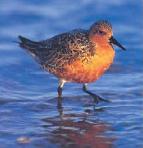
The cases of the dodo and passenger pigeon are classic examples of hunting pressure leading to extinction. But species do not end solely because of hunting, and a reasonable level of predation can be tolerated by most species. The real problems are usually habitat destruction and degradation. A species with a small range or very specific needs is particularly at risk of habitat; this is one reason the destruction of rainforests causes so many extinctions. Long-distance migrants are also at risk because they need habitat for wintering, migration, and breeding. The red knot appears to have been harmed on all three counts, but especially on the vital middle link in its migration route. Climate change, of course, will be an aggravating factor in species loss in the future.

The authors of the piece advise better policies to prevent extinctions.

The new report is not all bleak, Pimm said. "The good news in this report is that conservation efforts are reducing extinction rates to about one bird species every three or four years," he said, but he added that even this improved rate "is still unacceptable."

Of the 9,775 known species of birds, "an estimated additional 25 would have gone extinct during the past 30 years if it were not for human intervention," Raven said.

Despite conservation efforts, "some 1,200 more species are likely to disappear during the 21st century," he warned. "An equal number are so rare that they will need special protection or likely will go extinct, too."

Read the rest.

Friday, June 16, 2006

Early Birds

The oldest known ancestor for modern birds was recently discovered in China and was announced yesterday.

Paleontologists have unearthed the exquisitely preserved fossils ofwhat is the oldest known ancestor of modern birds, a loonlike swimmerand flier that flourished in lake country 110 million years ago in whatis today northwest China.

The fossils included five headless butotherwise nearly complete skeletons that show the outlines of softtissues, including feathers and ducklike webbing between the toes.Researchers said the find suggested modern birds may have evolved fromaquatic ancestors.

An international team led by Hai-lu You, of the Chinese Academy of Geological Sciences, found the fossils, known as Gansus yumenensis, in Gansu province near Changma, a mountain community about 1,200miles west of Beijing. Results of their research are reported today inthe journal Science.

"They were clearly able to fly but were alsoadaptable for swimming and diving," said team member Matthew C.Lamanna, of the Carnegie Museum of Natural History. "We don't know what they ate because we don't have a skull, but the legs and feet are thoseof a diver. He had a powerful kick stroke."

Gansus is being compared in appearance and behavior to modern loons, grebes, and diving ducks, but was actually fairly small. The Post article says it was close to magpies in size; perhaps a murrelet or auklet would be a closer analogy for something that small that spends most of its time on the water. The modern diving birds spend almost their entire lives on the water, some of them coming ashore only to breed.

Grrlscientist has more on the implications of the discovery, and how this fossil fits into the avian lineage. One of the interesting implications is that modern birds evolved from primarily aquatic species after most terrestrial species had become extinct. This is just something that will need to be worked out later.

technorati tags:, , ,