Showing posts with label Habitat. Show all posts

Wednesday, November 21, 2012

How Soon Can Refuges Recover from Sandy?

Damage at Forsythe NWR / USFWS Photo
The Washington Post covers some of the damage that Sandy wrought at national wildlife refuges in the Mid-Atlantic region:
The wreckage at Forsythe and other Northeast coastal refuges was yet another testament to the destructive power of Sandy, the superstorm that ripped up the New Jersey shore and flooded Manhattan. And it drew attention to the costly plans being considered by the federal agency to protect wildlife refuges from the impact of climate change and sea-level rise.

Sandy’s winds rammed a dirt and gravel dike at Forsythe with seawater, causing it to burst. Bay salt water rushed into a shallow freshwater pond created for birds such as the American black duck and Atlantic brant. The usual foot of water in which the birds dip their heads got saltier, rose to five feet and washed out vegetation, so the birds could no longer reach underwater seeds or pick bugs from leaves.

Dozens of refuges between Maine and Virginia were pummeled. Four were damaged severely, including Forsythe, where about 130 boats in the Atlantic City area were blown into marshes, Kahan said.

At Chincoteague National Wildlife Refuge in Virginia, part of the public beach and two parking lots were washed away on Assateague Island. At Prime Hook National Wildlife Refuge in Delaware, a 1,500-foot breach in a dune sent salt water from the Delaware Bay into a freshwater pond where waterfowl eat, nest and give birth, and flooded homes on an island near the refuge. And at the Long Island National Wildlife Refuge Complex in New York, fallen trees blocked the entrance.

Sandy created sea surge powerful enough to reshape portions of the coasts of North Carolina, Delaware and Maryland, and Virginia’s portion of the Delmarva Peninsula, which includes Chincoteague, said the U.S. Geological Survey.

Thirty-five of the region’s 72 refuges were closed after the storm. Six million people per year — many from the District, Virginia and Maryland — visit the refuges, which cover 535,000 acres, and managers acted to protect visitors from “widow-makers,” damaged trees that crash down after storms, a Fish and Wildlife spokeswoman said.

Forsythe still has not reopened. In addition to the busted dike and ruined pond, the wrecked boats appear to be leaking fuel, Kahan said.

Wednesday, October 26, 2011

Boreal Habitats and Birds at Risk

Oscar Lake in the Northwest Territories
©D. Langhorst, Ducks Unlimited
Three conservation organizations (Nature Canada, NRDC, and the Boreal Songbird Initiative) have issued a report discussing the threats to birds in three areas of the boreal forest that are currently coming under increasing pressure from human activity. You can view a quick summary, a press release, or the full report (pdf). The forests and wetlands of the boreal are home to billions of birds from over 300 species, which use the habitats for nesting, and in some cases wintering, territories. That includes more than half of the world populations of 96 species. Alterations to those habitats, especially to water quality, will effect how well they can support bird life. Many species that breed in the boreal forest winter in the United States or further south. Changes in boreal habitats could, in turn, affect how many birds we see during spring and fall migrations.

Major flyways coming out of Canada's boreal forest
©Boreal Songbird Initiative
Here are a few affected areas discussed in the report:
  • In the Hudson and James Bay Lowlands, forests were flooded as part of hydroelectric projects. The area provides breeding habitat for 28 waterfowl, 21 other waterbirds, and 19 shorebird species. Hydroelectric energy is clean in the sense that it does not produce carbon emissions, but it comes with the cost of lost breeding grounds for birds and contaminated fishing areas for native inhabitants.
  • At the Peace-Athabasca Delta, tar sands mining is reducing water quality, and flows have dropped. The delta is recognized as a global IBA and a significant wetland under the Ramsar Convention. It is home to 215 bird species, including the endangered Whooping Crane, which breeds in Wood Buffalo National Park. The delta itself is protected, but the waters flowing into the delta are not, and those upstream activities threaten the productivity of the wetlands downstream.
  • Logging activity in the Lake Superior Watershed is reducing biodiversity and removing important food sources for the millions of birds that live there. Lake Superior is the largest freshwater lake on earth and drains over 49,000 square miles, much of which lies in the boreal forest. Bird species that breed in this watershed include several that depend on spruce budworm outbreaks, which are reduced when timber companies spray with pesticides.
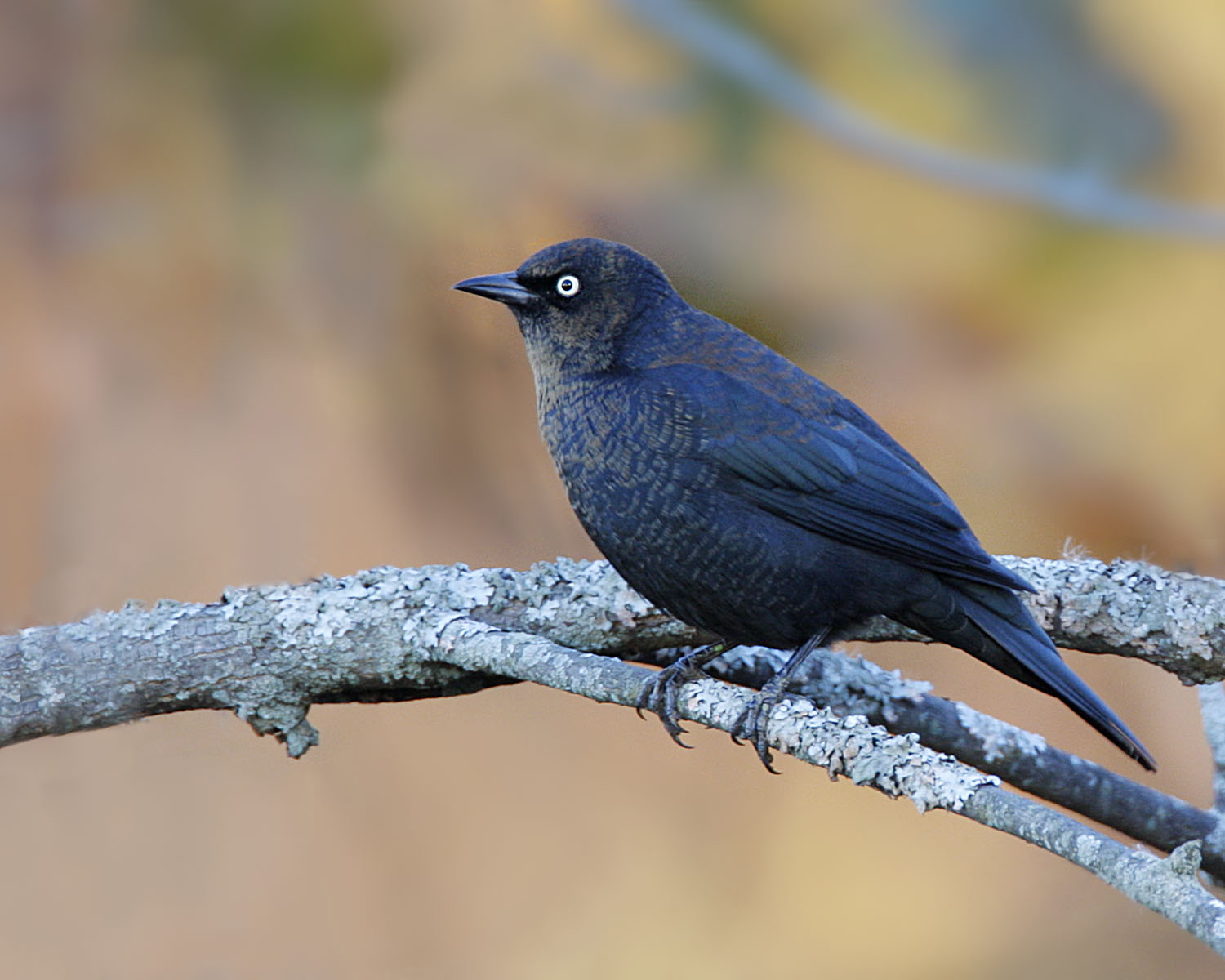
Rusty Blackbird
©Jeff Nadler
The boreal forest provides habitat for threatened species such as the Rusty Blackbird, Yellow Rail, and Whooping Crane. Conserving those and other species will require maintaining human activities in the forests at a sustainable level.

Monday, March 28, 2011

Will Trees Along the Parkway Be Replanted?

If you have traveled the southern portions of the Garden State Parkway at all in the last few years, you will no doubt have noticed the extensive tree-clearing and road-widening underway. Under the state's no-net-loss law, the agency overseeing the project needs to replace the trees being cleared or contribute to a tree-planting fund. However, it looks like the Turnpike Authority is trying to avoid that obligation by reclassifying the tree-clearing from mile 30 to mile 64.5 as routine maintenance rather than preparation for construction.

Officials from the Turnpike Authority say they have lived up to their “no net loss” obligations and plan to continue doing so. But they believe the tree-cutting project may be eligible for exemption since the state’s Division of Parks and Forestry has said the cut trees could classify as a firebreak for the pinelands.

The authority has submitted a plan to the state Department of Environmental Protection to mitigate the loss of wetlands and trees, although it did so only after the clearing work had begun, a breach of etiquette if not of the regulatory process....

In recent months, the Turnpike Authority has repeatedly said the clearing is not part of the $900 million parkway widening project that, when completed, will widen the roadway between mileposts 80 in Toms River and 30 in Somers Point, but rather a maintenance program designed to keep drivers safe and the roadway clear of debris.

Tom Feeney, a spokesman for the Turnpike Authority, told The Press in February that “originally, this was billed as clear zone maintenance for this entire stretch and, also, the northern part was going to be worked into the removal for the widening project. But we’re still in the planning process for the next phase of the widening, and any actual work is so far away that some of the trees will probably have started to grow back by the time work begins on the widening.”

On March 17, Kropp told The Press that the Turnpike Authority submitted a reforestation or payment plan in February for the section of the project that stretches between mileposts 30 and 64.5, but that the plan still had not been reviewed at that time.
The plan originally submitted described the work as minor, in contrast to the clearcutting evident along the Parkway now.
The size of the undertaking is reflected in both the $6 million price tag to clear the trees and in the visual impact of the razed oak, maple, cedar and pine trees. The scene has become familiar to motorists: heavy machinery, specially fitted timber-cutting machines and dump trucks picking their way through long swaths of denuded ground and fallen timber. Piles of woodchips tower more than 20 feet high.

Yet despite the scope of the project, the authority’s environmental impact study, submitted in 2006, describes the work as relatively minor.

“The proposed project will require minor disturbances of vegetated areas. ... In total, 155.58 acres of existing vegetated area will be cleared, of which 88.84 acres will be converted to paved area,” the report reads.

The report states that a majority of the permanent impact will be to the plant and animal habitat in the project area, including those of threatened and endangered species, such as bald eagles, ospreys and Pine Barrens tree frogs. But it states that the loss of habitat is not expected to affect the ability of existing species to successfully breed, forage and hibernate because there is plenty of available habitat space nearby.

Tuesday, December 08, 2009

Copenhagen and Wildlife

BirdLife is requesting five things from the negotiators at the climate conference in Copenhagen.

1. Cut global emissions by the amount needed to limit global average temperature rises to less than 2°C above pre-industrial levels. Developed countries should take the lead in cutting emissions, but rapidly industrialising developing nations must act too. Global emissions must peak and decline well before 2020, and go to 80% below 1990 levels by 2050. Industrialised countries must take on targets of 40% reductions below 1990 levels by 2020.

2. Recognise the vital importance of safeguarding biodiversity, ecosystems and the essential services they provide in climate change mitigation, in particular, reducing emissions from deforestation and degradation (REDD). Tropical deforestation accounts for 15-20% of all human-induced emissions, and must be reduced to zero by 2020. REDD should prioritise conservation of natural tropical forests because they are the most carbon dense, and must exclude conversion of natural forests to industrial forests or plantations. REDD must include provisions which ensure conservation of biodiversity because it is the plants and animals in natural forests that help create their carbon density. REDD must respect, support and promote the rights of local and indigenous peoples.

3. Recognise the vital importance of safeguarding biodiversity, ecosystems and the essential services they provide in climate change adaptation. Healthy bio-diverse environments play a vital role in maintaining and increasing resilience to climate change. Copenhagen outcomes should encompass taking an ecosystem approach to all adaptation, should refer to the direct use of ecosystems as part of a strategy to help people adapt to the adverse effects of climate change, and should recognise vulnerable ecosystems as a priority concern.

4. Provide funding for developing countries to reduce emissions from deforestation, enable adaptation to climate change, and support low-carbon development. At least $200 billion will be needed annually by 2020, including $35 billion for REDD, and $100 billion to enable developing countries to adapt to the inevitable impacts of climate change.

5. Ensure that when developed countries account for their land-use sectors they account fully for carbon emissions to, and removals from, the atmosphere. Current rules enable countries to hide emissions whilst claiming credit for carbon storage, and the rules proposed in Copenhagen are shaping up to be even worse than the old ones.
The link provides a bit more about their reasoning. I think this is a reasonable list, though I doubt this conference will meet the first goal based on reports in the last few weeks. I hope that the other items will be included in some form. Natural habitats are important carbon sinks, and land use changes (especially moving from natural to developed landscapes) are a major source of emissions. That applies as much to landscape development for "green" projects – from LEED-certified buildings to renewable energy sites – as it does to other types of development.

Saturday, May 02, 2009

Top 10 Favorite Wetland Sites

Wetlands are rightly valued for their high levels of biodiversity. In U.S. conservation politics they may perhaps be a bit overrepresented in comparison to other habitat types due to their attractiveness for waterfowl hunting. However, this is hardly their only function. In addition to supplying year-round habitat for numerous resident and migratory birds, wetlands work to improve water quality and protect human settlements from flooding, at least in areas where wetlands are still intact.

Despite their ecological and economic functions, wetlands are constantly under threat. New developments may fragment or burden wetlands with additional pollution. Rising sea levels and land subsidence eat away at coastal sites. Meanwhile, nitrates from fertilizer runoff change the species composition. In recent decades, state and federal governments have slowed the loss of wetlands, but many remain vulnerable.

To celebrate the role of wetlands and raise awareness of the many problems, the EPA has declared May to be American Wetlands Month. So what is a wetland?

Wetlands are the vital link between land and water, where the flow of water, the cycling of nutrients, and the energy of the sun meet to produce highly productive ecosystems with unique plant and animal life. Wetlands may not be wet year-round. In fact, some of the most important wetlands are seasonally dry transition zones. They are among the most valuable, but often least understood, wetland resources.
To celebrate this month, I am creating a wetlands top ten list. These are simply my ten favorite wetland sites out of the places I have visited. As such, they will no doubt leave out vast swaths of the country (and the world), so I invite readers to list their own favorites either in comments or on their own blogs.

Wetlands Top Ten
  1. Great Swamp (NJ)
  2. Kenilworth Aquatic Gardens (DC)
  3. Hughes Hollow (MD)
  4. South Cape May Meadows (NJ)
  5. Cumberland Salt Marshes (NJ)
  6. Blackwater NWR (MD)
  7. Bombay Hook NWR (DE)
  8. Trenton Marsh (NJ)
  9. Jamaica Bay Wildlife Refuge (NY)
  10. Bolinas Lagoon (CA)

Sunday, April 26, 2009

Biofuels and Biodiversity

On Thursday I submitted a post on biodiversity and climate change, important ecological trends that compete for the attention of environmentalists. In at least some cases the two topics are linked, either through the potential effects of climate change or various proposed solutions. An example of the latter is biofuel production, which shares many of the ecological problems of industrial agriculture.

A recent paper by Eggers et al. presents a new method of assessing biodiversity impacts resulting from changing land use due to the production of biofuel crops in Europe, distinguishing between arable (first generation) and woody (second-generation) crop types. In particular, Eggers et al. focus on two questions: (1) what might happen if we doubled the current EU biofuel target of 5.75%, and (2) what might happen if we abolished the current biofuel target. While biodiversity as such includes all forms of life, their impact assessment was restricted to a set of 313 species pertaining to four taxonomical groups.

The results indicate that more species might suffer from habitat losses rather than benefit from a doubled biofuel target, while abolishing the biofuel target would mainly have positive effects. However, the possible impacts vary spatially and depend on the choice of biofuel crop, with woody crops being less detrimental than arable crops. The results give an indication for policy and decision makers of what might happen to biodiversity under a changed biofuel policy in the European Union. The presented approach is considered to be innovative as to date no comparable policy impact assessment has been applied to such a large set of key species at the European scale.
Currently biofuel production uses mostly sugar, corn, or other cereals. Multiple studies have shown that biofuel production using these ingredients produces more greenhouse gases per unit of energy than ordinary petroleum, largely because of the high carbon costs of agriculture. Cellulosic ethanol – fuel produced from wood and grass – may be have less lifecycle impact on the climate, and if this study is correct, will destroy less biodiversity as well. The only trouble is that an efficient process for producing these second-generation biofuels awaits invention.

So for now we face an apparent choice between preventing catastrophic climate change and preserving biodiversity. However, given the problems with the current generation of biofuels, this may not be much of a choice at all. It seems to me that both goals warrant slowing the pace of biofuel production until such time as we have a process with less impact on climate and biodiversity.

As an aside, Nate from The Drinking Bird wrote a thoughtful response to the previous article on climate change and biodiversity, particularly the use of palm oil and desert solar arrays.

Thursday, April 23, 2009

Must We Choose Between Climate Change and Habitat Preservation?

An Earth Day article in Slate argues that the focus on preventing climate change is harming the more important goal of preserving endangered species and their habitats.

Even if we consider the impact of environmental degradation on humanity, deforestation has a more significant and immediate impact on local weather, water availability, water quality, and soil erosion than does global climate change from greenhouse gases. The roots of trees and native brush hold loose, nutrient-rich topsoils together, slowing erosion and absorbing precipitation. You can see the impact of habitat loss on local climate by poking a stick into the parched soils of the Brazilian cerrado or wandering along the boundary of the expanding Sahel Desert in Africa. Then there's Cherrapunjee, India, once considered the wettest place on Earth—and now facing climbing temperatures and water shortages as the once lush landscape has been denuded.

Only recently have conservationists begun to grasp what a debacle it was to enact climate change legislation in Europe without first putting in place global deforestation treaties. EU policies promoting a market for biofuels triggered the destruction of Indonesian rain forests in favor of palm plantations. Meanwhile, the forestry industry has argued that their monoculture plantations in Asia, Africa, and South America deserve credit as carbon sinks, but the data show that these biological deserts are actually spewing out carbon dioxide. We don't have federal climate change legislation in place in the United States, but the Obama administration is pushing for a carbon tax in the new budget. Conservationists now have an apparent ally in the White House, so let's tell him to slow down and get those forest protections in place before the carbon-conscious spill any more blood.

As evidence, the author cites a paper from PLoS Biology from 2007 that compared climate change and habitat conversion as causes for loss of biodiversity. (I discussed what the results meant for birds at the time.) That paper found that habitat loss alone would cause at least as many extinctions as climate change, and it is likely to contribute to most climate-related extinctions. In the high latitudes, habitat changes are being wrought primarily by warming, but in the temperate zones and tropics, economic development and deforestation drive habitat changes.

Those two trends, deforestation and climate change, can combine in particularly nasty ways so that what appears to be "green" may actually be harmful. When trees are viewed solely as carbon sinks, then any tree will do, regardless of how appropriate it is for the local landscape. The same may well hold true for fantastic schemes such as genetically-modified carbon-eating trees if such things existed. In most cases it is preferable to preserve existing forests than to convert wild lands into tree farms for carbon offsets. Numerous studies have shown that natural habitats fix more carbon than even the best artificial ones.

Yet preserving natural habitats is not what dominates the climate change discourse. Instead we have various carbon offset schemes and alternative energy, which can consist of a bewildering array of options depending on the speaker. By far the worst manifestation of this thoughtless approach appears in alternative energy proposals, especially biofuels. Currently biofuels derive from one of three main sources: corn, sugarcane, or palm oil. All of them are grown in monoculture with substantial chemical inputs, and all of them are replacing more and more natural habitat. Fuel from all such sources requires more energy to produce than it releases in burning. As of this writing cellulosic ethanol remains largely theoretical. Despite the negative energy cycle and its consequences for natural habitats, these biofuels are presented as the answer to climate change and insecure oil supplies.

The goal of saving endangered species need not be set aside to prevent climate change. However, we need to abandon many of the "solutions" offered thus far and adopt ones that preserve and expand natural landscapes.

Thursday, July 17, 2008

Good News from the Boreal Forest

A recent study compared breeding populations of 14 songbird species in natural clearings versus recent clearcuts in Canada's boreal forest. The study, published in Avian Conservation and Ecology - Écologie et conservation des oiseaux, found that most of the species were resilient enough to survive and breed in both types of landscapes. A few, however, had significantly lower survival rates or had higher rates of site abandonment in clearcut habitats. Yellow-rumped warbler and ruby-crowned kinglet were particularly sensitive to landscape changes. Despite the resiliency of many species, it is still important to maintain landscapes in as natural a state as possible, especially prime wilderness areas such as the boreal forest.

That is why it is so exciting to see the recent news from Ontario. The provincial government of Ontario just announced that it would preserve half of its Northern Boreal region – 225,000 square kilometers (roughly 87,000 square miles or 56 million acres)! Over the next 10-15 years, government officials will work with scientists and local communities to identify which areas of its boreal forest are in greatest need of preservation and which are most appropriate for mining and logging. The government will also reform its mining law so that future mines will need the approval of local First Nations and will need to share profits with them.

One neat thing about the announcement is that it was inspired in part by a petition sent to the Canadian government on behalf of 1500 scientists. Activism does bring results!

Preservation of the boreal forest is crucial for two major reasons. First, it is one of the largest undeveloped forest and wetland tracts on earth. As such, it gives prime habitat to many animal species, including over 300 species of birds. Many of those birds spend the winter in our area, such as dark-eyed junco and the rapidly-disappearing rusty blackbird, or migrate through like Swainson's thrush. Other bird species, such as gray jay and boreal chickadee, live year-round in the boreal. New York shares 89 species with the boreal forest, and DC has 86 species that breed there.

The second reason is that preservation of the boreal contributes towards a climate change solution. Ontario's Northern Boreal region absorbs 12.5 million tonnes of carbon dioxide per year – roughly 2% of Canada's total emissions. Intensive development in that region would release the carbon that is currently sequestered and reduce the ability of the boreal forest to absorb emissions.

This looks like a win for boreal birds and a win for the planet. I hope that other provinces will follow Ontario's example.

Update (7/21): Ontario continued its environmentalist streak over the weekend by joining the Western Climate Initiative.

Thursday, June 26, 2008

How Singing Helps Warblers Find Breeding Habitat

Spring is accompanied by an explosion of birdsong that lasts well into the summer. Every morning for the past few months I have woken to the sound of a catbird singing outside my window. We are all familiar with the role birdsong plays in the early breeding season. Males sing to win and defend their territories and, in turn, attract females to mate with them. As the breeding season progresses, continued singing by adults helps juvenile birds learn to sing. It turns out that late season singing has one more function: it helps fledglings find appropriate breeding habitat for the following year.

That was the conclusion of a recent study involving one of my favorite birds, the black-throated blue warbler (Dendroica caerulescens). The researchers wanted to test whether social cues, such as late season birdsong or the presence of fledglings, helped other birds determine which sites had the best potential for breeding.

They set up 54 test sites in White Mountain National Forest in places with inappropriate habitat (to eliminate the possibility that birds followed vegetation cues rather than social cues). At the end of the breeding season in 2006, each site was given one of three treatments: left alone (a control group); song playbacks with male decoys (location cues); song playbacks with male decoys, plus female decoys attending fledgling decoys with with playbacks of begging calls (public information).

That summer, the researchers checked all three types of sites for the presence of black-throated blue warblers that might be looking for future breeding habitat. Sites with an artificial social cue were more likely to receive visits from fledgling warblers than the control sites. Both males and females were observed at the test sites.

The following year (2007), researchers conducted point counts at the test sites to check for warbler activity. Male warblers were far more likely to set up territories at sites where they had heard playback of territorial songs or fledgling calls the year before than at control sites. Females seemed to follow the presence of males; females were observed only at test sites where a male warbler was present.

Since warblers were equally likely to return to sites with location cues (song playback) and public information (song playback and dummy nests), the researchers surmised that late-season birdsong alone was a reliable indicator of good nesting habitat. To test this, researchers checked 60 known warbler territories for singing males.

Song frequency within territories was positively correlated with reproductive success, but only towards the end of the period observed.... By late in the breeding season (31 July), singing was 5.1 times (95% CI: 1.89-22.28) more likely on territories that successfully fledged young than those that did not. Conspecific song in the post-breeding season was therefore a reliable indicator of breeding success.
This result may be of interest to birders who volunteer for breeding atlases or other types of nest surveys.

Birdsong turns out to be a complex and powerful communication tool. For a short-lived species such as the black-throated blue warbler, which has to migrate thousands of miles between its wintering and breeding grounds, individual birds have relatively few chances to produce offspring. Reliance on a social cue like birdsong helps young birds avoid making some nesting mistakes in their first breeding season. They thus can produce more offspring over the course of their lives. It also holds advantages for the species as a whole, since local populations will be able to adapt more quickly to changes in their environment.


Matthew G. Betts, Adam S. Hadley, Nicholas Rodenhouse, and Joseph J. Nocera, "Social information trumps vegetation structure in breeding-site selection by a migrant songbird." Proceedings of The Royal Society B (online edition, published June 17, 2008). doi:10.1098/rspb.2008.0217

Saturday, March 22, 2008

Restoring Dyke Marsh

Dyke Marsh, just south of Alexandria (VA), provides valuable habitat in a vulnerable location. Marsh wrens and least bitterns nest there during the summer; both species are rare that close to D.C. Because it is so small, the marsh is constantly threatened by human activity and natural forces. In 2003, it took a beating from Hurricane Isabel, which destroyed the boardwalk and dumped its remnants at various places around the marsh. According to a Post article today, the National Park Service is working on restoring the marsh's habitat.

The National Park Service is beginning a $500,000 environmental impact study of how to restore and preserve the 485-acre marsh just off the George Washington Memorial Parkway in Virginia. The wetlands, prized by birders, naturalists and bicyclists who pass by on the Mount Vernon Trail, are home to painted turtles, water snakes, orioles and tundra swans.

Congress authorized the study last year in an effort to halt erosion from natural and man-made causes. Details on the study's scope are still being determined, but it could look at the effect of heavier water taxi traffic and other activities such as boating, fishing and kayaking.
For more on the marsh and its habitat, visit the Friends of Dyke Marsh website.

Thursday, October 25, 2007

Burning Chaparral

Chaparral is one of the primary plant fuels for the continuing wildfires in southern California. The Wall Street Journal interviewed an advocate for low-impact fire prevention in chaparral areas.

The founding director of the California Chaparral Institute, Mr. Halsey has spent four years defending the existence of chaparral, the term given to the wide varieties of shrubby plants, trees and bushes that dot the region's hilly landscape. His Web site, Californiachaparral.com, celebrates its diverse plant life, seasonal ponds that gleam like "liquid sapphires" and birdlife that includes bushtits and towhees.

"I awaken each morning to a view of old-growth chaparral coating a nearby mountain like a carpet of green velvet," he writes. "The first sound I usually hear is that of the wrentit, a secretive, little bird with a descending whistle that mimics the beat of a bouncing Ping-Pong ball."

On Tuesday, Mr. Halsey found himself standing on the roof of his century-old home, garden hoses at the ready, as wildfire spread across the chaparral and torched houses a quarter-mile away. The Witch Fire, as the conflagration was named, was bearing down on his town of Escondido, Calif., just northeast of San Diego, feeding off the bushes Mr. Halsey has fought to save.
The whole article is worth a read, as a look at the issues in fire prevention in California's natural areas.

Monday, October 08, 2007

Threats to Northeastern Forests

Speaking of invasive species, the Times profiled some of the threats facing the widespread forests of New Jersey, New York, and Connecticut. While the acreage covered by forests has increased over the past century, the composition of forests is changing. Many forests occur in smaller plots, many are losing their understory, and invasive plants are replacing native ones in many locations.

From state to state and forest to forest, the situation is variable and dynamic. “There is a lot of healthy forest left,” said Dr. Joan Gardner Ehrenfeld, an expert on invasive species who is a professor in the Department of Ecology, Evolution and Natural Resources at Rutgers University.

But in some areas, multiple threats “are coming together as a sort of a perfect storm,” she said. “There are too many different problems all converging at the same time in the same place, and the multiple effect makes the situation all the more serious.”

These threats, experts say, include suburban sprawl, the impact of marauding invasive plants and insects, climate change and not only acid rain but also, contrarily, lack of rainfall. But in many locales, the implacable browsing of deer on young trees is killing replacement saplings, depleting shade and promoting the growth of invasive plants that smother native species.
The various threats are interwoven. Sprawl leads to forest fragmentation, which in turn encourages invasive plants to proliferate. The overpopulation of white-tailed deer also makes it harder for native plants to survive and easier for invasives to take over. Some invasive plants are distasteful to deer, while the native plants are not.
In some areas the impact is so profound “that it looks like someone took a brown crayon and used a ruler to draw in a brown line and a green line,” Dr. Ehrenfeld said. “The green above stops at a steady line at the height that deer can reach.” Increasingly, “suburbia is uniquely designed to grow and harbor deer,” Ms. Sauer said, “because lawns and flower gardens are high-quality deer delis, and the deer are safe from hunters.” She added, “We have created a physical environment where there is no limit to their growth.”

Forests can heal themselves when they have a population of 5 to 10 deer per square mile, “but now 35 per square mile is common, it’s well over 50 in some places, and in a few places in New Jersey it can be 250 or even more,” Dr. DeVito said. “One overabundant species is sacrificing thousands of other species. We have to recognize that, and deal with it.”

....

And newer invasives are perennially joined by older stalkers. This year some 320,000 acres of New Jersey trees were defoliated by gypsy moth caterpillars, the most since 1990, when more than 431,000 acres of trees experienced leaf loss. A growing concern is the appearance of kudzu, a climbing perennial vine that can reach heights of close to 100 feet and has caused hundreds of millions of dollars in damage to Southern woodlands.
The disappearance of forest's understory and the proliferation of invasives changes the types of animals that can survive there.
Still, some forest managers fear a future of “boring forests” or “trash forests,” with fewer hardwoods and more species like ailanthus and cottonwoods that may transform the region’s wildlife population.

In the worst case, “we are looking forward to forests that look like the landscapes of vacant lots,” Ms. Sauer said. “Alien species, and no complexity. And that level of simplification will affect birds, mammals, butterflies, everything.”
So what types of birds might be affected? The primary impact would be felt by birds that depend on a rich understory for nesting or foraging. These include most thrushes, many warblers (including ovenbirds, black-throated blue warblers, and Kentucky warblers), and fox sparrows, among others. Even some canopy-dwellers, such as cerulean warblers, start to disappear when the understory is lost or degraded. Studies have shown that deer exclosure plots and forests with lower deer density have higher plant and bird diversity.

Most forests profiled in the article will continue to exist for the foreseeable future. They occur on large tracts protected as federal or state public lands for conservation and recreation. What they look like in the future will depend on how well the current threats can be managed.

***

Birders can help with the problem to some extent. One way is to volunteer for invasive species control efforts, if they are available locally. Another is to be careful to use native or noninvasive species for plantings around the home. Here is an invasive plant identification key, and here are tips for control and removal. Local native plant societies can provide recommendations for what to plant and where to find them. Here are lists of sources for native plants for New Jersey and Maryland, for example.

***

One nonnative invasive tree highlighted by the Times is the norway maple. These tall shade trees have a wide and dense canopy that blocks out most sunlight and rainfall from reaching the ground. As a result, it is difficult for any other plants to grow underneath them. Like a true invasive, norway maples are prodigious breeders. The trees produce seeds (pictured left) twice annually; the lightweight seed packets spread easily.

Norway maples are widespread in Central Jersey. When I was growing up, they seemed to be our characteristic maple. Since then I have learned better and look on them quite differently.

Tuesday, August 28, 2007

Disappearing Marshes in Delaware; Bay Grass Data Destroyed in Maryland

Delaware's coastal marshes are falling the rise in sea level.

In some areas, the marsh is disappearing. At the 16,000-acre Bombay Hook National Wildlife Refuge, for example, as much as 1,160 acres of interior marsh has vanished since 1979. In its place: water. ...

"It's approaching a crisis at the refuge," said David Carter, environmental program manager with the Delaware Coastal Management Program. "We're really looking at an early indication of problems."

Scientists in Delaware and throughout the region are trying to figure out why some salt marshes -- both here and elsewhere in the mid-Atlantic -- are thriving and others are in trouble. ...

Tidal salt marshes are one of Delaware's most unique and valuable ecosystems, providing a refuge and forage area for dozens of bird species, a nursery ground for fish and a habitat for muskrats. But once inundated with water, the grasses -- the glue that holds the wetland together -- die off. Without the grass, sediment slips away and the marsh disappears. Once the marsh is gone, upland residents lose a natural sponge that helps minimize flooding and a filter that buffers the impact of pollution on the Delaware Estuary.

Once a wetland is gone, Carter said, it is expensive and difficult to bring it back. One possible fix may be to spray sediment over the marsh, much like sand is added to the beach to compensate for erosion and rising sea level. Carter said more work is needed to better understand where Delaware's troubled salt marshes are and how best to restore and repair them.
Two researchers lost 30 years worth of data on the Chesapeake's bay grasses in an office fire.
Bay grasses are crucial habitat for crabs, small fish and other marine life. They were once so plentiful that boaters routinely complained to natural resources officials that the plants were clogging their propellers. But since 1972, when Tropical Storm Agnes dropped millions of tons of sediment into the bay, the grasses have struggled for life against an increasing tide of pollution and runoff. ...

Investigators from the state fire marshal's office have not determined what caused the blaze, which caused an estimated $550,000 in damage at the sprawling Horn Point scientific campus along the Choptank River. ...

The 25-foot-by-40-foot trailers, meant to be temporary offices and to house computer equipment, had become fixtures since they were installed in the mid-1980s, said laboratory director Michael Roman. With data and backup servers stored in one of the buildings, the researchers never imagined a fire would destroy both trailers, which sat about 10 feet apart.

"As a scientist, you collect data, write it in a notebook, then type it into a computer," Roman said. "There's no question that their research was irreplaceable. It's hard to resurrect."

Sunday, August 12, 2007

Palmyra Cove

New Jersey Audubon is fighting a plan to dump dredge spoils in Palmyra Cove, a nature preserve near the Tacony-Palmyra Bridge. This email was sent to the JerseyBirds list:

Commissioner Jackson has called a public information session regarding the dredge spoil plan for Palmyra Cove Nature Park for this coming Monday, August 13th, at 10am at the Burlington County Bridge Commission's Offices (see address below). The meeting will likely be moved the the Palmyra Cove Nature Center because of the large crowds that the meeting is expected to draw. The commissioner has called the meeting to explain the need for Palmyra Cove to accept dredge material and to outline the plan for this project. There will be an opportunity for the public to ask questions. The most recent plan that I am aware of calls for use of 10 acres of the Park for dredge material. This plan requires that the 2 wetlands and existing vegetation near the site not be disturbed. Although this sounds like a good compromise in comparison with the original plan of 90 acres, we are not given any guarantee that ACE will return for the additional 80 acres.
There is a little more on the issue here and here. I do not have a strong opinion on the case since I do not have adequate knowledge of the context. If you do have an opinion on the case, Monday's meeting is a chance to express it; alternately, try writing to a state official or the Bridge Commission.
Burlington County Bridge Commission
1300 Route 73 North
P.O. Box 6
Palmyra, NJ 08065

Tuesday, July 17, 2007

Is Backyard Habitat Illegal?

Conservation organizations encourage homeowners to maintain their properties as if they were wildlife preserves. The National Wildlife Federation provides certification for qualified backyards as wildlife habitats. Audubon at Home also provides advice along similar lines. Other organizations, like the Maryland Native Plant Society, provide resources for finding and growing native plants.

While this is good for wildlife, it can create conflicts with the local community. In some cases, the municipality intervenes; in other cases, the trouble may come from a homeowners association. The latest case comes from Edgewater Park, New Jersey. A woman had planted her property with native plants to attract birds, butterflies, and other creatures.

Wozniak said she moved to the neighborhood six years ago and has made an effort to comply with repeated notices from the township to clean up her property.

She removed a garbage can that was filled with birdseed from her front porch. She took down a shed that the township believed was in disrepair. She raked up piles of pine needles in her back yard.

Last month, however, the municipal property-maintenance inspector, Charles Gant, sent her a warning letter.

“Your property has become (a) blight to your neighborhood, with its overgrown landscaping, bushes and weeds,” the letter states. “There is accumulated debris and is in an unsafe condition.”
She has to appear in court on charges of "obnoxious growth." The township cited two reasons for concern:
Dougherty said mosquitoes gather in areas that are “not kept up,” and those insects can carry West Nile virus....

Dougherty said Wozniak's yard would be better suited in a country setting, not in a residential community.

“We are very much concerned about the impact of this property on the community and the nonconformity of her property compared to the properties around her,” she said.
The issue of property conformity appears frequently in these types of cases. (For comparison, see this case from Utah in which a woman was arrested for not watering her lawn.) Townships may have some legitimate reasons for enacting and enforcing weed laws. True neglect of a property could result in health and safety problems or lead to the spread of invasive species such as kudzu or ailanthus.

However, too often weed laws seem to be enforced to impose arbitrary standards on properties that simply look different. These standards reflect an understanding of humans and nature as fundamentally antagonistic; any vegetation that is not carefully controlled is a weed and an eyesore. Natural landscaping does not pose the same problems foreseen in weed laws; the commonly-cited defenses of weed laws such as vermin, mosquitos, and allergenic pollen are more likely on a manicured lawn than in a natural garden. Instead, natural landscaping adds value to the neighborhood by increasing biodiversity in the midst of suburban monoculture. Weed laws and their enforcement ought to be reformed to account for a better understanding of ecology.

For a thorough explanation of natural landscaping and weed laws (and how to defend against prosecution), see this article on the EPA website. It refutes most of the common arguments against natural landscapes and describes their relation to Aldo Leopold's Land Ethic. See also this discussion of natural landscaping and urban planning.

Thursday, July 12, 2007

Duck Stamps for 2007-2008

Federal Duck Stamps for 2007-2008 are now on sale at duckstamp.com and from the Postal Service. Ninety-eight percent of the funds raised from duck stamp sales goes directly to preserving habitat through the National Wildlife Refuge System. Beneficiaries include refuges such as the Great Swamp, Cape May, and Forsythe refuges in New Jersey; Montezuma in New York; John Heinz (Tinicum) in Pennsylvania; Bombay Hook in Delaware; Patuxent, Blackwater, and Eastern Neck in Maryland; and Chincoteague and Great Dismal Swamp in Virginia. There are many others, as well.

Purchased of the stamp is required for hunters. Birders are encouraged to purchase the stamp as well. The entrance fee at National Wildlife Refuges is waived for birders who possess a valid duck stamp.

Monday, June 18, 2007

Wood Thrushes in Decline

The wood thrush has lost 43 percent of its population over the past 40 years, making it a species of conservation concern. As with other species in decline, the main culprit seems to be the loss and fragmentation of woodland habitats, largely due to development. Ongoing research at the University of Delaware compares the breeding success of wood thrushes at a university woodland preserve and in a nearby neighborhood.

Roth discovered that loss of habitat hasn't deterred the remaining wood thrushes from summering in Delaware. However, many must try to breed in less than desirable conditions; in the 1980s, Roth studied a sizable population of wood thrushes in the wooded Newark neighborhood of Arbour Park. These birds had the usual two to three nests with three to four eggs per year, but raised significantly fewer young than wood thrushes breeding in the UD Woods, located just two miles away. And, unlike the thrushes at the UD Woods, few of the banded adults in Arbour Park returned there the next year, which was more likely an indication of bird dissatisfaction than mortality.

"UD Woods' leaf litter fosters excellent food resources, such as larval and adult insects, earthworms and millipedes. And on the edge of the woods, the birds can forage for berries from spicebush, elderberry and other shrubs," notes Roth. "A suburban neighborhood often doesn't provide such an abundant food supply, much less native trees and shrubs for nesting and shade."

While many nests were lost to predation at Arbour Park, the nests there also were more frequently parasitized by the brown-headed cowbird. It lays its eggs in the nests of wood thrushes and some other song birds, often removing a host's egg for each one laid. The unwitting host incubates the cowbird eggs and feeds the cowbird chicks along with her own. The negative effect on wood thrushes is the loss of eggs.

"Cowbirds are more apt to parasitize nests in small forest fragments, wooded neighborhoods and other edge habitats created by humans than in deep deciduous forests, where the wood thrush thrives," says Roth. "Don't blame the cowbirds; we created the favorable conditions for them."

Tuesday, March 06, 2007

Help Boreal Birds

Yellow-rumped Warbler / Photo by Donna Dewhurst (USFWS)

The Boreal Songbird Institute is looking for working scientists to support a petition to the Canadian government on behalf of boreal birds. Boreal birds that visit our area include common loons, horned grebes, merlins, short-billed dowitchers, ruby-crowned kinglets, hermit thrushes, yellow-rumped warblers, palm warblers, swamp sparrows, white-throated sparrows, dark-eyed juncos, rusty blackbirds, and many others. Preserving their habitat helps ensure that these species will continue to visit our area during migrations and winter. From their site:
The Canadian Boreal region, stretching from Yukon across the continent to Newfoundland, contains some of the world 's most intact forests and wetlands. It represents both an unprecedented conservation opportunity and a place at great risk as a frontier for extractive natural resource industries. Already much of Canada's southern Boreal has been allocated for resource development. It is increasingly clear that the window for conserving the ecological integrity of the region is limited.

Recently over 100 Ph.D. scientists from Canada, the U.S., and throughout the world signed the letter below to urge Canadian policy makers to recognize the importance of the Boreal and their responsibility for its protection.

We invite scientists to sign the letter to show the Canadian government and the world that the scientific community, as represented by hundreds of scientists, recognizes the Boreal as one of our world 's last great conservation opportunities.
If you fit this description, visit the link to read the letter and sign the petition.

Monday, December 04, 2006

Border Security and Wildlife Migration

During the past year, concerns over illegal immigration led Congress to pass a bill authorizing a 700-mile double-layer security fence along the border between the United States and Mexico. The idea was to create an impenetrable barrier that would prevent people from crossing the border on foot or by vehicle except at authorized passage points. Unfortunately the wall may well obstruct migration for many animals, especially land-bound species. Our southwest border sits astride a major migration route for animals that winter in Mexico and farther south.

The linked article cites a few sites that may be affected by the border fence.

By Mr. Merritt's estimate, some 275 river miles – 150 aerial miles – of habitat now run through and between federal, state and private refuge tracts in South Texas. Among the tracts:

•The Lower Rio Grande Valley National Wildlife Refuge totals some 90,000 acres across 125 tracts from Falcon Reservoir to the Gulf of Mexico. Its goal is a 132,500-acre continuous corridor along the Rio Grande, complementing city, county and privately owned greenbelts. The refuge is host to 484 species of birds and more than 300 species of butterflies.

•The federal government returns some 800 acres of South Texas refuge land each year to native brush. Just two days after Mr. Bush signed the fence bill, 800 schoolkids, Boy Scouts and other volunteers planted more than 14,000 seedlings along the river in Hidalgo County as part of this year's Rio Reforestation effort.

•The 2,000-acre Santa Ana National Wildlife Refuge near Mission, considered a hot spot for rare species seen nowhere else in the United States.

•Bentsen-Rio Grande Valley State Park near Mission, home of the World Birding Center and NABA's International Butterfly Park, are two other refuges that have collected millions of dollars in government and private grants to expand territory near the border.

The managers of these federal and state refuges are working together to ensure that their concerns are part of the planning process. Whether they will be given much weight remains to be seen.

Monday, November 06, 2006

Maryland Will Buy Blackwater Property

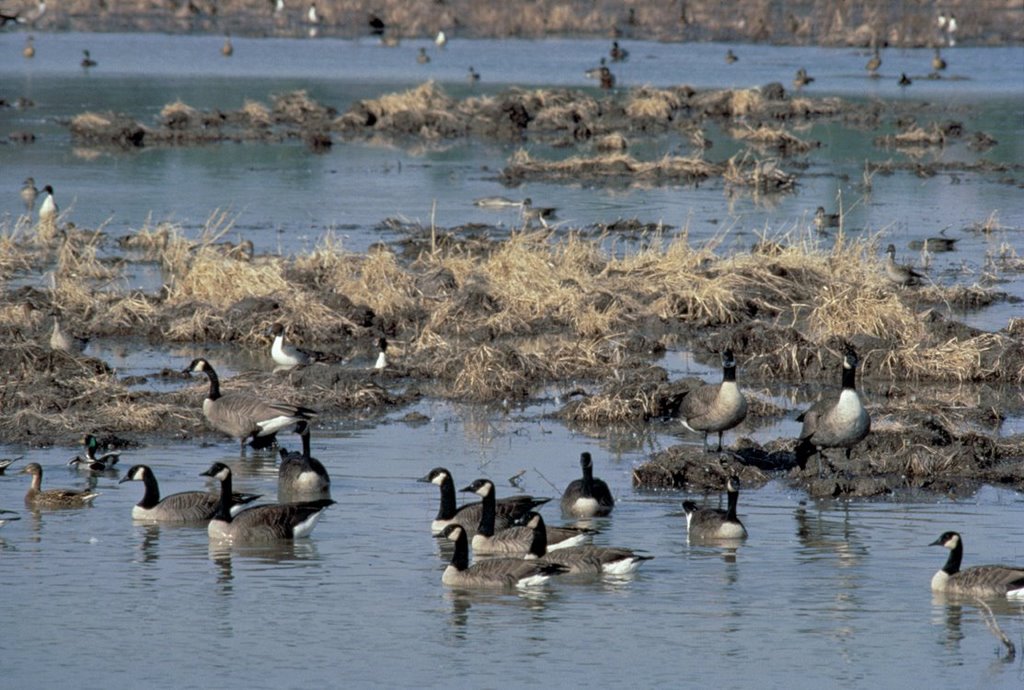
Waterfowl at Blackwater (USFWS)

For the past year, environmental groups on the Eastern Shore have been fighting a proposed development near Blackwater National Wildlife Refuge. The development would have occupied 1,080 acres in the watershed of the Little Blackwater River. The site would have held a golf course, hotel and conference center, and 2700 homes. (See here and here for background.) Today Maryland announced that it will use conservation funds to purchase most of the land upon which the development would have been built.
The state will spend up to $10.4 million to buy 754 acres of about 1,080 acres of what is now mostly farmland. A developer, Duane Zentgraf, originally planned to build thousands of new homes plus a golf course and hotel on the land.

Today's agreement, subject to an appraisal and final state approval, leaves room for 675 homes, most of them for older adults only. A golf course, hotel and conference center originally planned have been scrapped.
The announcement represents a victory for conservation and smart growth advocates, and for the wildlife that depends upon the refuge and its surroundings for habitat.