Showing posts with label Kenilworth. Show all posts

Saturday, April 25, 2009

Tree Planting at Kenilworth

Planting Trees / White House PhotoIn honor of Earth Day, the Obamas, Bidens, and Bill Clinton visited Kenilworth Aquatic Gardens in Washington, D.C., to plant trees.

President Barack Obama, First Lady Michelle Obama, former President Bill Clinton, Vice President Joe Biden and Dr. Jill Biden planted trees with the Student Conservation Association in a muddy marsh beside the Anacostia River at Kenilworth....

The SCA leader, Amtchat Edwards, said they were planting trees to protect the river and, by extension, the entire watershed as a service project.

Clinton had a fundraiser to get to, but ended up staying to plant two trees, saying that service is important to him. "That's why I got into politics," he said.

The First Lady picked out the biggest tree to plant. "Look how big our tree is, honey," she called out. President Obama chose to plant a smaller tree with purple flowers.
There is a bit more on the event at the Post.

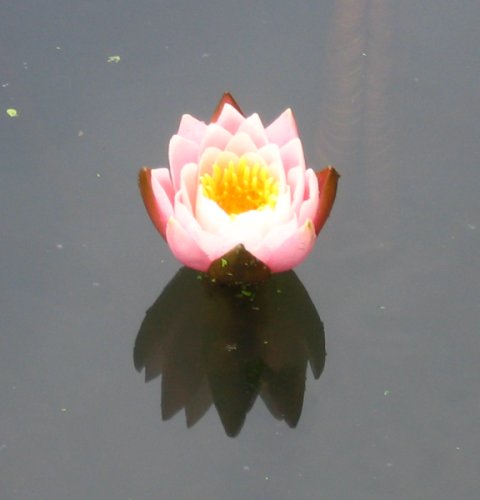
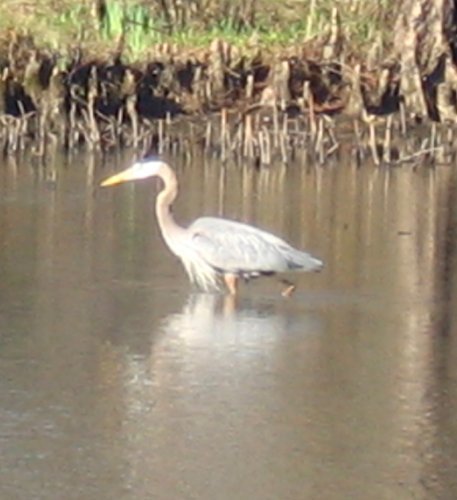
Kenilworth is one of my favorite birding spots in D.C. (perhaps second to the Arboretum), so I am pleased to see it getting some positive attention. The gardens tend to receive the most visitors in midsummer, the peak blooming season for its many waterlilies and lotuses. Founder's Day in July tends to be especially crowded. Now is actually an excellent time to visit, as crowds will be smaller and spring bird migration is underway. Plenty of shorebirds and herons ought to be passing through right about now, and at least some waterlilies will be blooming.

White House Photo by Pete Souza
Saturday, July 21, 2007

Lotuses and Lilies at Kenilworth

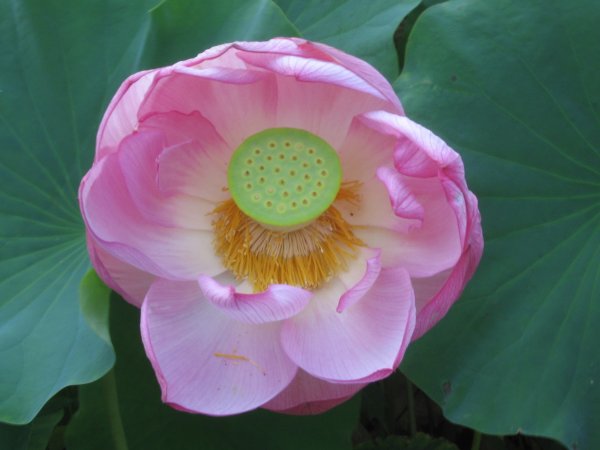
During most of the year, Kenilworth Aquatic Gardens is one of the quietest spots in the District. Relatively few residents know about it, and even fewer visit, so one can spend an entire morning there and only meet a handful of people. Then for a brief period in the middle of summer, the park turns into a bustling hub of activity as people from around the area visit to see the waterlilies and lotuses at their peak.

The park was already full of people when we gathered this morning for DC Audubon's bird walk in honor of today's Waterlily Festival. Many serious photographers were already in attendance to catch lotuses in full morning light. This year's festival seemed better attended than last year's, perhaps due to the Post article earlier this week.

Sadly, we missed the yellow-crowned night heron that has been spotted in the Gardens over the past few weeks. We saw (or heard) most of the local breeding birds, especially eastern kingbirds, red-winged blackbirds, common yellowthroats, very young robins, and barn swallows. One flock of cedar waxwings flushed from within the aquatic vegetation in the marsh; usually I associate those with fruit trees but apparently they like marshes as well. A lone greater yellowlegs in the marsh marked the beginning of fall migration. We saw two raptors - the resident red-shouldered hawk chasing a crow (usually it's the other way around!) and an osprey carrying and then eating a fish.

BIRD SPECIES: 33

Great Blue Heron
Canada Goose
Mallard
Osprey
Red-shouldered Hawk
Killdeer
Greater Yellowlegs
Mourning Dove
Yellow-billed Cuckoo
Chimney Swift
Downy Woodpecker
Pileated Woodpecker
Eastern Phoebe
Great Crested Flycatcher
Eastern Kingbird
Tree Swallow
Barn Swallow
Cedar Waxwing
Carolina Wren
Gray Catbird
Northern Mockingbird
Brown Thrasher
American Robin
Blue-gray Gnatcatcher
European Starling
Red-eyed Vireo
Common Yellowthroat
Song Sparrow
Northern Cardinal
Blue Grosbeak
Indigo Bunting
Red-winged Blackbird
Common Grackle

Thursday, July 19, 2007

Kenilworth's Lilies Near Their Peak

This week the Washington Post ran an article about one of Washington's hidden treasures, Kenilworth Aquatic Gardens. Kenilworth is the only site in the National Park Service that is dedicated to the propagation and display of aquatic plants. As such, it is a unique resource, but one that few DC residents seem to know about. The article describes the park's site and origins:

The gardens are nestled between the Anacostia River and the Anacostia Freeway, just south of New York Avenue traffic that drones like a guilty conscience. They're the creation of a one-armed Civil War veteran. Walter B. Shaw, who in the 1880s worked as a clerk at the U.S. Treasury Department, bought 30 acres along the Anacostia and planted a few wild waterlilies in an unused ice pond. Soon, he and his daughter were importing lilies from the Orient, Nile and South America and developing varieties. After the ugliness of war, he created a life of beauty.

By the 1920s, thousands of visitors were regularly stopping by to see the waxy blossoms and wide saucerlike lily pads. In 1938, the federal government bought the land and turned it into a park, preserved to this day pretty much as it was. It's a refuge for birders and weekend photographers, wetlands aficionados and college students who periodically come to study.
Aside from its spectacular aquatic plants, Kenilworth is also home to many bird species, which make it a DC hotspot. (I have written about bird walks in Kenilworth several times on this blog.) The Post reporter was impressed by the bird life she encountered:
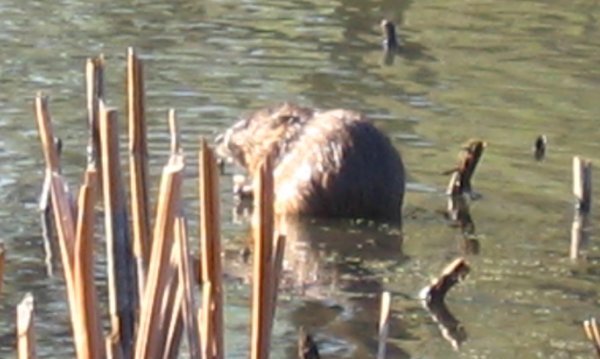
Life and beauty teem here. Frequent summertime bird sightings include great blue herons and chimney swifts, Eastern phoebes and indigo buntings, song sparrows and gnatcatchers. Enter the gardens by foot, and the air both stills and turns loud: City sounds dim. Insects chirr and fiddle. Songbirds are a symphony. The resident beaver has dug a channel across the river to his dam.

Surely, paradise is like this, visitors must think.
I know that feeling of tranquility very well. While you are in those gardens, it is easy to forget that you are in a major city.

Summer tends to be a slow period for birding at the gardens; I generally find winter and spring to be the best for finding birds. However, this is a great time of year to visit (despite the heat) because the gardens will be at their peak blooming stage. This Saturday the Aquatic Gardens is holding its annual Waterlily and Founders Day Festival from 11-2. The event will be preceded by a DC Audubon bird walk at 8 am. For more details, see here.

Wednesday, April 25, 2007

Migrants at Kenilworth

On Sunday I visited Kenilworth Aquatic Gardens with the DC Audubon Society. We had a good turnout, as is common with local trips. A smaller group visited Kenilworth Park to look for open country birds later in the morning.

As you can see from the list below, the day was very good for sparrows and hawks. We were treated to great looks at ospreys from several locations in the park, including two occasions to watch an osprey eat fish. Bald eagle sightings included both an adult and an immature. The lone harrier was high in the sky and headed northward. A male kestrel perched for a short time at Kenilworth Park and performed some aerial acrobatics for us.

Field sparrows sang at several locations in and around the aquatic gardens. Several members of the group had an obscured look at one on the river trail. Swamp sparrows were more cooperative, with at least one coming out of the bushes and foraging on the open ground where we all could see it. One swamp sparrow sang a couple sweet trills. Our savannah sparrow turned up in Kenilworth Park. It flew in and out of tufts of grass on the football field. Though mown fairly short, the grass is just high enough to hide a small sparrow.

Other birds included a palm warbler and an early ovenbird. Most of the group had good looks at a flock of rusty blackbirds near the nature center. These charming icterids are no longer rusty but still clearly recognizable for their yellow eyes and short tails.

Migratory birds are clearly moving through in good numbers now, so it is time to get out and look for them.

BIRDS SEEN: 52

Double-crested Cormorant
Great Blue Heron
Canada Goose
Mallard
Osprey
Bald Eagle
Northern Harrier
Cooper's Hawk
Red-shouldered Hawk
Red-tailed Hawk
American Kestrel
Greater Yellowlegs
Solitary Sandpiper
Ring-billed Gull
Rock Pigeon
Mourning Dove
Chimney Swift
Belted Kingfisher
Red-bellied Woodpecker
Downy Woodpecker
Northern Flicker
Eastern Phoebe
Tree Swallow
Barn Swallow
Ruby-crowned Kinglet
Carolina Wren
Northern Mockingbird
Brown Thrasher
Eastern Bluebird
American Robin
Blue-gray Gnatcatcher
Carolina Chickadee
Tufted Titmouse
American Crow
Fish Crow
European Starling
Yellow-rumped Warbler
Palm Warbler
Ovenbird
Chipping Sparrow
Field Sparrow
Savannah Sparrow
Song Sparrow
Swamp Sparrow
White-throated Sparrow
Northern Cardinal
Red-winged Blackbird
Rusty Blackbird
Common Grackle
Brown-headed Cowbird
American Goldfinch
House Sparrow

Sunday, April 01, 2007

Early Spring Birding at Kenilworth

This morning I birded at Kenilworth Aquatic Gardens for the first time in a while. The gardens were quiet as usual. Except for the walk to and from the Deanwood Metro station, and the occasional low-flying helicopter, I would hardly know I was in a city while I was there. Today was overcast and cold, so the birds seemed a bit less active than yesterday.

The area around the lily ponds was mostly quiet, but the activity picked up near the boardwalks. I spotted a bald eagle as it landed in some trees on the other side of the marsh. Near the boardwalk junction, two eastern phoebes were gathering nesting material. It looked like they were building a nest under the boardwalk, but I cannot be sure. Also near the junction, I was surprised by a beaver, which was swimming and slapping its tail on the water close to the boardwalk.

Out in the marsh, a couple ospreys called and wheeled overhead. Swallows also have returned to the marsh. I saw more northern rough-winged than tree swallows. A few northern rough-winged swallows flew so close to the boardwalk that my binoculars couldn't focus on them. Wood ducks were busy flying back and forth. A few jet-black double-crested cormorants were perched on a log.

As I started down the river trail, a small flock of northern pintails flew overhead. (This was the first time I have ever seen pintails in D.C.) On either side of the trail there were singing sparrows - mainly white-throated, song, and swamp. Carolina chickadees were singing, and even a winter wren broke into song. Close to the end of the trail, a hermit thrush sang, but weakly, and I saw the largest group of yellow-rumped warblers that I have seen in the District all year.

Sure enough, northern flickers were abundant, though I did not see as many as I saw yesterday at the Arboretum.

SPECIES SEEN: 40

Double-crested Cormorant
Great Blue Heron
Canada Goose
Wood Duck
Mallard
Northern Pintail
Osprey
Bald Eagle
Red-tailed Hawk
Killdeer
Ring-billed Gull
Rock Pigeon
Mourning Dove
Yellow-bellied Sapsucker
Downy Woodpecker
Northern Flicker
Eastern Phoebe
Tree Swallow
Northern Rough-winged Swallow
Carolina Wren
Winter Wren
Northern Mockingbird
Eastern Bluebird
Hermit Thrush
American Robin
Carolina Chickadee
Blue Jay
Fish Crow
European Starling
House Sparrow
Yellow-rumped Warbler
Chipping Sparrow
Song Sparrow
Swamp Sparrow
White-throated Sparrow
Dark-eyed Junco
Northern Cardinal
Red-winged Blackbird
Common Grackle
Brown-headed Cowbird

Monday, August 14, 2006

Shorebirds at Kenilworth

Since low tide was early this morning, I headed over to Kenilworth to check for shorebirds. I got there when it opened, and very few other people were around aside from the garden staff. The aquatic plants are still in bloom, but most lotuses have already lost their petals.

The best perspective on the marsh for shorebirding is from the end of the river trail. For whatever reason, shorebirds seem to prefer the mudflats over there to the ones near the boardwalk trail. This morning I saw greater and lesser yellowlegs, spotted sandpipers, and lots of killdeer. That is not bad for D.C., but I had been hoping to spot another species or two.

There were many green herons in the gardens this morning. Most seemed to be hatch year birds. They gave a higher-pitched call than the adults when they flushed. As I walked through the impoundments, at least five flew up into the trees. Even more were out in the marsh.

SPECIES SEEN: 36

Great Blue Heron
Great Egret
Green Heron
Canada Goose
Mallard
Red-tailed Hawk
Killdeer
Greater Yellowlegs
Lesser Yellowlegs
Spotted Sandpiper
Ring-billed Gull
Laughing Gull
Rock Pigeon
Mourning Dove
Chimney Swift
Downy Woodpecker
Eastern Phoebe
Eastern Kingbird
Barn Swallow
Cedar Waxwing
Carolina Wren
Gray Catbird
Northern Mockingbird
American Robin
Carolina Chickadee
American Crow
European Starling
House Sparrow
Red-eyed Vireo
American Goldfinch
Song Sparrow
Northern Cardinal
Indigo Bunting
Red-winged Blackbird
Common Grackle
Brown-headed Cowbird

Saturday, July 15, 2006

Field Trip: Kenilworth

On Saturday, July 15, Kenilworth Aquatic Gardens in northeast Washington celebrated its annual Waterlily Festival and Founders Day. The festival included traditional Asian music and dance, food, a photography exhibit, and displays by local conservation organizations, including the DC Audubon Society. Today I led a short bird walk for the society to contribute to the occasion.

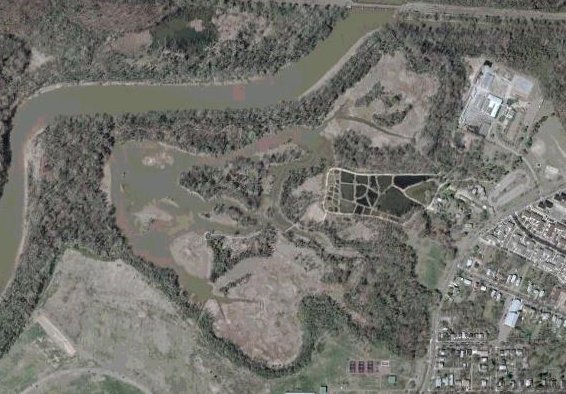
Kenilworth Aquatic Gardens / image via Google Earth

Three birders joined me this afternoon to look for birds around the gardens. Since it was already midday, our prospects were limited, but we set off eagerly to find what we could. Common Yellowthroats, which breed throughout the gardens, sang constantly, but stayed tucked out of sight in the shade. An Indigo Bunting sang boisterously near the boardwalk. Unlike the yellowthroats, the bunting perched out in the open and allowed all of us to have a good look at it. One Great Egret watched the marsh from the top of a snag. Tree and Barn Swallows coursed over the waters in search of insects. On the way back towards the entrance, we could hear a White-eyed Vireo singing. Two Eastern Kingbirds engaged in a territorial melee.

By midsummer, most birds have ceased or reduced their singing, so that they become much harder to find. Luckily for naturalists, butterflies and dragonflies become more apparent at this time of year. We saw Monarchs and Viceroys, a possible Mourning Cloak, and a large Eastern Tiger Swallowtail. Dragonflies were also plentiful; these included Eastern Amberwings, Eastern Pondhawks, Common Whitetails, and Slaty Skimmers.

Birds observed:

Great Egret
Mallard
Ring-billed Gull
Mourning Dove
Chimney Swift
Eastern Phoebe
Eastern Kingbird
Tree Swallow
Barn Swallow
Carolina Wren
Northern Mockingbird
Fish Crow
White-eyed Vireo
Common Yellowthroat
Song Sparrow
Northern Cardinal
Indigo Bunting
Red-winged Blackbird

Friday, May 26, 2006

Birds at the Kenilworths

Early on this muggy morning I set off for the two Kenilworths - the Park and the Aquatic Gardens to see if any new migrants had moved in since my last visit there on the Birdathon. I was also curious to see if the birds reported earlier in the week were still around. The short answer is no. The rest of this post is the longer explanation.

I checked the "back area" of Kenilworth Park first. As I approached, a large raptor-type bird flushed from the treeline near the barrier. Unfortunately I did not see where it landed so I could not get a positive identification. But the manner of flight and overall shape of the bird make me think that this was an owl, probably a barred owl. Its tail was very short - shorter than one would expect for a hawk - while its wings were relatively long and its body appeared kind of chunky. The feathers of the tail appeared to be flecked with white. I did not get a look at the head since it flushed away from me.

Elsewhere in the back area, a killdeer was doing a distraction display; I did not see a nest, but presume there was one nearby. Two blue grosbeaks were singing, and I got a look at both of them. In addition to the grosbeaks, several indigo buntings chased each other around. It was a visual feast of blue. A field sparrow sang near the barriers.

The no-mow area held more buntings and grosbeaks. It also turned up some large flocks of starlings. Sadly, no bobolinks appeared today. However, there was one eastern meadowlark, which has persisted at the park. I saw it as it was chased by a red-winged blackbird. It was a flash of brown and yellow before disappearing into a convenient bush.

At the Aquatic Gardens, most birds were quiet, even if they were there. The most persistent singers today were the prothonotary warblers - two on the river trail and one in the ponds area. They sang loudly and repetitively. I got a look at two of them, one of which appeared to be carrying food (to a nest?). These birds really are a wonder with their bright yellow heads and bodies.

The tide was high so few shorebirds were around. I am not sure there are even many passing through this year, because very few sightings have been reported. Their normal high tide hangouts like Kenilworth Park and Anacostia Park have been very dry because of the lack of rain. Perhaps that is keeping them away.

Does anyone know of a good online guide for identifying wetland vegetation? I found this useful site, but it is limited in scope. Most online sources that I know about split between wildflowers and trees, with little else. If you know of something please leave a comment.

SPECIES SEEN: 54

Great Blue Heron
Green Heron
Canada Goose
Mallard
Osprey
American Kestrel
Killdeer
Spotted Sandpiper
Rock Pigeon
Mourning Dove
Yellow-billed Cuckoo
Barred Owl ?
Red-bellied Woodpecker
Downy Woodpecker
Hairy Woodpecker
Northern Flicker
Pileated Woodpecker
Eastern Phoebe
Great Crested Flycatcher
Eastern Kingbird
Tree Swallow
Barn Swallow
Cedar Waxwing
Carolina Wren
Gray Catbird
Northern Mockingbird
Eastern Bluebird
Swainson's Thrush
American Robin
Blue-gray Gnatcatcher
Carolina Chickadee
Tufted Titmouse
American Crow
European Starling
House Sparrow
White-eyed Vireo
Red-eyed Vireo
American Goldfinch
Northern Parula
Yellow Warbler
Blackpoll Warbler
Prothonotary Warbler
Common Yellowthroat
Scarlet Tanager
Chipping Sparrow
Field Sparrow
Song Sparrow
Northern Cardinal
Blue Grosbeak
Indigo Bunting
Red-winged Blackbird
Eastern Meadowlark
Common Grackle
Brown-headed Cowbird

Sunday, May 14, 2006

Birdathon 2006

On Saturday the DC Audubon "City Flickers" toured DC birding sites to see as many birds as possible within a single day. I am still a little worn out from the full day of birding. We were lucky to have cooperative weather. Though the sky threatened ominously at several points, we never did get rain. Our goal was to see 100 species, an achievable but challenging number.

The City Flickers - Mike, Denise, and I - gathered at the nature center in Rock Creek Park at 5:30 am. Though it was still dark, many birds were already singing. From the parking lot, we heard american robin, wood thrush, eastern towhee, northern cardinal, and others. We heard an eastern phoebe calling near the horse center. In the maintenance yard, bats were still winging after insects as we began looking for birds. A lingering blue-headed vireo (my first for the year) perched out in the open. Red-eyed vireo, ovenbird, black-throated blue warbler, northern parula, and indigo bunting sang in the yard. Common yellowthroats and swamp sparrows darted in and out of the knotweed.

Back at the nature center, we found our other thrushes for the day. Veery and Swainson's patrolled the underbrush of the median strip. Eastern bluebirds flew to and from a nestbox. The loop trail produced blackpoll, blackburnian, and yellow-rumped warblers. An unusual buzzy song from deeper in the woods caused some disagreement - was it black-throated blue or black-throated green? After consulting some recordings, we decided it was neither; in reality it was a cerulean warbler song, sounding somewhat like a speeded-up black-throated blue song.

The "dog run" at Military Road was good for more warblers: magnolia, black-and-white, and redstart, as well as a baltimore oriole. Our mascot bird, a northern flicker, flew across the field with its golden underwings gleaming in the sunlight. A quick stop at Picnic Areas 17/18 revealed a chestnut-sided warbler and a fine-looking scarlet tanager. A mourning warbler reported last week failed to appear in its usual spot. Other warblers that were reported late last week failed to show themselves as well. It seems that many species in the early May wave of migrants have now moved on.

When we left Rock Creek Park around 9:30 am, we had already recorded 54 species. On the drive to our next stop, Kenilworth Aquatic Gardens, we picked up three more: great blue heron, canada goose, and rock pigeon. Kenilworth was mostly devoid of human visitors when we arrived, leaving us alone with the birds. Taking the river trail first, we quickly heard prothonotary warbler, white-eyed, and yellow-throated vireos. In fact, we would hear several prothonotary warblers singing along our route. As we rounded a bend in the trail, a small heron flushed from the ground and landed on a branch - yellow-crowned night-heron! Legions of cedar waxwings buzzed from a mulberry tree.

Several shorebirds walked the dikes between the impoundments. Most were spotted sandpipers but at least one solitary was among them. A greater yellowlegs flushed from a pond, but unfortunately it left to quickly for all of us to identify it, so it could not count for the list. The same went for a killdeer. A green heron flushed from one of them. We finally saw our first hawk for the day around noon, a red-shouldered hawk under constant harassment from crows and other birds.

Refreshed by a quick lunch, we looked for grassland species at Kenilworth Park. The back area yielded field sparrow, killdeer, and blue grosbeak. It also yielded a powerful stench in an area close to the Pepco plant. One osprey flew overhead, bringing our diurnal raptor total to 2. When we stopped at the other parking lot to check out the no-mow area, a large flock of dark birds flew in and settled in the tall grass. As we approached, the flock rose from the field and flew towards the aquatic gardens, but not before giving identifiable looks. They were males with creamy heads and white rumps, and warm orange brown females - bobolinks! The no-mow area also yielded a savannah sparrow and an eastern meadowlark.

After Kenilworth Park, our species count stood at 86. From there on, our big day was a mop-up operation to find specific species that we missed earlier. Kingman Island produced a double-crested cormorant and ring-billed gull - common birds, but to that point unseen. Poplar Point at the south end of Anacostia Park yielded laughing gull and a very late american black duck, as well as an orchard oriole and house wren. From Anacostia Park we headed west across town. A drive by MacMillan Reservoir produced nothing. Stops along the C&O Canal were more productive. The sycamores at Fletcher's Boathouse yielded warbling vireo, ruby-throated hummingbird, and (finally) a house finch. A couple black-crowned night-herons worked a nearby stream. At the Chain Bridge, we failed to find any new species, but we had the pleasure of seeing a flyover yellow-crowned night-heron.

We ended the day in the place where we began it, Rock Creek Park. A stop along Broad Branch Road produced a louisiana waterthrush, which we watched as it worked its way from one rock to the next. Elsewhere in the park, we caught sight of a barred owl. It sat and looked around as the songbirds in the area went crazy. When it departed into the deepening gloom, the chattering quieted down considerably. An evening stop at the maintenance yard brought us common nighthawks. At that point we were at 99 species. To break 100 would require some night birding. A stop in one open field produced displaying american woodcocks, who displayed in response to a great-horned owl recording. At another location, three or four eastern screech owls responded to a taped call, with all calling back and forth at the same time. Clearly the screech owl population appears to be thriving.

With that, we packed it in for the night. In sixteen hours of almost non-stop birding, we found 101 species of birds. With better luck at Rock Creek in the morning and more convenient tide times we could have seen even more than that. If you notice from the list below, we somehow missed red-tailed hawk and all other diurnal raptors, as well as black vulture, both yellowlegs, all terns, rose-breasted grosbeak, and several warbler species that are usually easy to find. Despite the misses, this was an event to celebrate Washington's avian diversity and varied habitats. As you can see from the list below, our team met that goal handily.


SpeciesLocation First Seen
Ducks, Geese, and Cormorants
Canada GooseKenilworth Aquatic Gardens
Wood DuckRock Creek Park
MallardRock Creek Park
American Black DuckAnacostia Park
Double-crested CormorantKingman Island
Herons
Great Blue HeronKenilworth Aquatic Gardens
Green HeronKenilworth Aquatic Gardens
Black-crowned Night-heronFletcher's Boathouse
Yellow-crowned Night-heronKenilworth Aquatic Gardens
Vultures and Hawks
Turkey VultureKenilworth Park
OspreyKenilworth Park
Red-shouldered HawkKenilworth Aquatic Gardens
Shorebirds
KilldeerKenilworth Park
Solitary SandpiperKenilworth Aquatic Gardens
Spotted SandpiperKenilworth Aquatic Gardens
American WoodcockRock Creek Park
Gulls
Ring-billed GullKingman Island
Laughing GullAnacostia Park
Doves and Cuckoos
Rock PigeonKenilworth Aquatic Gardens
Mourning DoveRock Creek Park
Yellow-billed CuckooKenilworth Aquatic Gardens
Owls
Eastern Screech-owlRock Creek Park
Barred OwlRock Creek Park
Nightjars and Swifts
Common NighthawkRock Creek Park
Chimney SwiftRock Creek Park
Hummingbirds and Kingfishers
Ruby-throated HummingbirdFletcher's Boathouse
Belted KingfisherKenilworth Aquatic Gardens
Woodpeckers
Red-bellied WoodpeckerRock Creek Park
Downy WoodpeckerRock Creek Park
Hairy WoodpeckerKenilworth Park
Northern FlickerRock Creek Park
Pileated WoodpeckerKenilworth Aquatic Gardens
Tyrant Flycatchers
Eastern Wood-peweeRock Creek Park
Acadian FlycatcherRock Creek Park
Eastern PhoebeRock Creek Park
Great Crested FlycatcherKenilworth Aquatic Gardens
Eastern KingbirdKenilworth Aquatic Gardens
Vireos
White-eyed VireoKenilworth Aquatic Gardens
Yellow-throated VireoKenilworth Aquatic Gardens
Blue-headed VireoRock Creek Park
Warbling VireoFletcher's Boathouse
Red-eyed VireoRock Creek Park
Crows and Jays
Blue JayRock Creek Park
American CrowRock Creek Park
Fish CrowKenilworth Aquatic Gardens
Swallows
Tree SwallowKenilworth Aquatic Gardens
Northern Rough-winged SwallowKenilworth Park
Barn SwallowKenilworth Aquatic Gardens
Chickadees and Nuthatches
Carolina ChickadeeRock Creek Park
Tufted TitmouseRock Creek Park
White-breasted NuthatchRock Creek Park
Wrens and Gnatcatchers
Carolina WrenRock Creek Park
House WrenAnacostia Park
Blue-gray GnatcatcherRock Creek Park
Thrushes
Eastern BluebirdRock Creek Park
VeeryRock Creek Park
Swainson's ThrushRock Creek Park
Wood ThrushRock Creek Park
American RobinRock Creek Park
Mimids
Gray CatbirdRock Creek Park
Northern MockingbirdRock Creek Park
Brown ThrasherRock Creek Park
Starlings and Waxwings
European StarlingRock Creek Park
Cedar WaxwingKenilworth Aquatic Gardens
Wood Warblers
Northern ParulaRock Creek Park
Yellow WarblerKenilworth Aquatic Gardens
Chestnut-sided WarblerRock Creek Park
Magnolia WarblerRock Creek Park
Black-throated Blue WarblerRock Creek Park
Yellow-rumped WarblerRock Creek Park
Blackburnian WarblerRock Creek Park
Blackpoll WarblerRock Creek Park
Cerulean WarblerRock Creek Park
Black-and-white WarblerRock Creek Park
American RedstartRock Creek Park
Prothonotary WarblerKenilworth Aquatic Gardens
OvenbirdRock Creek Park
Louisiana WaterthrushRock Creek Park
Common YellowthroatRock Creek Park
Hooded WarblerRock Creek Park
Tanagers
Scarlet TanagerRock Creek Park
Sparrows
Eastern TowheeRock Creek Park
Chipping SparrowRock Creek Park
Field SparrowKenilworth Park
Savannah SparrowKenilworth Park
Song SparrowRock Creek Park
Swamp SparrowRock Creek Park
White-throated SparrowRock Creek Park
Cardinals and Buntings
Northern CardinalRock Creek Park
Blue GrosbeakKenilworth Park
Indigo BuntingRock Creek Park
BobolinkKenilworth Park
Blackbirds and Orioles
Red-winged BlackbirdKenilworth Aquatic Gardens
Eastern MeadowlarkKenilworth Park
Common GrackleRock Creek Park
Brown-headed CowbirdRock Creek Park
Baltimore OrioleRock Creek Park
Orchard OrioleAnacostia Park
Finches
House FinchFletcher's Boathouse
American GoldfinchRock Creek Park
Old World Sparrows
House SparrowRock Creek Park
Results
Total Species Identified101
Seen81
Heard Only20


Wednesday, April 26, 2006

Walking in the Two Kenilworths

My mother was just in town for a few days, so we visited a couple of prime D.C. birding spots. Yesterday it was Rock Creek Park, to see warblers and other songbirds; today it was Kenilworth Park and Aquatic Gardens, to look for some good birds that were reported on MDOsprey. As it turns out, we saw quite a lot today between the two locations, and some of the reports bore fruit.

We started in Kenilworth Park. As Nick noted a few days back, Kenilworth Park and Kenilworth Aquatic Gardens are not the same entity. The Aquatic Gardens is a special national park devoted to the propagation of water lilies and other aquatic plants, and also shelters Kenilworth Marsh, one of the few viable tidal wetlands in DC. Kenilworth Park is a public park with football fields, playgrounds, and a recreation center. Click the satellite image at right to see the locations (courtesy of Google Earth).

Several birds of interest for DC birders had been reported there: vesper sparrow, savannah sparrow, grasshopper sparrow, horned lark, eastern meadowlark, blue grosbeak, and glossy ibis. The grasshopper sparrow, horned lark, and glossy ibis did not make an appearance while we were at the park today, but the others did. The first, a couple of vesper sparrows, were with a flock of savannah sparrows in the grassy border between the second parking lot and the river. The two were squabbling with each other, as had been reported by two previous birders; the squabbling provided a clue to identification - while in flight, the two vespers gave a buzzy call note, unlike the savannah sparrows.

The blue grosbeak sat out on top of a short tree in the heart of the no-mow area and sang its heart out. My previous sightings of this species had always been backlit and poorly seen. This one was front light, with its deep blue body and rufous wingbars shining in their full glory. It was impressive even at a distance. Close to where we saw the grosbeak, a few meadowlarks flushed from the managed meadow and landed some distance away. These two birds and the vesper sparrow were all DC firsts for me. Also at Kenilworth Park were a singing white-eyed vireo and a singing blue-winged warbler, both in the remediated landfill beyond the concrete barriers (visible at the lower left of the photo above).

The aquatic gardens had quieted down considerably by the time we arrived there. Birds were still singing, but they had settled into their mid-morning routines. One juvenile red-shouldered hawk was being harrassed by crows near the building complex. Later this hawk was involved in an aerial confrontation with two adults (its parents?); having lost, it took out its frustration by harrassing a few turkey vultures that happened to be passing by.

In addition to the usual goose contingent, the marsh held four northern shovelers (three males and one female). This was a DC first for me. Near the end of the river trail, there were two blue-winged teal, another rare-for-DC water bird. Yellow-rumped warblers could be heard singing in both Kenilworths, and a few singing northern parulas and common yellowthroats were audible as well. Shorebird diversity is increasing; this week I saw my first spotted sandpipers of the year, first on the Mall on Monday and today at the aquatic gardens.

It was a gorgeous day despite a cold start. We had sunshine, blue skies, and plenty of birds.

SPECIES SEEN: 56

Double-crested Cormorant
Great Blue Heron
Great Egret
Canada Goose
Wood Duck
Mallard
Blue-winged Teal
Northern Shoveler
Turkey Vulture
Osprey
Red-shouldered Hawk
Red-tailed Hawk
Greater Yellowlegs
Spotted Sandpiper
Ring-billed Gull
Rock Pigeon
Mourning Dove
Chimney Swift
Belted Kingfisher
Downy Woodpecker
Pileated Woodpecker
Eastern Phoebe
Eastern Kingbird
Tree Swallow
Northern Rough-winged Swallow
Barn Swallow
Cedar Waxwing
Carolina Wren
Northern Mockingbird
Brown Thrasher
American Robin
Blue-gray Gnatcatcher
Carolina Chickadee
Blue Jay
Fish Crow
European Starling
House Sparrow
White-eyed Vireo
Warbling Vireo
American Goldfinch
Blue-winged Warbler
Northern Parula
Yellow-rumped Warbler
Common Yellowthroat
Eastern Towhee
Chipping Sparrow
Field Sparrow
Vesper Sparrow
Savannah Sparrow
Song Sparrow
White-throated Sparrow
Northern Cardinal
Blue Grosbeak
Red-winged Blackbird
Common Grackle
Brown-headed Cowbird

Sunday, April 09, 2006

Birding on a Beautiful Sunday

After yesterday's steady rain and gray skies, today's sunshine was a great relief. The sky was blue, the air was cool, and there were lots of birds around - a great combination. I headed over to Kenilworth Aquatic Gardens as soon as I got up this morning, and then followed that up with a short trip to Anacostia Park.

I was greeted at the entrance to Kenilworth with a smattering of bird song. One ruby-crowned kinglet sang its complex twittering song near the gate while white-throated sparrows sang "Poor Sam Peabody" here and there. One unfamiliar song caught my attention; when I turned to look for the singer, I spotted a Louisiana waterthrush about fifteen feet up in a cypress. The ponds held three members of the heron family: great blue heron, great egret, and snowy egret. Snowy egrets are not that common in D.C. and only appear during migration.

When I reached the boardwalk, I was treated to a quick succession of hawks: a calling red-shouldered hawk, a soaring red-tailed hawk, and a young bald eagle with crows in pursuit. As I watched the red-tail turn, I caught sight of four birds flying north in a loose line - common loons! At the observation decks I sat and watched and listened for a while. As I was getting ready to leave, three Wilson's snipe flew in and settled on the mud flats. It was great to be able to watch them and examine their plumage instead of trying to catch them in flight, which is usually the way I see them.

On the first half of the river trail, the birds were joined in song by chorusing spring peepers. I believe this is the first time I have heard them this spring due to the lack of rain. Further along, I ran into a flock of palm warblers. Normally I will see one or two of this species at a time; today I saw about a dozen darting back and forth across the path. At least one was singing. At the end of the river trail I found my first barn swallows and chimney swifts of the year as they cruised over the mudflats with tree and northern rough-winged swallows. Some of the swallows appeared to be chasing the swifts, but that may just have been coincidental.

At Anacostia Park I hoped to find some migrant gulls and terns. One caspian tern was among a group of ring-billed gulls on a sandbar near the railroad bridge. Other than that the park was not all that birdy. Oddly enough there were no great black-backed gulls to be seen today. As some species are moving in, other species are departing.

BIRD SPECIES SEEN: 59

Common Loon
Pied-billed Grebe
Double-crested Cormorant
Great Blue Heron
Great Egret
Snowy Egret
Canada Goose
Green-winged Teal
Mallard
Turkey Vulture
Osprey
Bald Eagle
Red-shouldered Hawk
Red-tailed Hawk
Killdeer
Wilson's Snipe
Greater Yellowlegs
Ring-billed Gull
American Herring Gull
Caspian Tern
Rock Pigeon
Mourning Dove
Chimney Swift
Belted Kingfisher
Red-bellied Woodpecker
Downy Woodpecker
Northern Flicker
Pileated Woodpecker
Eastern Phoebe
Tree Swallow
Northern Rough-winged Swallow
Bank Swallow
Barn Swallow
Ruby-crowned Kinglet
Carolina Wren
Gray Catbird
Northern Mockingbird
Brown Thrasher
Hermit Thrush
American Robin
Carolina Chickadee
Blue Jay
American Crow
Fish Crow
European Starling
House Sparrow
Yellow-rumped Warbler
Palm Warbler
Louisiana Waterthrush
Eastern Towhee
Chipping Sparrow
Song Sparrow
Swamp Sparrow
White-throated Sparrow
Dark-eyed Junco
Northern Cardinal
Red-winged Blackbird
Common Grackle
Brown-headed Cowbird

BUTTERFLY SPECIES SEEN: 1

Clouded Sulphur

Sunday, April 02, 2006

Kenilworth Birds

Despite the especially lovely day, I spent most of the day inside for a DC Audubon organizational meeting. Luckily for me, and the rest of us, the meeting was at Kenilworth Aquatic Gardens. DC Audubon has had a special relationship with this park for a long time and runs an annual field trip in the gardens. So there was a short opportunity for birdwatching built into the schedule.

I saw my life broad-winged hawk this morning, thanks to one member who pointed it out to the group. Now that I have seen one, I think that the main thing holding me back from recognizing one previously was that I was probably misidentifying juvenile broad-wingeds with very light red-tailed hawks. That may explain why I had not seen this rather common migrant.

The river trail held a collection of woodpeckers and sparrows, plus a lone osprey dining on a fish. The marsh held several sandpiper species: greater and lesser yellowlegs and Wilson's snipe. The snipe in particular gave great looks, as they were sitting out in the open on a mud flat. In addition there was a group of green-winged teal swimming near the Anacostia inlet. Wood ducks were flying back and forth from one area of the gardens to another.

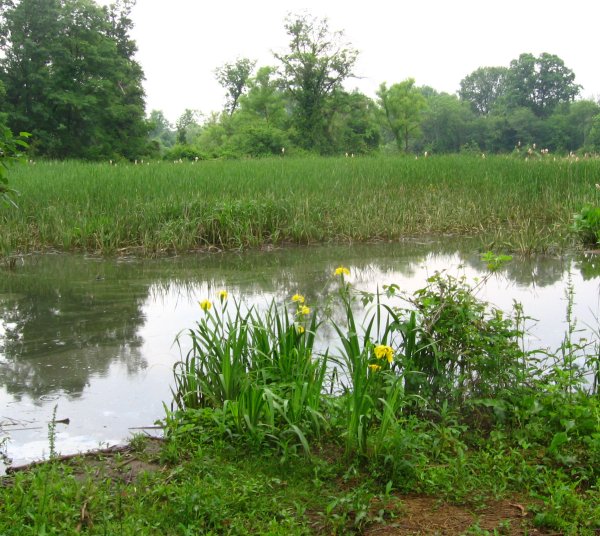
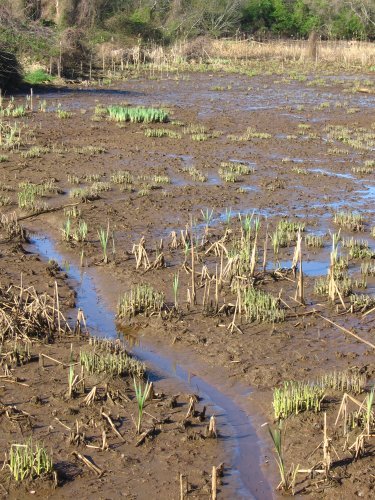
Marsh grasses sprouting on the banks of a lily pond

SPECIES SEEN: 39

Double-crested Cormorant
Great Blue Heron
Canada Goose
Wood Duck
Green-winged Teal
Mallard
Osprey
Red-shouldered Hawk
Broad-winged Hawk
Wilson's Snipe
Greater Yellowlegs
Lesser Yellowlegs
Ring-billed Gull
Rock Pigeon
Red-bellied Woodpecker
Downy Woodpecker
Northern Flicker
Eastern Phoebe
Tree Swallow
Ruby-crowned Kinglet
Cedar Waxwing
Gray Catbird
Northern Mockingbird
Brown Thrasher
American Robin
Carolina Chickadee
Tufted Titmouse
Blue Jay
American Crow
Fish Crow
European Starling
Yellow-rumped Warbler
Song Sparrow
Swamp Sparrow
White-throated Sparrow
Dark-eyed Junco
Northern Cardinal
Red-winged Blackbird
Common Grackle

Friday, January 06, 2006

Kenilworth Aquatic Gardens

When I arrived at Kenilworth Aquatic Gardens this morning, I was greeted by a chorus of crows. Both species were represented - fish and American. Both did their best to make the gardens a noisy place. I think the crows even set the other birds on edge, because the Canada geese in one pond took off when a nearby American bittern made its pumping call. The raucous crows fit the gloomy mood of the day, which was overcast and cold. The sun tried to break through around noon, but soon was pushed back by the blanket of clouds.

While looking for the bittern, I came across an American tree sparrow. This lovely little bird with the rufous cap is fairly unusual for DC, even if it is more common further north. Today, in fact, turned out to be a good day for sparrows. In addition to the tree sparrow, there were several fox sparrows along the boardwalk, and swamp sparrows on the river trail.

The marsh at the end of the boardwalk held American black ducks and common mergansers, as well as a few killdeer. A large flock of red-winged blackbirds passed overhead and settled on the far side of the channel. At this point I began to feel very cold and realized I ought to have dressed more warmly. Still, I pressed on for the river trail. As I made my way back through the ponds, I found a yellow-bellied sapsucker (pictured above).

The river trail held several flocks of sparrows and woodpeckers. There was also one flock of tufted titmice and Carolina chickadees that held several chickadees that almost looked like black-cappeds, but were not quite convincing enough. As I walked further along, a brown thrasher disappeared into the brush on the right side of the path. At the very end of the river trail were three eastern bluebirds and a few yellow-rumped warblers. On the way back, I found a gray catbird eating poison ivy berries. That made it a three-mimid day, which is very good for January.

After finishing up at the aquatic gardens, I headed over to the neighboring Kenilworth Park to look around. The only bird I saw there that I had not seen at the aquatic gardens was a peregrine falcon. There were a few sparrows in the no-mow areas, but I could not get a good look at any of them.

This picture of the Anacostia was taken from Kenilworth Park in the early afternoon.

SPECIES SEEN: 41

Great Blue Heron
American Bittern
Canada Goose
Mallard
American Black Duck
Common Merganser
Red-shouldered Hawk
Peregrine Falcon
Killdeer
Ring-billed Gull
Rock Pigeon
Mourning Dove
Belted Kingfisher
Red-bellied Woodpecker
Yellow-bellied Sapsucker
Downy Woodpecker
Hairy Woodpecker
Northern Flicker
Carolina Wren
Gray Catbird
Northern Mockingbird
Brown Thrasher
Eastern Bluebird
Carolina Chickadee
Tufted Titmouse
White-breasted Nuthatch
Brown Creeper
Blue Jay
American Crow
Fish Crow
European Starling
American Goldfinch
Yellow-rumped Warbler
American Tree Sparrow
Fox Sparrow
Song Sparrow
Swamp Sparrow
White-throated Sparrow
Dark-eyed Junco
Northern Cardinal
Red-winged Blackbird

Tuesday, December 13, 2005

Kenilworth Park and Aquatic Gardens

This morning I visited the east side of the Anacostia in hopes of tracking down some winter migrants. The day began at Kenilworth Park. A bald eagle was visible across the river, perched on a snag above a large flock of Canada geese. A hooded merganser was also in the river. The brush along the edges of the park was loaded with birds. Many cedar waxwings were present in several flocks, along with house finches, robins, and white-throated sparrows. One lingering gray catbird was in the bushes near the recreation center.

The aquatic gardens was full of sparrows. Among the many song sparrows and white-throateds, there were swamp sparrows, dark-eyed juncos, and a single Lincoln's sparrow. The latter perched on a sapling at the bank of one of the ponds and allowed a good look. A small flock of red-winged blackbirds was in the trees along the boardwalk trail. The dominant black-colored birds, though, were crows, of which there may have been a hundred, all chattering noisily. Along the river trail, there were purple finches and yellow-rumped warblers, as well as more sparrows. Yellow-bellied sapsuckers were in good numbers in both parks.

SPECIES SEEN: 44

Canada Goose
Mallard
Hooded Merganser
Turkey Vulture
Bald Eagle
Cooper's Hawk
Red-shouldered Hawk
Red-tailed Hawk
Killdeer
Ring-billed Gull
Great Black-backed Gull
American Herring Gull
Rock Pigeon
Mourning Dove
Belted Kingfisher
Red-bellied Woodpecker
Yellow-bellied Sapsucker
Downy Woodpecker
Northern Flicker
Ruby-crowned Kinglet
Cedar Waxwing
Carolina Wren
Gray Catbird
Northern Mockingbird
American Robin
Carolina Chickadee
White-breasted Nuthatch
Brown Creeper
Blue Jay
American Crow
Fish Crow
European Starling
House Sparrow
Purple Finch
House Finch
American Goldfinch
Yellow-rumped Warbler
Song Sparrow
Lincoln's Sparrow
Swamp Sparrow
White-throated Sparrow
Dark-eyed Junco
Northern Cardinal
Red-winged Blackbird

Thursday, July 21, 2005

Kenilworth Park and Aquatic Gardens

This morning I braved the heat and humidity to do some birding along the other side of the Anacostia. The day was extremely hazy right from the start, and the grass in Kenilworth Park was so covered with dew that my feet were soaked for the rest of the morning despite my "waterproof" sneakers. By the time I was done, the temperature had hit 90, with the heat index somewhere above that; at least the relative humidity was "only" 41% this morning.

Kenilworth Park has a reputation for being good for shorebirds and field species. Sure enough, I found a couple of early least sandpipers mixed in with about a dozen killdeer. Those sandpipers and a few great egrets in the river near the Metro bridge are signs that fall migration is underway here. Other than that, not much was stirring in the park.

Kenilworth Aquatic Gardens also seemed fairly quiet at first. The tide was high so not much was to be seen out in the marsh. There were lots of young birds, especially young American robins still in their spotted plumage. As I walked along the boardwalk, young barn swallows would land less than five feet away from me and not fly off until I was almost on top of them. I also saw family groups of eastern kingbirds in both the park and the aquatic gardens.

Since the birds were not too active this morning, I spent some time looking at butterflies and dragonflies. There appear to be about a half-dozen common local species of dragonflies; I have not learned what these are yet because I do not currently have a guide. Some are very pretty and all are rather ancient-looking. The butterflies are tricky to identify. I had one land on my foot and still could not identify until a few hours later when I looked through my guidebook thoroughly. That was the red-spotted purple. Viceroys were common along the boardwalk, and there were several zebra swallowtails along the river trail.

I had one unwelcome first-time sighting this morning. As I ascended the escalator to the Metro platform, I saw one of the advertising-wrapped cars that Metro is using. It is unfortunate that Metro had to resort to that, because it looks bad.

BIRDS SEEN AND HEARD - 39

Great Blue Heron
Great Egret
Green Heron
Canada Goose
Mallard
Killdeer
Least Sandpiper
Rock Pigeon
Mourning Dove
Yellow-billed Cuckoo
Chimney Swift
Red-bellied Woodpecker
Downy Woodpecker
Pileated Woodpecker
Eastern Wood-Pewee
Acadian Flycatcher
Eastern Phoebe
Eastern Kingbird
Purple Martin
Barn Swallow
Cedar Waxwing
Carolina Wren
Gray Catbird
Northern Mockingbird
Brown Thrasher
American Robin
Blue-gray Gnatcatcher
Carolina Chickadee
Tufted Titmouse
American Crow
European Starling
House Sparrow
Northern Parula
Common Yellowthroat
Song Sparrow
Northern Cardinal
Indigo Bunting
Red-winged Blackbird
Common Grackle

BUTTERFLIES SEEN - 11

Zebra Swallowtail
Eastern Tiger Swallowtail
Spicebush Swallowtail
Cabbage White
Cloudless Sulphur
Spring Azure
Eastern Comma
Red Admiral
Red-spotted Purple
Viceroy
Silver-spotted Skipper

Tuesday, June 21, 2005

Kenilworth Aquatic Gardens and Park

This morning I took a birding trip to Kenilworth Aquatic Gardens and the adjacent Kenilworth Park. As befits the first day of summer, the water levels were especially high today, so much so that the gardeners had pumps running in several places to avoid flooding in the waterlily impoundments. The beaver dam was entirely covered with water. Of course this meant that there was little to see out in the marsh. One can occasionally see shorebirds out on the flats, but there were no mudflats to be seen today, let alone shorebirds. Common grackles were the dominant species today, and their constant movement and chatter proved distracting as I was looking for other species.

Right at the entrance I was greeted by a brown thrasher standing out in the open among the hollies near the parking lot. Once inside I heard a black-and-white warbler and saw a small group of blue-gray gnatcatchers, a small but hyperactive species. A green heron flew over the impoundments. After that things settled down. I heard common yellowthroats and indigo buntings as I approached the marsh, and passed within feet of a great blue heron standing stock-still in an impoundment.

The boardwalk and overlooks presented little aside from some eastern phoebes. This species seemed to be in relatively high numbers at the aquatic gardens today. I got a nice long look at one posing on a boardwalk railing, and later saw pairs wheeling playfully over the waters of the marsh. They were joined by numerous tree swallows and barn swallows, both of which breed there. The marsh is stocked with nesting boxes for such species. These boxes are carefully monitored by the NPS staff.

The river trail, which curves around the marsh and goes out to the tidal inlet, presented a few more nice finds. My first glimpse for the year of a northern parula came at the start of the trail. I had heard them before but not seen them, because they are hard to spot but have a loud and distinctive call, like a zipper being pulled up. I finally got to see an indigo bunting instead of just hearing them. A prothonotary warbler, unusual for D.C. but in proper habitat, called several times from the swampy wooded area between the trail and the nursery buildings. As I walked the portion of the trail that parallels the river, I could hear a pileated woodpecker call, and shortly afterwards one flew across the path on its way across the marsh. Soon I also heard the distinctive chick-per-ee-o-chick of the white-eyed vireo in more or less the same area where one was breeding last summer.

The best bird of the day was at the end of the trail. There I heard a call that I first tuned out as an alternate white-eyed vireo. But after listening to it for a few minutes I realized it was something different. When I got home and had a chance to listen to my recording, I confirmed my hunch that what I heard was the ritzbew of a willow flycatcher. This was a life bird for me, and brings my life list to 248 species.

On the way back towards the entrance, I spotted a wood duck sitting on a log in the marsh. After that I had no new species in the gardens for the day. Usually when I am done in the gardens I just walk over to the Deanwood station and head home. But today I wanted to check out some good sightings that had been reported from Kenilworth Park, just down Anacostia Avenue from the aquatic gardens. So I walked down and started walking towards the meadow area, where the birds had been found. Along the way I noted an eastern kingbird. As I came to the crest of the hill, I saw about a dozen police cars parked in a line in the gravel parking lot, with another dozen streaming in the entrance. Then a helicopter swooped low over the field. At that point I decided that my birding day was pretty much done. I will have to give that park another try soon. The species reported would be a lifer and a D.C. first for me, so it would be worth another shot, I think. I want to take some photographs of the waterlilies anyway, and it looks like we are near the best time to do that.

Good birding.