Showing posts with label Anacostia Park. Show all posts

Tuesday, September 22, 2009

Black-headed Gull on the Anacostia River


My friend Peter Vankevich went canoeing on the Anacostia River this past Sunday and found a Black-headed Gull. It was standing on a dock at the Anacostia boathouse, across from Anacostia Park. The red legs made it stand out from the others since Laughing Gulls do not have red legs except in full adult breeding plumage.


This is clearly a hooded gull in winter plumage because a remnant of the hood is still visible behind the eye. It also appears to be an adult since there are no visible dark markings on the bird's tertials or upperwing coverts. The red legs and the dainty red bill with a dusky tip fit Black-headed Gull the best. The upperwing and underwing patterns seem to fit that identification as well.


This is a rare sighting for Washington, DC, where even Bonaparte's Gulls are pretty unusual. The only previous record of Black-headed Gull in eBird's database for DC is from 2004. The MD/DC Records Committee also has records of three previous sightings in the two decades before that.

Peter's Black-headed Gull was among thousands of Laughing Gulls, so it may be hard to find again. In my experience, flocks of gulls tend to wander around the Anacostia River corridor. If it is not present at the Anacostia boathouse, it may be at Hains Point or some other place nearby.

All photos are courtesy of Peter Vankevich.

Tuesday, November 13, 2007

DC Waterways

A report from the Potomac Conservancy suggests that water quality in the Potomac River may be deteriorating.

The report comes as federal scientists say that more "intersex" fish, showing elements of both genders, are being found in the river. Previous studies had shown that male bass in District waters were growing eggs; new data show that female fish also seem to be developing abnormally, one researcher said yesterday.

The Potomac Conservancy's report cites the intersex problem -- along with high levels of dirt, sewage and other pollutants -- to show that the Potomac might be in danger of backsliding after a decades-long rehabilitation.

"We've plateaued," said Hedrick Belin, president of the conservancy, which has pushed for cleaner water and the protection of land along the Potomac's banks. "The improvements that we've made, the progress, has stalled out."
Growing suburbanization in the Potomac watershed means more hard surfaces for stormwater runoff, which typically carries pollution from roadways and pesticides and fertilizer from lawns. Some of the fish problems have been associated with the Blue Plains sewage treatment plant at the southern tip of DC. It is possible that agricultural or industrial sources of endocrine disruptors also contribute to that problem.

You can read the full report from the Conservancy and some commentary from the Baltimore Sun Bay & Environment Blog.

Also, following up on the CSX derailment into the Anacostia, the railroad reports that the coal cars rolled into the river by themselves:
On Friday afternoon, a CSX operator failed to secure the brakes properly while moving the cars around the Benning rail yard in Anacostia, CSX Transportation officials have said. Eighty-nine cars coasted more than a quarter-mile before rolling onto a closed span of bridge near the Sousa Bridge that then collapsed. Ten cars derailed, and six tumbled into the river. The bridge span was closed in November 2006 after an inspection revealed structural problems. The cars, which have a capacity of 100 tons of coal, were full when the accident occurred.

"When you mix coal dust with water, there's a chemical reaction that occurs," said Jim Connolly, executive director of the Anacostia Watershed Society. "We're very concerned that the coal be removed as quickly as possible."
If there are two spans crossing the Anacostia at this location, presumably there are multiple crossover points between the tracks leading up to the spans. Aside from the failure to set the brakes, what I wonder is why crossover switches were open to the closed span.

Saturday, November 10, 2007

Coal Cars Overboard

Photo by James M. Thresher / Washington Post

In other fossil fuel news, a CSX train derailed while crossing the Anacostia River. Several coal fell off the bridge and dumped their contents into the river. Part of the span collapsed. Investigators are trying to determine whether the collapse caused the derailment or the derailment caused the collapse. The bridge had a poor safety record and had been shut down awaiting repair. The bridge's structural problems are hampering efforts to clean up the wreckage.

There are more photos of the incident on Flickr.

If I'm not mistaken, this is the bridge visible from Anacostia Park, a little below Kingman Island. I am not sure why the superstructure would look different in the two photographs.

Sunday, May 06, 2007

Back to Poplar Point

This morning I returned to Poplar Point with Rob Hilton to explore the area further. (Rob had kindly offered to show me some areas I missed last week.) It was a beautiful day to be out, if cool with winds increasing throughout the morning. When we arrived, field sparrows were singing in the meadow, and several willow flycatchers were calling. (I did not get a look at any of the willow flycatchers - not that it would have made much difference for identification purposes.) Yellow warblers and Baltimore orioles were plentiful, as they were last week. A few savannah sparrows were still present.

Savannah Sparrow / Photo by Donna Dewhurst (USFWS)

Further back, we encountered a northern waterthrush and a veery. (Both were firsts-of-the-year for me.) Rob spotted a wild turkey that I missed. As with the meadow, there were a lot of orioles and yellow warblers singing and flying back and forth across the paths. The nursery area appears to be catbird heaven as we saw and heard numerous gray catbirds mewing and singing. A few brown thrashers were skulking in the underbrush as well.

Unfortunately, the water birds from last week did not show themselves today. The Poplar Point wetlands area had a couple more northern waterthrushes. Once again, the grassy strips along Anacostia Drive had some bobolinks among the more common starlings and brown-headed cowbirds. One poked his head above the weeds to sing a few complex songs before flying off.

A stop at Kenilworth Park turned up a spotted sandpiper and soaring osprey and red-tailed hawks. An indigo bunting and warbling vireo sang for short stretches. Otherwise the park was pretty quiet.

BIRD SPECIES: 43

Double-crested Cormorant
Great Blue Heron
Canada Goose
Mallard
Turkey Vulture
Osprey
Red-tailed Hawk
Spotted Sandpiper
Ring-billed Gull
Great Black-backed Gull
Rock Pigeon
Mourning Dove
Chimney Swift
Willow Flycatcher
Eastern Phoebe
Eastern Kingbird
Tree Swallow
Northern Rough-winged Swallow
Barn Swallow
House Wren
Gray Catbird
Northern Mockingbird
Brown Thrasher
Veery
American Robin
Fish Crow
European Starling
Warbling Vireo
American Goldfinch
Yellow Warbler
Yellow-rumped Warbler
Northern Waterthrush
Common Yellowthroat
Field Sparrow
Savannah Sparrow
Song Sparrow
Northern Cardinal
Indigo Bunting
Bobolink
Red-winged Blackbird
Common Grackle
Brown-headed Cowbird
Baltimore Oriole

Sunday, April 29, 2007

Sparrows and Bitterns at Poplar Point

Last week, someone reported a seaside sparrow - a highly unlikely species in DC - at Poplar Point, a small peninsula that juts into the Anacostia River. Then yesterday, while I was at Bird Fest, other birders reported a slew of other unusual bird species at the same location. So this morning I went over to Poplar Point to see if any of the reported birds were still there.

The walk started out well with a female kestrel and some first-of-the-spring songsters. A Baltimore oriole flew out from one of the locust trees as I walked along the tree line. It was the first of several for today. Just inside the tree line, a gray catbird was mewing, and yellow warblers, chestnut-sided warblers, and common yellowthroats were singing. In a few other spots I could hear house wrens singing. I thought I heard an orchard oriole, but I could not could confirm that with a sight identification.

I failed to find any of the reported grasshopper sparrows, unfortunately. However, the grassy areas were not lacking for sparrows. In addition to the usual suspects, I saw two savannah sparrows, two field sparrows (one singing), and a swamp sparrow. My search for the grasshopper sparrows took me deeper into the meadows than I normally venture, and in the course of my search I flushed two Wilson's snipe in short succession.

Deeper into the meadow, there are some marshy areas, where I flushed a least bittern and then an American bittern. Both stayed airborne long enough for me to get identifying looks at them. The least bittern - a tiny brown bird with a black cap - flushed from reeds near me and landed just out sight behind a tree and some other reeds. The American bittern flushed from a position farther from me and then stayed in the air longer as it flew farther into the swamp. This was my first look at either species. As I turned to leave, I saw a wild turkey walking in and out of the tall grass. It did not seem to be disturbed by my presence.

Leaving the meadow, I made my way along the river from Poplar Point towards Anacostia Park proper. A bobolink flushed from the taller grass near the side of the road, perched in the shrubs, and started singing. It had a fascinating song - not necessarily a pleasing song, but a complex one with a lot of squeaks and gurgles. As I walked further, I checked the mudflats on the river. There were about seven caspian terns among the masses of ring-billed gulls. A few herring and great black-backed gulls are still around. Two osprey were hunting over the river. I later saw one carrying a stick to an unknown destination.

The Least Bittern and Wild Turkey were #199 and #200 on my DC life list. I reached one of my birding goals for the year!

Birds observed: 50 species

Double-crested Cormorant
Great Blue Heron
Least Bittern
American Bittern
Canada Goose
Mallard
Turkey Vulture
Osprey
Red-tailed Hawk
American Kestrel
Wild Turkey
Wilson's Snipe
Ring-billed Gull
Great Black-backed Gull
American Herring Gull
Caspian Tern
Rock Pigeon
Mourning Dove
Chimney Swift
Red-bellied Woodpecker
Eastern Phoebe
Eastern Kingbird
Tree Swallow
Northern Rough-winged Swallow
Barn Swallow
Carolina Wren
House Wren
Gray Catbird
Northern Mockingbird
American Robin
Blue-gray Gnatcatcher
Fish Crow
European Starling
House Sparrow
American Goldfinch
Yellow Warbler
Chestnut-sided Warbler
Common Yellowthroat
Eastern Towhee
Field Sparrow
Savannah Sparrow
Song Sparrow
Swamp Sparrow
White-throated Sparrow
Northern Cardinal
Bobolink
Red-winged Blackbird
Common Grackle
Brown-headed Cowbird
Baltimore Oriole

Butterflies observed: 8 species

Cabbage White
Clouded Sulphur
American Copper
Gray Hairstreak
Eastern Tailed-Blue
Spring Azure
Mourning Cloak
Wild Indigo Duskywing

Friday, November 17, 2006

DC to Gain Federal Land in Land Transfer

Washington, DC, will gain about 200 acres of land from the federal government if President Bush signs a recent piece of legislation. The land lies mostly in two parcels sited on either side of the Anacostia River.

The biggest parcel is Poplar Point, a 100-acre site on the eastern side of the Anacostia that is intended as the location of a stadium for the D.C. United soccer team. Also transferred to city control would be Reservation 13, a 66-acre site on the western edge of the river that houses the former D.C. General Hospital campus and is slated for mixed-use development and health-related facilities.
The parcels are intended for development to add land into the District's tax base. Development will probably according to the plans of the Anacostia Waterfront Corporation, which expects big things along the river. At least one parcel will become a sports facility.
Plans for the Poplar Point site include a mix of high- and low-rise housing and retail, as well the eventual site of the soccer stadium. According to the land swap, 30 acres of the site would be developed, and the rest would be preserved as parkland.
A large portion of Poplar Point is already parkland, or at least undeveloped enough to be treated as such. While it is not great bird habitat, several species do use it in all seasons. It has some large (for DC) overgrown fields, as well as some edge/riverine habitat. Hopefully at least some of this will be left in place or at least allowed to regenerate elsewhere.

One issue that is sure to arise is the condition of the land. Much of the land on both sides of the Anacostia River is fill, since the river was originally lined with freshwater marshes. Because the dredging and filling was done in the days before environmental regulations, no one really knows what was dumped there. One fill site north of RFK is known to have highly toxic substances just underneath the surface. If the same holds true for the Reservation 13 and Poplar Point sites, substantial remediation may need to be done before anything can be built there.

Tags:

Saturday, May 20, 2006

Canada Geese and Anacostia Wetlands

The Anacostia River has long suffered from neglect and pollution. Just recently it was branded as one of the most polluted rivers in America, after up to 68% of brown bullhead catfish from the river were discovered to have liver tumors. In the last few years, the District government has focused on ways to clean up the river and "revitalize" the waterfront.

A large part of the publicity has focused on economic development, which is being overseen by the Anacostia Waterfront Corporation, a semi-public entity. The economic development includes the new baseball and soccer stadiums being built at the mouth of the Anacostia, as well as other initiatives. Somewhat less publicity has been given to efforts to restore the Anacostia wetlands that formerly provided habitats for many animals and would improve the water quality dramatically by removing excess nutrients.

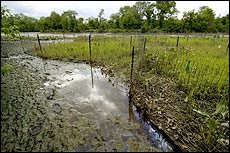
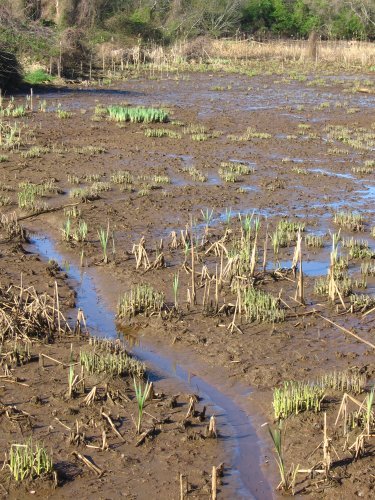
Over a decade ago, the wetlands of Kenilworth Marsh were rebuilt into a healthy ecosystem. Now, the focus is on Kingman Lake. Since 2000, there has been a major effort to replace the wetlands south of Benning Road that were destroyed by an Army Corps of Engineering project in the early twentieth century. Initially the restoration program was successful; the ground was built up, native marsh grasses were planted in fenced areas, and the plants thrived. But this did not last last when fences were removed.

This week's Washington City Paper has profiled one of the major challenges in restoring the former wetlands on the Anacostia: resident Canada Geese. Whenever fencing around replanted grasses came down, either because it was removed or because it fell down, geese would enter the replanted areas and eat down the grasses. In the second year of the project, geese ate 80% of the area that had been replanted the year before. What is worse, the resident geese eat the grasses all year, including in the summer when the same plants could be used by bitterns, rails, and other migratory marsh birds. The resident Canada Geese are a midwestern subspecies imported for hunting in the 1950s; it is the largest subspecies, Branta canadensis maxima, and it is extremely sedentary.

One measure of the success of marsh restoration is the success of wild rice, a dietary staple for both songbirds and gamebirds. Unfortunately, the Canada Geese love wild rice as well, and will eat the plants down - grains, leaves, stems, and all. Planting unpalatable species might discourage the geese, but would likely have the same effect on the animals the restoration is supposed to attract.

The options to solve the population issue all have problems. The current situation - spending millions on replanting only to have the plants mowed down - is clearly not tenable. Scaring away geese with dogs and various noisemakers only works temporarily; geese come right back as soon as the show is over. Egg addling will keep the population in check, but will not lead to a significant decrease for some time; this option has been in use for several years already. Lethal control, an option now under consideration, would reduce or eliminate most resident geese, has its own ethical questions and would certainly face public opposition and lawsuits.

What will happen with the marsh restoration project remains to be seen. Rebuilding the Anacostia wetlands is a key part of restoring a healthy river. Because the river is part of the Chesapeake watershed, improving water quality here has a regional impact as well. Unfortunately the project cannot make significant progress with the current balance.

Friday, April 14, 2006

Friday Butterfly


This Clouded Sulphur was fluttering in the grass at Anacostia Park on Sunday. Clouded Sulphurs are very common in this area, almost as common as the ubiquitous Cabbage Whites.

Visit Friday Ark #82 for more critters.

Tags:

Sunday, April 09, 2006

Birding on a Beautiful Sunday

After yesterday's steady rain and gray skies, today's sunshine was a great relief. The sky was blue, the air was cool, and there were lots of birds around - a great combination. I headed over to Kenilworth Aquatic Gardens as soon as I got up this morning, and then followed that up with a short trip to Anacostia Park.

I was greeted at the entrance to Kenilworth with a smattering of bird song. One ruby-crowned kinglet sang its complex twittering song near the gate while white-throated sparrows sang "Poor Sam Peabody" here and there. One unfamiliar song caught my attention; when I turned to look for the singer, I spotted a Louisiana waterthrush about fifteen feet up in a cypress. The ponds held three members of the heron family: great blue heron, great egret, and snowy egret. Snowy egrets are not that common in D.C. and only appear during migration.

When I reached the boardwalk, I was treated to a quick succession of hawks: a calling red-shouldered hawk, a soaring red-tailed hawk, and a young bald eagle with crows in pursuit. As I watched the red-tail turn, I caught sight of four birds flying north in a loose line - common loons! At the observation decks I sat and watched and listened for a while. As I was getting ready to leave, three Wilson's snipe flew in and settled on the mud flats. It was great to be able to watch them and examine their plumage instead of trying to catch them in flight, which is usually the way I see them.

On the first half of the river trail, the birds were joined in song by chorusing spring peepers. I believe this is the first time I have heard them this spring due to the lack of rain. Further along, I ran into a flock of palm warblers. Normally I will see one or two of this species at a time; today I saw about a dozen darting back and forth across the path. At least one was singing. At the end of the river trail I found my first barn swallows and chimney swifts of the year as they cruised over the mudflats with tree and northern rough-winged swallows. Some of the swallows appeared to be chasing the swifts, but that may just have been coincidental.

At Anacostia Park I hoped to find some migrant gulls and terns. One caspian tern was among a group of ring-billed gulls on a sandbar near the railroad bridge. Other than that the park was not all that birdy. Oddly enough there were no great black-backed gulls to be seen today. As some species are moving in, other species are departing.

BIRD SPECIES SEEN: 59

Common Loon
Pied-billed Grebe
Double-crested Cormorant
Great Blue Heron
Great Egret
Snowy Egret
Canada Goose
Green-winged Teal
Mallard
Turkey Vulture
Osprey
Bald Eagle
Red-shouldered Hawk
Red-tailed Hawk
Killdeer
Wilson's Snipe
Greater Yellowlegs
Ring-billed Gull
American Herring Gull
Caspian Tern
Rock Pigeon
Mourning Dove
Chimney Swift
Belted Kingfisher
Red-bellied Woodpecker
Downy Woodpecker
Northern Flicker
Pileated Woodpecker
Eastern Phoebe
Tree Swallow
Northern Rough-winged Swallow
Bank Swallow
Barn Swallow
Ruby-crowned Kinglet
Carolina Wren
Gray Catbird
Northern Mockingbird
Brown Thrasher
Hermit Thrush
American Robin
Carolina Chickadee
Blue Jay
American Crow
Fish Crow
European Starling
House Sparrow
Yellow-rumped Warbler
Palm Warbler
Louisiana Waterthrush
Eastern Towhee
Chipping Sparrow
Song Sparrow
Swamp Sparrow
White-throated Sparrow
Dark-eyed Junco
Northern Cardinal
Red-winged Blackbird
Common Grackle
Brown-headed Cowbird

BUTTERFLY SPECIES SEEN: 1

Clouded Sulphur

Saturday, March 11, 2006

Saturday's Birds

Having gotten a late start this morning, I headed over to Anacostia River Park for a little waterbirding. Unfortunately the waterbirds were trying not to be seen, at least by me, and so I mostly saw just a few of the common species. There was at least one lesser black-backed gull among the myriad of common gulls, and one killdeer preening itself on a mudflat. A juvenile bald eagle did a few turns high overhead. I searched through a small flock of song sparrows for anything different, and I may have had a savannah, but I cannot be sure of that.

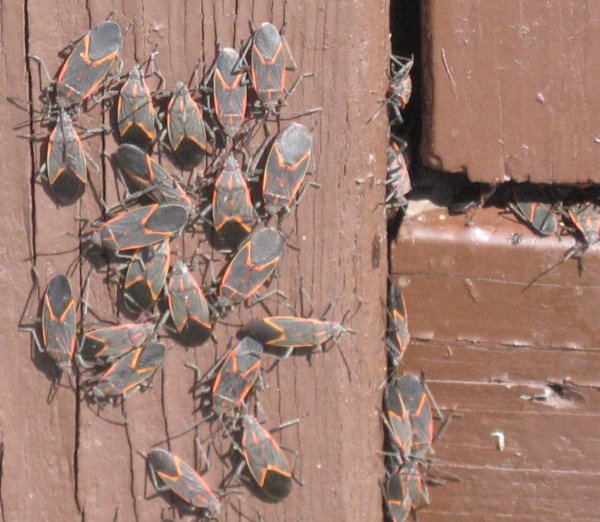
This swarm of insects was on a signboard near the AREC. Does anyone know what these are?

The red eyes make them look a bit demonic.

Since I finished up pretty quickly at Anacostia Park, I made a second stop to walk around the Tidal Basin. With today's warm temperatures, plenty of people came out and were walking and sunbathing all around the inlet. The flock of lesser scaup that was there last week has largely been replaced by a flock of paddle boats. There was a lone pied-billed grebe on the Washington Channel, and two male red-breasted mergansers on the Potomac. Double-crested cormorants are back in force.

The cherry trees are getting ready to bloom.


SPECIES SEEN: 26

Pied-billed Grebe
Double-crested Cormorant
Canada Goose
Mallard
Lesser Scaup
Red-breasted Merganser
Turkey Vulture
Bald Eagle
Killdeer
Ring-billed Gull
Great Black-backed Gull
Lesser Black-backed Gull
American Herring Gull
Rock Pigeon
Mourning Dove
Carolina Wren
Northern Mockingbird
American Robin
Fish Crow
European Starling
House Sparrow
American Goldfinch
Song Sparrow
Northern Cardinal
Red-winged Blackbird
Common Grackle

Tags:

Sunday, January 08, 2006

Sunday Riverfront Birding

Since I had some free time at the beginning of this month, I resolved to get my birding for this year off to a fast start by hitting as many of DC's better birding spots as possible. I started somewhat slowly with a trip to the zoo on Wednesday, and then the birding built momentum from there. This weekend ends with only a few places - Rock Creek Park, McMillan Reservoir, and the southwest riverfront - left unvisited. As a result, I am already ahead of my 2004 pace, which was my best birding year so far.
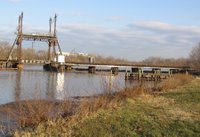

This morning I visited Anacostia Park in southeast Washington. This quiet park tends to be good for waterbirds, and occasionally some landbirds that prefer open areas. This morning I did have some good waterbirds here. There was a handful of ruddy ducks across from the Commodore Barry; farther down, a pied-billed grebe swam in the river. All the common local gulls were represented, as well as an adult lesser black-backed gull. I also saw my first ruby-crowned kinglet of the year all the way down near the South Capitol bridge.

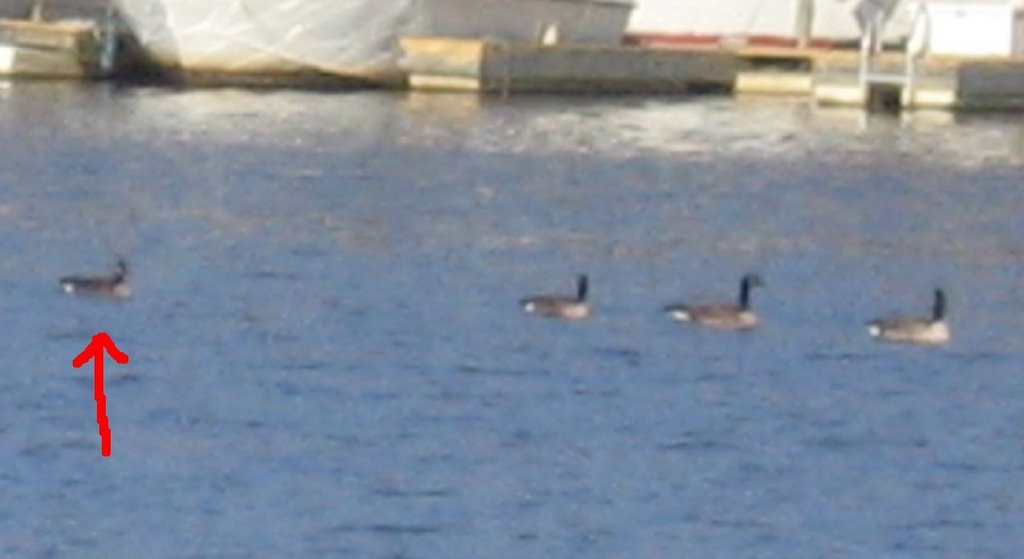
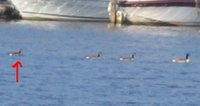
I did leave with a question, and that is whether or not I saw a cackling goose. Several cackling geese have been reported in DC so far this winter, but today was the first time I had seen a real candidate for that species. Cackling goose is a composite of several subspecies that used to be considered part of the Canada goose species until the species was split in two last year. Cackling geese look very similar to Canada geese, except that they are smaller, have proportionately shorter necks, and have stubbier bills. The subspecies most likely to be found in the eastern United States, Richardson's cackling goose, is grayer overall, with breast color matching the color of the flanks. One goose among a flock in the Anacostia River matched this description, though the viewing range was a bit too far for my judgment to be conclusive. I took some photographs of this bird; the best of the lot are shown below.

After lunch, I decided to visit the waterways on the other side of town, namely the Georgetown Reservoir and the neighboring C&O canal. The reservoir sometimes has good numbers of waterfowl in winter; today it was mostly deserted except for the gulls. There were some lesser scaup and at least one canvasback all the way on the far side of the water. One adult lesser black-backed gull was among the common gulls on the dike.

Down at Fletcher's boathouse I followed a foottrail leading west along the river instead of the towpath. This trail soon degraded into little more than a deer path, and even that was sketchy at times. Still I pressed on with that route, since I knew I would not get lost; I was in an area bounded by the Potomac and canal, and Fletcher's boathouse and the Chain Bridge. As long as I kept on in the same direction there would eventually be a way out.

The bushwhacking paid off, as I passed through some very birdy meadows. One spot had a female common yellowthroat, which perched on a tree branch at eye level and then glided down into the grass; it showed its yellow underside on the way down. Farther on, close to the Chain Bridge, there was a spot full of sparrows. These included field and savannah sparrows, in addition to the more common ones. Other birds seen along the way included eastern bluebird, belted kingfisher, and red-shouldered hawk. The deer paths, of course, also had deer, which fled before my footsteps.

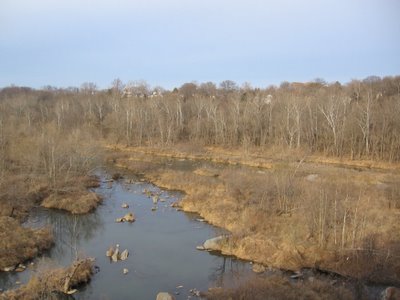
When I reached the Chain Bridge I went up on the walkway to look at the ponds. These held mostly mallards, but also a hooded merganser and several common mergansers. The view from the Chain Bridge was a lovely way to end a long day of birding.

SPECIES SEEN: 45

Pied-billed Grebe
Great Blue Heron
Cackling Goose (?)
Canada Goose
Mallard
Canvasback
Lesser Scaup
Hooded Merganser
Common Merganser
Ruddy Duck
Red-shouldered Hawk
Red-tailed Hawk
Ring-billed Gull
Great Black-backed Gull
Lesser Black-backed Gull
American Herring Gull
Rock Pigeon
Mourning Dove
Belted Kingfisher
Red-bellied Woodpecker
Yellow-bellied Sapsucker
Downy Woodpecker
Hairy Woodpecker
Northern Flicker
Pileated Woodpecker
Golden-crowned Kinglet
Ruby-crowned Kinglet
Carolina Wren
Northern Mockingbird
Eastern Bluebird
American Robin
Carolina Chickadee
Tufted Titmouse
Blue Jay
American Crow
Fish Crow
European Starling
House Sparrow
American Goldfinch
Common Yellowthroat
Field Sparrow
Savannah Sparrow
Song Sparrow
White-throated Sparrow
Dark-eyed Junco
Northern Cardinal

Monday, December 12, 2005

Sunday Birding

Following a report of some very good birds for DC along the Anacostia, I went over to Anacostia Park to see if I could find the greater white-fronted goose that had been present the day before. There were several large flocks of Canada geese, on both the north and south ends of the park, but unfortunately no white-fronted goose was present.

The trip to Anacostia Park was not a waste, however. On the north end of the park, a gorgeous adult red-shouldered hawk glided past me and settled in a tree that was full of starlings. The latter barely stirred, and held their ground. A blue jay and northern mockingbird did take interest in the hawk, and began harrassing it. The hawk eventually left its perched and flew away, with the mockingbird and blue jay in close pursuit.

Among the geese on the river, I saw at least three pied-billed grebes, at several different points along the park. On the south end of the park - below the 11th Street bridge - an adult lesser black-backed gull was in a group of various other gulls. The small flock was on a sandbar across the river from the Navy Yards. I walked all the way down until the road appeared to stop and then back up to Pennsylvania Avenue. As I got to the bridge I spotted a northern harrier soaring over the bridge. Now, harriers are not particularly rare, but do not venture into Washington very frequently; this was my first sighting of one within the district.

Later in the afternoon I headed up to the McMillan Reservoir to check on the waterfowl. Most of the birds were on the south end of the reservoir, across the street from the Howard University student center. There were good numbers of American coots and ring-necked ducks, though both were in lower concentrations than the last time I visited. The usual gulls rounded out the crowd at the reservoir.

SPECIES SEEN: 26

Pied-billed Grebe
Double-crested Cormorant
Great Blue Heron
Canada Goose
Mallard
Ring-necked Duck
Northern Harrier
Cooper's Hawk
Red-shouldered Hawk
American Coot
Ring-billed Gull
Great Black-backed Gull
Lesser Black-backed Gull
American Herring Gull
Rock Pigeon
Mourning Dove
Downy Woodpecker
Golden-crowned Kinglet
Northern Mockingbird
Blue Jay
American Crow
European Starling
House Sparrow
Song Sparrow
White-throated Sparrow
Brown-headed Cowbird

Sunday, November 13, 2005

Birding Along The Anacostia

When I watch birds I tend to visit the same places quite frequently; readers of this blog will notice a report on the National Arboretum practically every weekend. Part of this is that, being dependent on Metro, I need to find places that are easy to access. There is also benefit in birding a patch. But I do like to explore new areas from time to time. That is what I did today.

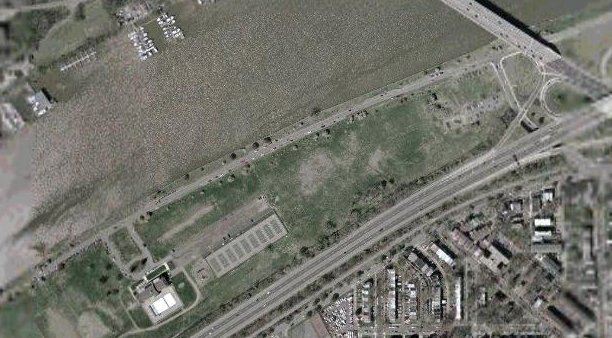
Anacostia Park is a narrow strip of open greenery that runs along the east side of the Anacostia River from the U.S. Naval Air Station north to Benning Road, NE. In practice, however, the usable parts of it are smaller, mainly the areas on either side of Pennsylvania Avenue, SE, south to the 11th Street Bridge and north to the CSX railroad tracks. I had long been puzzled about how to access the park as its east side is bounded by a highway (Route 295/Anacostia Freeway). With the help of Google Earth (a really neat service), I found that the correct approach was to use the Potomac Avenue stop on the Metro and walk across the Pennsylvania Avenue Bridge.

A small part of Anacostia Park. Pennsylvania Avenue is in the upper right.

Unfortunately there were not too many birds to be seen today. I think I may have covered the park at a lull in the season. There were plenty of gulls on hand, including all four locally regular species for fall migration: ring-billed, herring, great black-backed, and laughing gulls. The laughing gulls seemed to keep to themselves a bit more while the others mixed it up. One gull seemed to be trying to pull a crayfish out of the water.

Back on the west side of the river, I walked up a gated roadway that runs behind the Congressional Cemetery and DC General Hospital and up to RFK Stadium. (It seemed to be okay for people to walk here; it was closed to vehicles but not blocked for pedestrians.) The road was lined with trees and underbrush on both sides. Flocks of golden-crowned kinglets and dark-eyed juncos moved ahead of me as I walked down the path. Up at the stadium there was a reprise of more of the same gulls, plus a few Canada geese.

SPECIES SEEN: 20

Double-crested Cormorant
Canada Goose
Turkey Vulture
Ring-billed Gull
Great Black-backed Gull
American Herring Gull
Laughing Gull
Rock Pigeon
Mourning Dove
Belted Kingfisher
Downy Woodpecker
Golden-crowned Kinglet
Northern Mockingbird
Fish Crow
European Starling
House Sparrow
Song Sparrow
White-throated Sparrow
Dark-eyed Junco
Northern Cardinal