Thursday, July 06, 2006

I and the Bird #27

This week is the first anniversary of I and the Bird. To celebrate the occasion, Mike of 10,000 Birds has prepared a special edition on the theme of why we bird, why we blog, and why we blog about birds. Thirty people responded, and the results are in. Go visit I and the Bird #27 to read everyone's answers. (My answer is here.)

I and the Bird is a blog carnival devoted to online writing about birds and birdwatching. Since the carnival was founded, over 150 people have participated, by writing and submitting posts, or by hosting. When I began this blog a little more than a year ago, I had no idea the community was so large. This carnival has done much to introduce bloggers with similar interests.

If you have a blog (or are starting one) and write about birds, consider contributing one of your better posts to a future carnival. The next edition is at Bogbumper on July 20. If you have already submitted at least once, consider hosting. To read more about the rules for each, see here.

Wednesday, July 05, 2006

Bird Extinction and the Human Contribution

According to a recent article, human activities have raised the rates of bird extinction well above what they would be without human interference.

The researchers calculated that since 1500 -- the beginning of the major period when Europeans began exploring and colonizing large areas of the globe -- birds have been going extinct at a rate of about one species per year, or 100 times faster than the natural rate.

And the rate has been faster in recent times. "Increasing human impacts accelerated the rate of extinction in the 20th century over that in the 19th," the report said. "The predominant cause of species loss is habitat destruction." ...

The new assessment considerably exceeds previous scientific estimates that 154 bird types disappeared during that past 500 years, according to the researchers.

One factor contributing to such large differences in estimates is that "more than half of the known species of birds were not discovered until after 1850, an important point that previous estimates of extinction rates have failed to take into account," Raven said. "One can't register a bird as extinct if it was not known to exist in the first place."

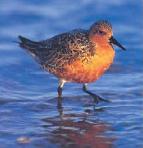
The cases of the dodo and passenger pigeon are classic examples of hunting pressure leading to extinction. But species do not end solely because of hunting, and a reasonable level of predation can be tolerated by most species. The real problems are usually habitat destruction and degradation. A species with a small range or very specific needs is particularly at risk of habitat; this is one reason the destruction of rainforests causes so many extinctions. Long-distance migrants are also at risk because they need habitat for wintering, migration, and breeding. The red knot appears to have been harmed on all three counts, but especially on the vital middle link in its migration route. Climate change, of course, will be an aggravating factor in species loss in the future.

The authors of the piece advise better policies to prevent extinctions.

The new report is not all bleak, Pimm said. "The good news in this report is that conservation efforts are reducing extinction rates to about one bird species every three or four years," he said, but he added that even this improved rate "is still unacceptable."

Of the 9,775 known species of birds, "an estimated additional 25 would have gone extinct during the past 30 years if it were not for human intervention," Raven said.

Despite conservation efforts, "some 1,200 more species are likely to disappear during the 21st century," he warned. "An equal number are so rare that they will need special protection or likely will go extinct, too."

Read the rest.

Carnival Time

Visit the Carnival of the Vanities #198 for self-submitted posts on a variety of topics. My review of Pilgrim on the Great Bird Continent was included.

Tuesday, July 04, 2006

Birds of the Mid-Atlantic #15: Bald Eagle

Our national symbol evokes different reactions in different observers. A bald eagle in flight shows grace and power. On the ground, it appears more clumsy, much like other large raptors. Despite its powerful appearance and hunting prowess, in many cases eagles prefer to scavenge or bully smaller hawks such as osprey into giving up their prey. (These habits led Benjamin Franklin to describe it as "a bird of bad moral character.")
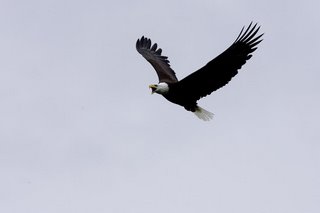
Adult Bald Eagle / Photo by Steve Hillebrand (USFWS)

Still, the bald eagle makes for an appropriate national symbol. Because of their large size and charisma, eagles command the attention even of non-birders. One of the most popular bird topics in the DC area this year has been the plight of the Wilson Bridge eagles, who lost their hatchlings because the mother was injured in a fight. (See my posts on the subject here, here, here, here, here, and here.) New York has its red-tailed hawks, but DC has its Beltway eagles.

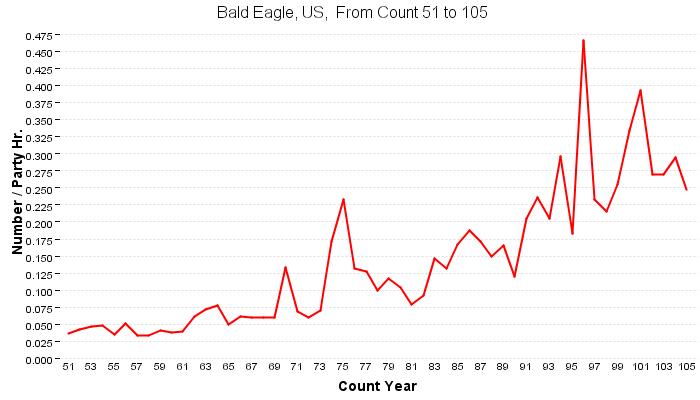
Bald Eagles Per Party Hour on Christmas Bird Counts, 1950-2004

Bald eagles almost disappeared a half-century ago because of human pressures, primarily from the use of DDT. The latter pesticide weakens the eggs of birds so that few eggs hatch; it had a greater effect on raptors because toxins concentrate in higher amounts as they move up the food chain. Thanks to the banning of DDT and the preservation of habitat, the eagle population has recovered. Eagles are now quite common along large bodies of water in the mid-Atlantic region, especially in winter.
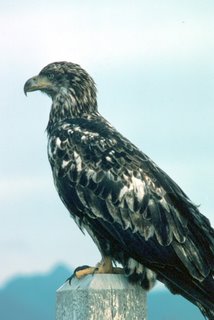
Immature Bald Eagle / Photo by Harrison (USFWS)

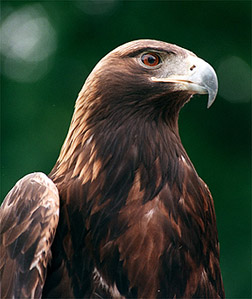
Young bald eagles are sometimes mistaken for golden eagles. The best way to tell the two species of eagles apart is by the amount of white. As you can see in the image above, the plumage of young bald eagles is flecked with white, all over the body and the wings. The amount of white differs depending on an individual's age; the key to note is that the white is widespread. Adult golden eagles will be completely brown, without any white. Young golden eagles will have distinct white patches near the tips of the wings and a distinct white band on the tail; other than those two features, the bird will be entirely brown. See the photograph below for an example of an adult golden eagle.

Golden Eagle / Photo by Illinois Raptor Center via Wikipedia

Another mistake that frequently occurs, not so much by birders as by entertainers, is the confusion of a red-tailed hawk's call with that of an eagle. Red-tailed hawks evoke feelings of wildness and fierceness when they scream. A bald eagle's high-pitched call sounds more harsh and whiny. It ill-befits such a majestic-looking bird. Watch for this in movies and television programs; red-tailed hawk calls are often attributed to almost any raptor, but especially to eagles.

Happy Fourth, everyone!

Cross-posted at A DC Birding Blog and Blue Ridge Gazette.

Monday, July 03, 2006

Birds and Blogging

In anticipation of the first anniversary of I and the Bird, Mike has asked that we bird bloggers think and write about why we bird, why we blog, and why we blog about birds. This is an especially fitting time for me to reflect on this question, since my blog recently completed its first year in existence as well.

So why do I bird? In this blog's inaugural post, I told the story of when I started birding in earnest. For me, this meant the summer when I began to take walks and longer trips specifically to look for birds. It was sparked by the realization that the exotic-looking birds that I saw illustrated in field guides and other sources could be seen with just a little extra effort. In that first year of birding, I came to know many wonderful species - everything from waterfowl to warblers. As a result I was hooked, and I have been watching birds ever since.

For me, there are four things that make birding appealing. First, I have always loved the outdoors, and I would be trying to get out as much as possible with or without birds. Birding has made me more aware of my natural surroundings - not just birds, but also trees, wildflowers, and various insects. Second, birds are notable for their diversity, so there is always a new species or plumage variation to see. Third, there is a thrill that comes from looking for birds and nailing down identifications. Finally, individual birds are fun to watch. Even the ubiquitous house sparrows can be fun to observe over an extended period of time.

Having answered that question as best I could, why do I blog, and why do I blog about birding? I have always enjoyed writing, or at least I have enjoyed writing since the later stages of high school. In many ways I prefer writing to speaking. I do not think on the fly all that well, and in conversation my thoughts tend to come out in a jumble, sometimes with critical points or connections left unclear. But with writing I have time to get my thoughts in order and form them into something logical and persuasive. My comfort with writing turned into an interest in blogging as I became more aware of the world of blogs. I first learned of blogs via some baseball sites that I used to read; then in the 2004 election cycle I was introduced to political blogs, many of which I still read regularly. Blogging seemed like a natural fit for me. It is writing, which I enjoy, and I am free to write about whatever topic most interests me.

Eventually I chose birds as a topic for my nascent blog because it was a topic that held my interest. My experience with blogging (and writing in general, for that matter) has been that it is very important to choose a topic that will hold one's interest over the long term. The next most important thing is that it be a topic that one knows something about.

Now I could just as easily have started a blog or website on something related to work or school. But I did not want to do this for two reasons. One is that when people have gotten in trouble for blogging, it has tended to be because of blogging about work or school in too much detail. The second was my worry that blogging on academic issues could create future problems for me when it came to getting papers published. So I decided to turn towards a hobby instead. For me, that meant birding.

I did not choose to blog about birding solely because it was an available - and safe - topic. The idea for bird blogging grew out of my tendency to write up details of my birding walks for my own use, and to report sightings to the local birding listserve, MD Osprey. At the same time, I was keeping a birding journal in a word processing document on my computer. I wanted a way to record and discuss my observations in more detail without cluttering up the local listserves. A blog seemed to be the natural way to do this. (I must note that this idea did not originate with me, since I had been reading a few bird-related blogs before I started my own.)

Blogging has been an enjoyable and fruitful experience for me. I find that it has enriched my birding experiences since I now pay closer attention to bird behaviors for possible blogging topics. Starting the "Birds of the Mid-Atlantic" series has led me to learn more about the natural history of our native bird species. Even my link posts have been educational. Since I look actively for articles to blog, I have more exposure to recent research and trends. Finally, the existence of a community of bird-bloggers has been a source of encouragement and inspiration in my writing.