Showing posts with label Bird Feeders. Show all posts

Saturday, November 26, 2011

Great-Looking Maybe, But Not With These Birds

Life is running a gallery of "Great-Looking Gifts" on their website, and the glass bird feeder shown above is one of them. Here is what they say about it:
The one thing aquariums have over birdhouses is that you get to watch your fish whenever you want. Now birdhouses get their own high-visibility makeover: This sculptural Mod Glass birdfeeder has an appealingly spare, modern feel — and allows you to observe your colorful feathered friends as they're nibbling. ($78, apartment48.com)
When I saw this image, the first thing that struck me was what birds they chose. The bird inside the feeder is a Common Redpoll, which breeds in the Arctic and migrates to southern Canada and the northern United States for the winter. The blue bird on the right is an Indigo Bunting, which breeds across the eastern United States and southern Canada and migrates south to Central America and the Caribbean for the winter. As far as I can tell, their breeding ranges do not overlap. These are two species that you are highly unlikely to see at the same feeder at the same time. The birds are also out of scale with each other, which makes the Photoshopping more obvious. Indigo Buntings are slightly larger than Common Redpolls but not twice their size, as this bunting appears to be.

Beyond that, I am not sure how functional this feeder would be in practice. The bowl seems very shallow and would not hold a lot of seed, so it would need constant refilling. If it swings back and forth, a lot of that seed could get knocked out. I can also imagine squirrels jumping on the feeder and either knocking it down or knocking the seed out. So if you are looking to splurge on a new bird feeder, I would suggest passing on this and looking for something more functional.

Wednesday, February 23, 2011

Goldfinch at Breakfast

The Great Backyard Bird Count may be over, but there are still plenty of birds in the backyard. Aside from the American Goldfinch in the photo above, there were lots of Dark-eyed Juncos, Common Grackles, and House Finches around yesterday. The weirdest sight was a White-breasted Nuthatch carrying something bigger than its head. It might have been a piece of suet, though I am not sure how one would fit that much through the bars of the suet cage. It probably was not a whole peanut since there are not any at these feeders or in the neighbor's yard. I guess that will remain a mystery.

As with the rest of my bird sightings, I entered those into eBird. Over several years, I have built up a substantial yard list of 68 species. There are probably more that missed or forgot to record.

Sunday, December 12, 2010

Birds at Scherman Hoffman Wildlife Sanctuary

Yesterday I was at Scherman Hoffman Wildlife Sanctuary, one of several preserves operated by New Jersey Audubon. The woods were mostly quiet, as I expected on a winter day, but there were patches of bird activity. One patch was along a trail that loops around a grassy field. There were a lot of sparrows busy in one of the hedgerows. Dark-eyed Juncos, White-throated Sparrows, Song Sparrows, and Field Sparrows all darted in and out of the bushes. Other small birds such as Black-capped Chickadees and Tufted Titmice was also active in the same spot. The reason for such a concentration of activity was apparent on the other side of the hedgerow, where a small stream was flowing. Birds were darting from the bushes down to the stream to drink or bathe. I photographed the junco below during its second dip into the stream.

Another concentration of activity was around the nature center's birdfeeders. Their feeders attracted the usual suspects: chickadees, titmice, White-breasted Nuthatches, and Downy Woodpeckers. In addition, some other birds like American Goldfinches and Blue Jays seemed to be attracted by the activity but did not actually come down from the trees around the center to the feeders. A few Eastern Bluebirds were sitting in a holly tree nearby.

The Black-capped Chickadees really liked one particular feeder that was shaped like a snowman. I am not sure why they favored this one so much, but they visited this feeder much more than the other feeders, and other birds mostly stayed away from it.

This Downy Woodpecker made use of the suet feeder.

Sunday, October 24, 2010

Database Matches Plants to Birds (Updated)

Sometimes I wonder which birds might use a particular plant, or how to attract a bird species. There is now a tool to help answer this question, at least for some eastern birds. Pennsylvania Audubon has assembled a database of plant-bird relationships. (Caution: the link was fine when I first wrote the post, but it may now lead to a phishing site.**) You can select a bird or a plant from dropdown menus; on hitting submit, you get a table of that species's relationships. (An example is shown below.) The tables show more than simply food plants, as the database includes plants that a bird might use for cover or nesting. (Some species have very specific needs for nest locations). It also breaks down the food uses by plant part. This information as the food sources are available at different times of year.


** Update: After several days I still have not had not a response from Audubon PA to an emailed query about the corrupted link. A lot of the same information can be found on the Audubon at Home website. Unfortunately, it does not have the same level of detail as Audubon PA's bird-plant database.

Thursday, August 19, 2010

Molting Mourning Dove

Among the common feeder birds here are Mourning Doves, which walk under the feeder and pick things off the ground. I am not entirely sure what they are finding, whether they are picking up bits of seed that were sloppily dropped by other birds at the feeder or catching invertebrates. It might be a bit of both. While their plumage is understated, their shape and gait makes them appear more elegant than some other feeder visitors.

As I was examining my photographs, I realized that this dove has two ages of feathers – in other words, the bird is molting. It is most obvious in the wing coverts: some feathers are grayish and others are brown. Which ones are newer is not as clear, but it seems that the darker ones have crisper edges while the lighter ones look frayed, so the dark ones are probably fresh.

Sunday, February 21, 2010

House Finches, Disease, and Bird Feeders

 
House Finches at a Feeder

Like humans, birds can be infected by various diseases, some of which can be quite contagious. Among feeder birds, House Finches are particularly susceptible to Mycoplasmal conjunctivitis. Avian conjunctivitis causes very noticeable changes to a bird's appearance and behavior. Infected birds appear to have swollen or crusty eyes. Becoming lethargic, they succumb more easily to starvation or predation.

A new study examines behaviors that may encourage the spread of conjunctivitis among House Finches. Researchers placed healthy finches into the middle chamber of a partitioned cage with a healthy finch on one side and a visibly diseased finch on the other; all three finches were of the same sex. Food dishes were placed at the edge of each chamber so that the middle finch would have to interact with neighboring finches in order to feed. The researchers then monitored the behavior of the middle finch.

While female House Finches fed equally near healthy or diseased finches, males strongly preferred to feed near a diseased finch. This preference may be explained by the symptoms of conjunctivitis. Since the disease produces lethargy, infected males are much less likely to challenge a healthy male for dominance at a feeding station. Feeding near infected individuals thus reduces the energy and social costs of losing such a confrontation.

The danger, of course, is that feeding and other interactions with infected individuals is likely to increase a healthy bird's chances of catching disease. Mycoplasmal conjunctivitis is a relatively new disease among House Finches, first documented in 1994. In the context of such a new and contagious disease, male finches' instinct to reduce confrontation may work against their ability to resist disease.


ResearchBlogging.orgBouwman, K., & Hawley, D. (2010). Sickness behaviour acting as an evolutionary trap? Male house finches preferentially feed near diseased conspecifics Biology Letters DOI: 10.1098/rsbl.2010.0020

Tuesday, September 01, 2009

Warbler at a Hummingbird Feeder

This video of a warbler visiting a hummingbird feeder was posted on YouTube.

Songbirds sometimes visit hummingbird feeders, either to drink nectar or to catch insects attracted to the feeder. (See the photos here for another example.) Many warbler species, which primarily eat invertebrates during the breeding season, will drink nectar from flowers on their winter grounds in Central and South America. So it is not all that surprising that they would take advantage of artificial nectar sources as well.

The bird in the video above is most likely a Prothonotary Warbler. Not many warblers have that combination of bright yellow throat and breast, white vent, and plain upperparts (with a bluish cast). The dark head may indicate a hatch year bird. While spring adult males have bright yellow head, other plumages show varying amounts of olive on the nape and crown, with the most olive coverage on first fall birds. Prothonotary is one of the warbler species known to nectar.

The only element that bothers me is the apparent dusky neck,* but that could be an effect of the lighting, which appears to be coming from behind. I also do not see location information on the video or user pages, so there is a question of whether the range is appropriate. The site is in North Carolina, so this would be within the Prothonotary Warbler's normal range. What do you think?

* After checking a few more sources, I found that first fall Prothonotaries may have an olive wash on the flanks and throat.

Thanks to Peter Vankevich for bring the video to my attention.

Wednesday, April 29, 2009

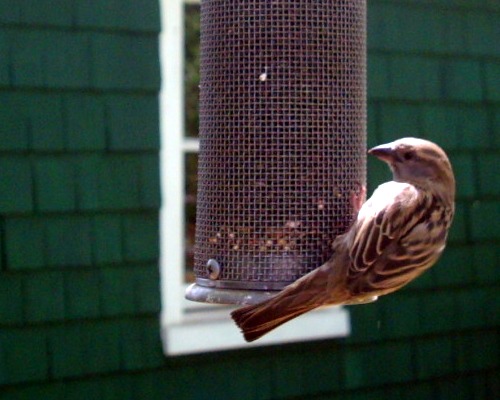
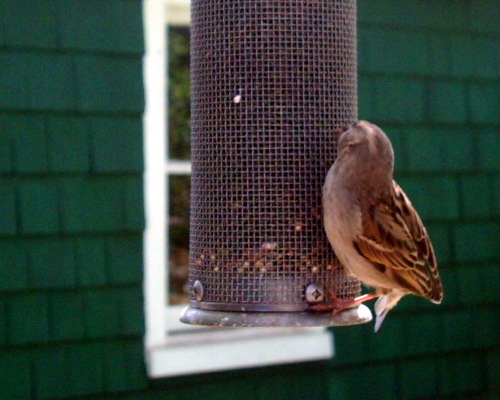
House Sparrows Don't Like Thistle

Or so I have heard...


Wednesday, February 04, 2009

Salmonella and Bird Food

I am sure most readers of this blog are aware of the salmonella contamination at a peanut processing plant in Georgia. Apparently the plant knew about the contamination, too, but sold contaminated food anyway. The salmonella outbreak may have health implications for birds as well, since many commercial suet cakes and seed mixes contain processed peanuts or peanut butter.

CLO's Round Robin blog has a useful summary of what they know about the peanut situation. The post includes a reminder from Project FeederWatch to clean feeders regularly and other advice on preventing disease outbreaks among feeder birds. Cleaning feeders is something that ought to be done on a regular basis regardless of known disease outbreaks.

Birdchick has been asking bird food companies whether any of their products contain peanuts processed at the Peanut Corporation of America. Here is a list of the companies that have said that their bird food is safe.

Tuesday, January 20, 2009

Busy Feeders

There was a lot of activity at the feeders yesterday. The morning and afternoon snowstorms seemed to keep the flocks coming.


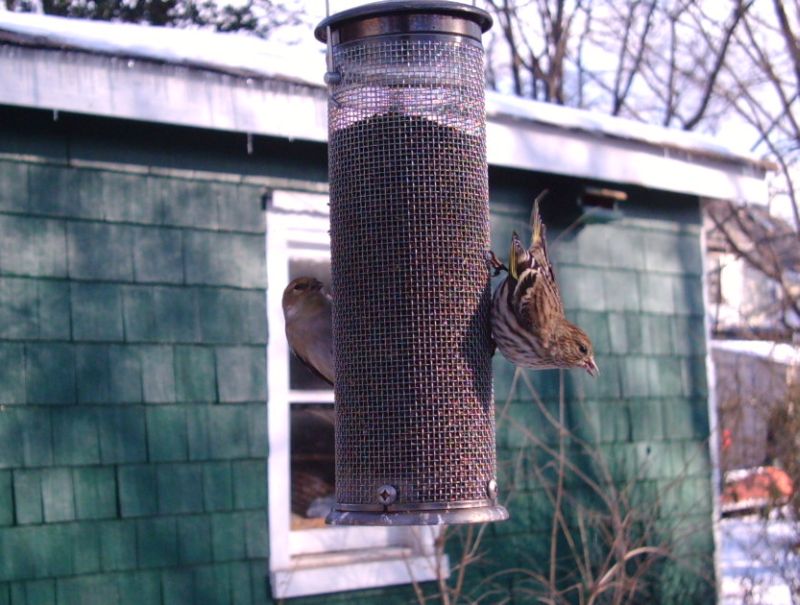
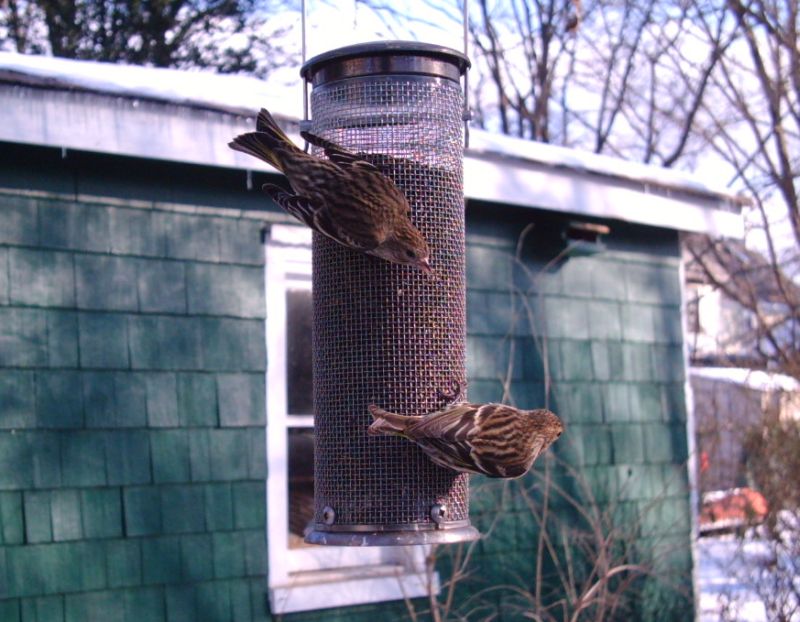
Siskins are still around.

Note: Photos are not necessarily in chronological order.

Monday, January 19, 2009

Some New Feeder Birds

The feeders were busy again yesterday when we got another dose of snow.

First off, an unusual thistle customer...

The Pine Siskins were back.

Siskins are back!At times, finding a place to land on the feeder was a problem.

Coming in for a landingThese photos were all taken with a Wingscapes BirdCam yesterday. You can find more at my Flickr site.

Thursday, January 15, 2009

New at the Feeders: Pine Siskins!

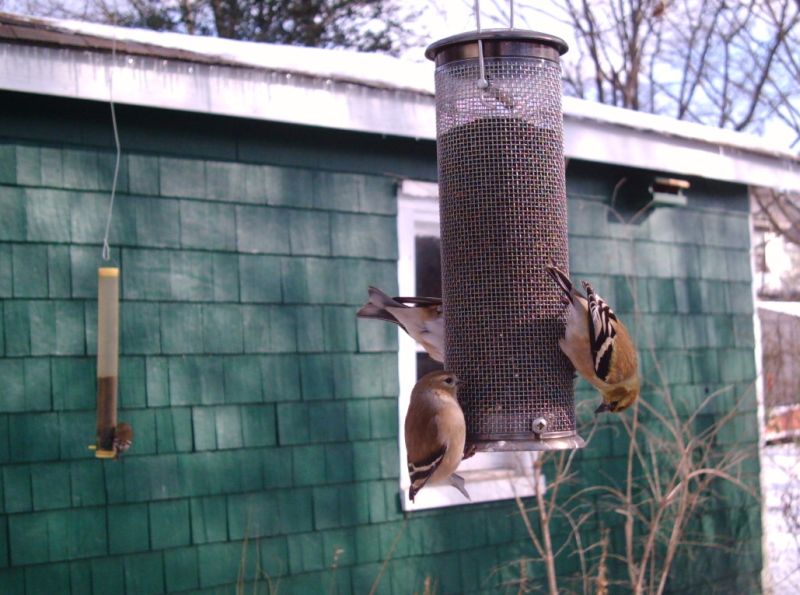
Two days ago a Pine Siskin showed up at the feeders for the first time this winter. I set up my BirdCam yesterday and today, and today I got some pictures of it. At least two siskins were present. Here are a few photographs from today, and possibly more since some of the photos were separated in time.

First, some goldfinches...

Then, one siskin and one goldfinch...


And now, two siskins!


More siskin and goldfinch images available here.

Saturday, July 12, 2008

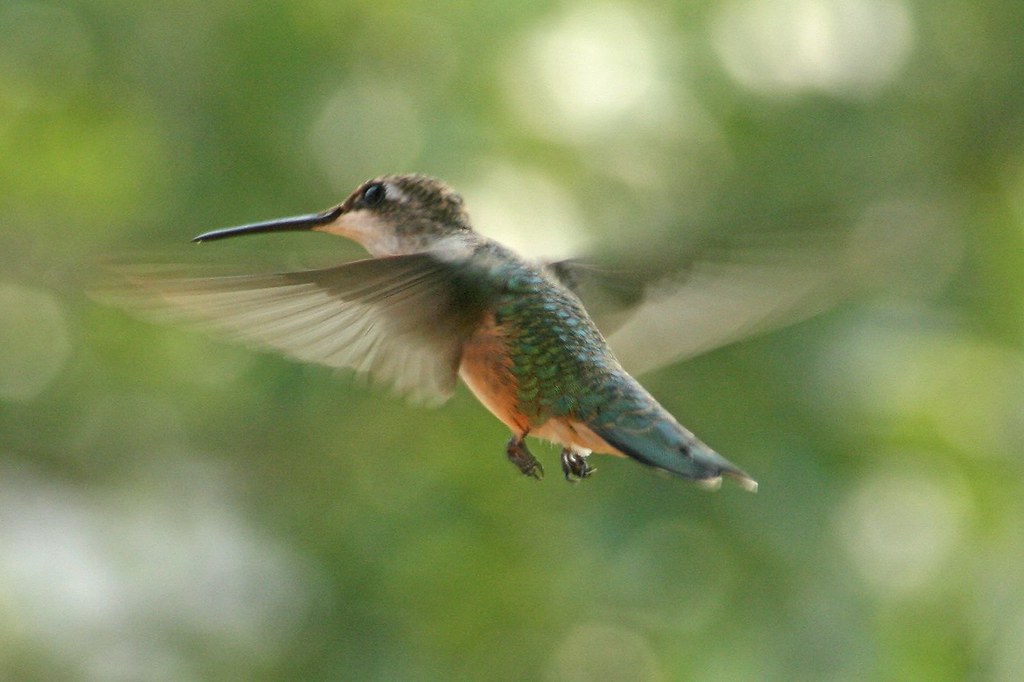
Are Hummingbirds in Decline This Year?

Airborne originally uploaded by c-eight

A couple days ago, Birdchick posted an email she received that asked about the status of ruby-throated hummingbirds. Apparently a lot of people have noticed declines in the number of ruby-throated hummingbirds coming to their feeders. I have received queries about this myself, both last year and this year, and it has been a frequent topic on discussion boards and email lists that deal with hummingbirds. The discussion that I have seen so far, though, has been mostly anecdotal; I would prefer to see it backed up with some data.

One easily-accessible source of distribution information is eBird, which allows users to break down sightings for a species by year. I downloaded the line graph data for ruby-throated hummingbirds during breeding seasons from 2004-2008 and created my own line graphs with Google Docs. The data covers the entire United States. (I would have liked to use a smaller area, but I could either pick the whole country or an individual state.)

The first graph is for frequency, the percentage of checklists from the breeding season (i.e., June-July) on which ruby-throated hummingbirds were reported. Each point on the graph represents a single week. Ignore the flatline near the end of line for 2008; those weeks have not happened yet.

The second graph is for abundance, the average number of birds reported on all checklists from the breeding season, including checklists that do not report the species. Again, ignore the dip at the very end of the line for 2008.

My read of the eBird statistics is that ruby-throated hummingbirds are being reported about as frequently but that birders have been seeing fewer individuals during 2007 and 2008. That might indicate a population decline. Conceivably it could result instead from a range shift or delayed start to the breeding season. In any case, the effect seems to be a small one, and the species does not appear to be undergoing a sudden population crash or catastrophic decline.

With a volunteer source like eBird, there may be some inconsistency in reporting at work in the results. It would be interesting to see whether the same result holds in data sources with more standarized protocols, like the Breeding Bird Survey (BBS) or banding stations. However, as one commenter on Birdchick's post noted, even some of these sources might underreport hummingbirds. BBS picks up mostly singing birds during short point counts, and not all bird banders are trained to band hummingbirds.

Any ideas for a better source on the hummingbird population?


Related posts:
Stokes Birding Blog also has a roundup of recent information on the hummingbird population.

Monday, January 28, 2008

Birdcamming - Recent Visitors

After deserting the feeders for the last two months of last year, the birds have suddenly returned in large numbers again. House sparrows are still mostly absent, but others are coming back.

There have been house finches and dark-eyed juncos...

...and cardinals...

...and wrens...

...and mourning doves.

One of the squirrels managed to open a suet feeder and run off with the cake, which was still fairly large when I last saw it.

Saturday, December 08, 2007

Wren at the Feeder

Carolina wrens eat mostly arthropods, but this week one was coming to the sunflower feeder for a supplement.

A junco tried the sunflower feeder, too.

Thursday, December 06, 2007

Feeder Birds

After a long absence, birds were back at the bird feeders today. The light snow must have covered other food sources and driven them to the feeder. Most of the activity today was from black-capped chickadees, though a few house sparrows and a blue jay (not shown) made appearances also.


Photos taken with the Wingscapes BirdCam.

Sunday, November 11, 2007

Recent Yard Birds

Here are some recent visitors captured on the BirdCam. All of these birds came to the feeders between November 4 and November 9. This week I aimed the camera at the suet feeder on most days, and it recorded an interesting mix of birds.

The suet feeder attracts a predictable set of birds - primarily nuthatches, chickadees, titmice, and woodpeckers.
This nuthatch appears to be yawning.

Then there are some less expected customers, like this house sparrow that thinks it's a chickadee.

Patrick wrote a lengthy review of the Wingscapes BirdCam at his blog. He covers all the bases, so I don't have much to add to it. I have gotten the best results in the 24"-37" range. Aiming for much closer tends to obscure more distant birds, while setting it for farther away results in a lot of birds being too close to the lens. It helps to have a single point where birds gather - like a feeder or birdbath - that is entirely within the focus range.

Saturday, November 03, 2007

Recent Feeder Visitors

There were new visitors to the feeders this week. Well, the first ones were not actually new to the feeders, but they were recorded on the BirdCam's memory card for the first time. First, a bright red cardinal posed conveniently in a beam of sunlight.


Red-winged blackbirds made an appearance as well. The image is my first record of them at the feeders this fall.

In addition to the birds, there were some red-backed salamanders here.

Both the red and dark ("lead-backed") morphs were present.

Wednesday, October 31, 2007

Feeder Birds, Halloween Edition

One of the little-advertised aspects of BirdCam is its ability to photograph not only birds, but also ghosts and phantoms.


Phantom birds can stand on their tails!

This poor mourning dove is clearly haunted by some nefarious presence.

This could be a great asset for paranormal investigators.

Wednesday, October 24, 2007

Birdcam Photos

Like Patrick, I recently received a Birdcam from Wingscapes. A Birdcam is a motion-sensitive camera that takes photographs automatically when it is triggered by something crossing its infrared sensor. It is designed to monitor feeders or other places that birds gather. Since birds are not bothered by its presence, it can be placed very close to feeders.

It took a few tries to get the lighting right. The first two times I tried setting up the camera, it rained one day and photos were backlit the other day. Yesterday the camera got better results at a bird bath. Here's a sampling.

A mourning dove came from a drink first.

A house sparrow took a drink...

... then more house sparrows took a bath.

Some goldfinches investigated.

A couple of house finches stopped by also, but were obscured by other birds or looking away from the camera. No weird birds yet.