Showing posts with label Constitution Gardens. Show all posts

Sunday, March 18, 2007

A Day for LBJs

Birders have adopted a term "little brown jobs" (abbreviated "LBJs") as shorthand for any of the small brown bird species. "LBJ" refers principally to sparrows, but may include female finches, female buntings, pipits and larks, some warblers, some icterids, and even some thrushes, depending on one's perspective. The term expresses the mix of frustration and endearment that birders feel towards small brown birds. Perhaps the frustration of trying to differentiate cryptic birds is more prevalent. But even the most frustrated birder can find something to like among the small brown birds. These are, after all, among the most common birds that we encounter out in the field. Even in the city, it is hard not to see a few on any given walk. Today I saw more than my usual share of LBJs.

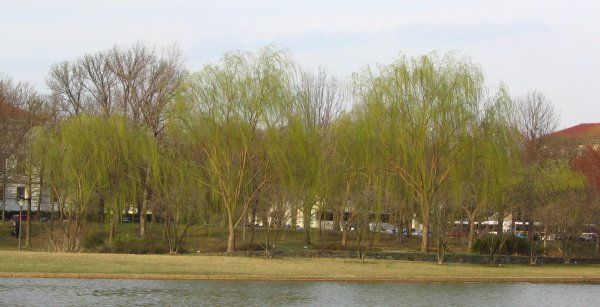
I started out at Constitution Gardens, and immediately I saw an adult bald eagle circling the Washington Monument. The lake at the gardens held basically the same group of waterbirds as the last time I visited: American wigeons, ring-necked ducks, lesser scaup, American coots, and superb redheads. A new waterbird species for this week was pied-billed grebe. The number of common grackles on the Mall has been building, and today I saw my first red-winged blackbird of the year. A few song sparrows and many robins worked the grassy areas around the lake.

From there I walked over to the DC WWI Memorial. As usual, the area around the memorial was quiet, but the azalea bushes held a trio of fox sparrows. All three let me approach closely for better looks at their rich rufous plumage.

The Tidal Basin and river held numerous double-crested cormorants. Cormorants are clearly making a push northward, but I am not sure that their numbers have peaked yet. Lesser scaup are also on the move. There were several large flocks on the Tidal Basin, river, and Washington Channel. Red-breasted mergansers are also passing through. A sure sign of spring is the return of the railroad bridge ospreys. One was arranging the nest on top of the trestle, and a second was perched on the piling below.

As I made my way south to the point, strong winds made it difficult to see what might be on the river. So I stayed close to the golf course fence instead. As a result, I got a decent look at a swamp sparrow. Near the point I deviated from my original plan and approached the river walk again. As a result of that chance decision, I saw two American pipits on the concrete path. This was a chance sighting in a second way as well; since the first bird I saw on the path was a song sparrow, I assumed the others would be as well, but took a second look anyway. (It is always a good idea to take a second look!) It was only then that I noticed the thrush-like posture, ungainly strut, and bobbing tail that are characteristic of American pipits. This was an exciting sighting since I have only seen pipits once before. There was a third pipit on the other side of the point. At the tip of Hains Point, I spotted three Bonaparte's gulls among the fleet of ring-billed gulls.

On the way from Hains Point, I encountered yet another odd LBJ. After checking through the various field marks - notched tail with white outer feathers, white eye ring, white supercilium with hatching, striped breast, etc. - I determined that the bird was a vesper sparrow. Like today's fox sparrows, this vesper sparrow was very cooperative and stayed in the grass about five feet away while I examined it in detail. It is not every day that one gets such a good look at an unusual bird.

Before calling it a day, I stopped by the Indian Museum to check the wetland display. Oddly enough, that was where I saw my first white-throated sparrows of the day. I am not sure how I went almost a whole day without seeing them. A final treat was a Cooper's hawk circling the Capitol's reflecting pool.

SPECIES SEEN: 41

Pied-billed Grebe
Double-crested Cormorant
Canada Goose
American Wigeon
Mallard
Redhead
Ring-necked Duck
Lesser Scaup
Red-breasted Merganser
Osprey
Bald Eagle
Cooper's Hawk
American Coot
Ring-billed Gull
Great Black-backed Gull
American Herring Gull
Bonaparte's Gull
Rock Pigeon
Mourning Dove
Downy Woodpecker
Northern Flicker
Eastern Phoebe
Golden-crowned Kinglet
Northern Mockingbird
American Robin
Tufted Titmouse
White-breasted Nuthatch
Blue Jay
Fish Crow
European Starling
House Sparrow
House Finch
American Goldfinch
Vesper Sparrow
Fox Sparrow
Song Sparrow
Swamp Sparrow
White-throated Sparrow
Dark-eyed Junco
Red-winged Blackbird
Common Grackle

Roll mouse over images for attribution and species name.

Sunday, March 04, 2007

Wind and Waterbirds

As I mentioned in a prior post, some redheads were reported in the course of the Great Backyard Bird Count, and were reported again this past week. Today I finally walked down to Constitution Gardens to look for them. Today was one of those changeable, blustery days typical of late winter with the sun going in and out of the constantly moving clouds. I have visited Constitution Gardens on such days before. The pond there is somewhat sheltered from the winds, so it provides an inviting resting point for waterfowl.

As reported, several redheads were in the Constitution Gardens lake. I counted six - four males and two females. Redheads are always a treat, so I stood and watched them bobbing in the midst of a small crowd of American wigeons, lesser scaup, and ring-necked ducks. Oddly enough, I have now seen redheads more frequently in DC than canvasbacks; that says more about the random character of finding waterfowl in this city than the species' relative abundance. Elsewhere on the lake, a few American coots with the lake's usual denizens. One was displaying the white underside of its tail; I am not sure of the meaning of this display - whether it is a sign of fear or a rush of hormones.

From Constitution Gardens, I walked past the WWII Memorial to the DC WWI Memorial. The reflecting pool was almost bone dry. A large flock of robins foraged in the leaves and bushes around the WWI Memorial. A small flock of juncos was also present, along with a small helping of white-throated and song sparrows.

The Tidal Basin held more lesser scaup, as well as both red-breasted and common mergansers. The biggest surprise was mammalian rather than avian. A beaver was sitting near the Tidal Basin's outlet bridge! Not having had a good look at one before, I was amazed by how large it was. Its presence may be bad news for the cherry trees, but I was certainly happy to see it.

Because of the strong northwest winds, birding along the river was nearly impossible. All I could find there were a few dozen lesser scaup. Conditions were better on the Washington Channel, which is more sheltered than the river side of East Potomac Park. There were yet more lesser scaup, the usual winter gulls, plus my first double-crested cormorants of the year (in D.C., anyway).

One reason I had pushed on to the river and the channel, even though I was somewhat tired by that point, was that I was hoping that I might find a pied-billed or horned grebe. The bad news is that I did not see either species. The good news is that I saw a red-necked grebe instead. Not only did I see one, but it was one of the best views I have had, of any grebe. Distinguishing winter-plumage red-necked and horned grebes can be tricky at a distance, but up close the differences in head and bill shape really stand out. This bird had the typical heavy and straight yellow bill that is typical of the red-necked variety, as well as the blocky head. (Horned grebes have a stubbier bill and more triangular head.)

It was a great day of birding, but by the time I got home, I was pretty worn out (thus the late post). While our temperatures are still in a relatively cold pattern, birds are clearly on the move. It is a trickle now, but in the next few weeks the pace will accelerate. If you live in Washington, go see the redheads and red-necked grebe while they are still around. With migration under way, they probably will not stay long.

SPECIES SEEN: 34

Red-necked Grebe
Double-crested Cormorant
Canada Goose
American Wigeon
Mallard
Redhead
Ring-necked Duck
Lesser Scaup
Red-breasted Merganser
Common Merganser
Turkey Vulture
Red-tailed Hawk
American Coot
Ring-billed Gull
Great Black-backed Gull
American Herring Gull
Rock Pigeon
Mourning Dove
Downy Woodpecker
Golden-crowned Kinglet
Northern Mockingbird
American Robin
Blue Jay
American Crow
Fish Crow
European Starling
House Sparrow
American Goldfinch
Song Sparrow
Swamp Sparrow
White-throated Sparrow
Dark-eyed Junco
Northern Cardinal
Common Grackle

Wednesday, May 03, 2006

Migrants on the Mall

After seeing that there had been a strong push of migrants last night, I decided to check out one of DC's migrant traps. I took the Metro over to the west end of the Mall and birded the areas around the DC WWI Memorial and Constitution Gardens. Birds other than starlings, house sparrows, robins, and the like are always a little sparse, but there were some good ones mixed in.

Starting out at the WWI Memorial, I heard Baltimore oriole, yellow-rumped warbler, and black-throated blue warbler in quick succession. A little digging turned up some wood thrushes and a singing veery. There were lots of brown thrashers and gray catbirds hanging around in the same wooded patch.

Moving on to Constitution Gardens, I found many more yellow-rumped warblers, which were everywhere today. Hearing a yellow warbler, I stopped to take a look. Instead of the yellow, I saw my life Cape May warbler. It was busy foraging in one of the locust trees at the west end of the lake. It was a male, with the orange cheek patches and lemon yellow head and breast. The best part was that it was at an easy viewing height and sat more or less out in the open for a long time.

From there I walked over towards the Vietnam Memorial and found a few more birds. (I do not take my binoculars down into the memorial, but walk around the outside.) A singing scarlet tanager gave great looks; after seeing it, I was sorry not to have included it in my top ten. Nearby a prairie warbler was singing its buoyant buzzy song. Among the many wood thrushes, I found a couple of lingering hermit thrushes. Those will not be around much longer.

These two areas are good migrant traps because of their relationship to the rest of the Mall. There are shady strips running the length of the Mall, but for most of its length, the trees are mostly American elms with high canopies and no understory. On both sides of the reflecting pool, however, there are fewer elms and more varieties of oaks, horsechestnuts, willows, and locusts. Along with the more diverse canopy, there is substantial understory in places, with plots of hollies, azaleas, and other shorter trees and shrubs.

SPECIES SEEN: 37

Canada Goose
Mallard
Osprey
Ring-billed Gull
Rock Pigeon
Mourning Dove
Chimney Swift
Northern Flicker
Carolina Wren
Gray Catbird
Northern Mockingbird
Brown Thrasher
Veery
Hermit Thrush
Wood Thrush
American Robin
Blue-gray Gnatcatcher
Blue Jay
American Crow
European Starling
House Sparrow
Red-eyed Vireo
House Finch
Northern Parula
Yellow Warbler
Cape May Warbler
Black-throated Blue Warbler
Yellow-rumped Warbler
Black-throated Green Warbler
Prairie Warbler
Scarlet Tanager
Eastern Towhee
Song Sparrow
White-throated Sparrow
Red-winged Blackbird
Common Grackle
Baltimore Oriole

Monday, March 13, 2006

Birds on the Mall

This evening I walked around the west end of the Mall for an hour or two. I started out to see if anything was new at Constitution Gardens. It turned out that only the common birds were there: large flocks of American robins, dark-eyed juncos, common grackles, red-winged blackbirds, and European starlings. The lake has been refilled, so the mallards and ring-billed gulls are back. A northern flicker called repeatedly from high in a tree. The gardens here have a reputation as a migrant trap, so the site bears frequent visitation.

As I walked, I could see small flocks of double-crested cormorants flying high overhead as they followed the course of the Potomac northwest. Later, when I rounded back along the river, there were few birds on it. A small flock of lesser scaup has returned to the Tidal Basin, along with the usual gull species.

This first-year ring-billed gull let out a big yawn as I took its picture. It needs to learn better manners.

Sunday, March 05, 2006

Pine Warbler, Not In A Pine

Despite the chilly March winds, spring was breaking out all over Washington. When I first arrived at the National Arboretum this morning, an exuberant house finch was singing nonstop. I relocated the red-headed woodpecker that has been lingering in the woods behind the Capitol columns fairly quickly. This time, with much better lighting, I could see the brilliant red of the woodpecker's head flashing in the sunlight. In the same general area, I also saw some field sparrows.

Unfortunately, the gate to the river path was locked so I was not able to check the Anacostia for waterfowl. However, my walk through the Asian Gardens was not without its rewards; I found that red-breasted nuthatches are still residing in the conifers there, and I got a great look at a pileated woodpecker as it flew across the river and into the woods on the near bank. (I still have trouble understanding how experienced observers could turn a pileated into an ivory-billed, but that is a story for another day.) The large Beech Spring Pond held a small group of hooded mergansers in addition to the larger flock of Canada geese.

As I checked around Fern Valley, I heard a trilling song coming from somewhere near the Youth Garden. (The song was almost like the sound of one of those old analogue train departure boards, but sustained on a high pitch.) I checked over around that garden and found a pine warbler. Oddly enough, it was foraging on the ground, instead of high in a tree where I am used to finding this species. There must have been two, because I could hear the song coming from a different direction at the same time as I had this one in my binoculars. It was really good to hear a warbler song again; I look forward to hearing more of them in a few short months.


Later in the afternoon I took a second walk along the waterfront. At the Washington Channel I saw a double-crested cormorant in the District for the first time since mid-December. In another month there should be hundreds of them. The channel also held a lone pied-billed grebe. When I rounded Hains Point and walked back up the Potomac side, I came upon raft after raft of lesser scaup, totalling many more than I have seen in the area through most of the winter. Presumably these scaup are staging here before resuming their northbound migration.

From the river, I walked across the Mall to Constitution Gardens. The lake that forms the centerpiece of the gardens has been drained for the most part, with only small portion still under water. This portion still held many mallards and ring-billed gulls, along with a pair of American wigeons. Large flocks of American robins and various blackbirds, including brown-headed cowbirds and red-winged blackbirds, foraged in the grass between the lake and the Mall's famous reflecting pool.


SPECIES SEEN TODAY: 48

Pied-billed Grebe
Double-crested Cormorant
Great Blue Heron
Canada Goose
American Wigeon
Mallard
Lesser Scaup
Hooded Merganser
Red-breasted Merganser
Black Vulture
Red-tailed Hawk
Ring-billed Gull
Great Black-backed Gull
American Herring Gull
Rock Pigeon
Mourning Dove
Red-headed Woodpecker
Red-bellied Woodpecker
Downy Woodpecker
Hairy Woodpecker
Northern Flicker
Pileated Woodpecker
Golden-crowned Kinglet
Carolina Wren
Northern Mockingbird
Eastern Bluebird
Hermit Thrush
American Robin
Carolina Chickadee
Tufted Titmouse
Red-breasted Nuthatch
White-breasted Nuthatch
Blue Jay
American Crow
Fish Crow
European Starling
House Sparrow
House Finch
Pine Warbler
Eastern Towhee
Field Sparrow
Song Sparrow
White-throated Sparrow
Dark-eyed Junco
Northern Cardinal
Red-winged Blackbird
Common Grackle
Brown-headed Cowbird

Saturday, January 14, 2006

Windy Birding at the National Mall

This afternoon I decided to investigate what kind of birds were appearing on the far end of the National Mall. I picked one wild day to do it. A cold front, accompanied by rain, had passed through overnight and put an end to the balmy weather we had had all week. In its wake, were were left with very strong winds - about as strong as we ever get around here. How strong was the wind? Strong enough to rip flags off the flagpoles near the Washington Monument. (Update: The Post has more on the windstorm.)

I started out by walking around part of the Tidal Basin. Only gulls were in the water. Some holly trees near the FDR memorial contained a large flock of American robins. There were accompanied by a smaller group of cedar waxwings . Some hardy waxwings braved the wind to perch out on the bare cherry trees, but even these had to retire to the relative comfort of the hollies.

The Potomac also had very few birds. One flock of lesser scaup rode the waves about halfway down towards the Memorial Bridge, but that was all. One bufflehead passed overhead as I walked on. It landing in the river could hardly be described as graceful since the wind knocked it down as it circled for a landing.

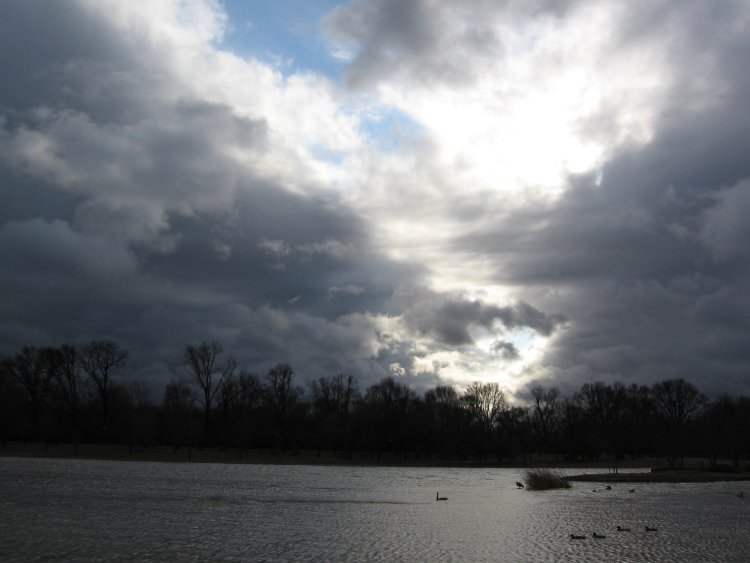
Likewise, Constitution Gardens had few smaller birds visible. However, there was a large flock of Canada geese and mallards around the island in the middle of the pond. With them was a single American coot and a small flock of buffleheads. The other individual must have come from here. While there were not many species to be seen here, I did get some close-up shots of mallards, and some dramatic images of the sky.


SPECIES SEEN: 14

Great Blue Heron

Canada Goose

Mallard

Lesser Scaup

Bufflehead

Ring-billed Gull

Great Black-backed Gull

Rock Pigeon

Cedar Waxwing

Northern Mockingbird

American Robin

American Crow

European Starling

House Sparrow


Technorati Tags: ,
Powered By Qumana

Monday, August 22, 2005

Birding on the Mall

I took advantage of the cooler weather to take an evening bird walk on the Mall, and to see if last night's northwest winds had brought any early migrants. Taking the Metro to the Smithsonian stop, I started out down by the Washington Monument. My initial objective was Constitution Gardens, a lake bordered by trees wedged between the World War II and Vietnam memorials.

No migrants were to be seen, but there were plenty of signs of the end of summer. One northern mockingbird was clearly a fledgling, but its feathers had grown enough for it to fly. A young brown-headed cowbird foraged amid a small flock of European starlings, which presumably had raised it. Male mallards were in various stages of molt, some close to basic plumage and some closer to alternate. I spotted two wood ducks in basic plumage among the mallards only because the wood ducks are so much smaller. One red-winged blackbird had begun to disguise his red epaulettes, as his species is wont to do during the winter months.

Somewhat disappointed with the pickings at Constitution Gardens, I moved on to the Tidal Basin and East Potomac Park (known to birders as Haines Point). I did not see many more birds down along the river, but I did have a nice long walk on a pleasant evening. Many people were sitting or lying along the riverfront to view tonight's spectacular sunset. Thin bands of clouds stretched across the sky from north to south, and these clouds became colored with a series of golds, reds, and purples as the sun sank further into the horizon. Later, after the sun finally set, I caught a glimpse of a black-crowned night-heron flying south along Washington Channel.

Before heading back to the Metro, I stopped one last time to train my binoculars at the Washington Monument, which is illuminated at night by giant floodlights. Sure enough, I found a small number of common nighthawks fluttering in and out of the beams of light. I assume that this represents the first trickle of migrants; as far as I can tell, no nighthawks were found breeding in Washington this summer. These were the first nighthawks I have seen in Washington this year.

SPECIES SEEN AND HEARD: 23

Black-crowned Night-Heron
Canada Goose
Wood Duck
Mallard
Osprey
Ring-billed Gull
Rock Pigeon
Mourning Dove
Common Nighthawk
Chimney Swift
Red-bellied Woodpecker
Downy Woodpecker
Eastern Kingbird
Gray Catbird
Northern Mockingbird
American Crow
European Starling
House Sparrow
Song Sparrow
Northern Cardinal
Red-winged Blackbird
Common Grackle
Brown-headed Cowbird