



 Posts
All Comments
Posts
All Comments
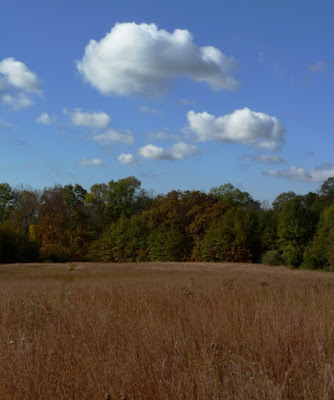
By the time I arrived at Scherman Hoffman yesterday morning, a sunny morning had turned into an overcast one. To some extent, this was a relief since Central Jersey residents were treated to a very hot July, and yesterday's overcast sky helped moderate the temperature. However, this moderation came at the cost of suppressing insect activity particularly that of the large insects (odonates and butterflies) that I had hoped to see.




New Jersey's northwestern counties are part of gives the state such incredible biodiversity for its size. While the southeastern end of the state has more in common with the Delmarva Peninsula or the Carolinas, the northwestern end is more like upstate New York. Though I grew up in New Jersey, and have now spent several years in the
state as a birder, I have not explored a lot of the state's northwestern
corner. So I spent yesterday morning at Muckshaw Ponds Preserve near Springdale in Sussex County, a county I think I have only visited once previously.


In late October, a White-tailed Kite – possibly the same one that spent the summer in Connecticut – showed up in a small part of Forsythe NWR in Barnegat, New Jersey. This was only the second state record for the species, and a lot of the state's birders eagerly rushed to see it. Yesterday was my first chance to look for the kite, so I headed down with my mother and sister. We arrived at the Barnegat Municipal Dock and scanned the far shoreline for about 40 minutes with no sign of the kite. Another birder told us that he had been there for about an hour before we arrived, also with no luck. Moving on, we stopped at two vantage points for the Forsythe impoundments, one at the public beach and the other at a small observation platform. Neither had any sign of a White-tailed Kite, though we did see some waterfowl and a Belted Kingfisher. After checking the first location once more, we moved on.
We stopped at Cape May Point State Park in the late afternoon. I had hoped to see the Ash-throated Flycatcher that has been hanging around there; unfortunately it must have turned in for the evening by the time we were walking the trails. Instead, there were lots of waterfowl to look at, including a Eurasian Wigeon among the hundreds of American Wigeon. Other ducks included Ring-necked Duck, Ruddy Duck, Northern Shoveler, Northern Pintail, Gadwall, and Green-winged Teal. I noticed two male Green-winged Teal swimming close by each other, one of which had a much more prominent vertical white bar than the other one. I am not sure if this is simply normal variation or marks a difference in populations. Sibley has an illustration of a Green-winged X Common Teal hybrid that has a similarly narrow vertical bar; however, that hybrid should have a more prominent white line where the wings rest against the body than this bird does.

I met with Patrick yesterday to do some birding around the lower Raritan watershed. Middlesex County is well positioned to attract a diverse bird life as it straddles the boundary between Piedmont and coastal plain. It is also densely developed. This means that patches of habitat are likely to be relatively small, especially compared to more rural portions of the state. Unusual birds are likely to be fleeting visitors during migration or tucked away in some swamp or pond.
Our first stop was a large pond near Raritan Center, which had a lot of waterlilies but few birds. A lone Green Heron was the only highlight. From there we went to Woodbridge River Watch, a small marsh. By this point it was starting to drizzle, and the rain would continue for most of the morning. We had hoped to see a Red-headed Woodpecker, which had been reported from the site on previous occasions. That bird failed to materialize, but we did see a handful of Least Sandpipers, a Lesser Yellowlegs, and a Northern Waterthrush. There must have been a few dozen robins just in the entrance to the park. That seems like a high concentration for this time of year.
We left Woodbridge and headed for South Amboy. The short strip of shoreline that runs from South Amboy to Laurence Harbor faces Raritan Bay and is the best area of the county to find coastal birds. At the Morgan Ave beach in South Amboy, we found a large group of gulls loafing on the shore, along with a few Semipalmated Plovers and a Least Sandpiper. We stood and scanned a bit to see if anything else would fly past. As we waited, I noticed one Herring Gull bearing 3rd winter plumage. Eventually, our patience was rewarded with a Spotted Sandpiper, a Willet, a couple Common Terns, and a Royal Tern – the last an excellent bird for the county.
Our next stop was Waterworks Park, a large pond behind the South Amboy waterfront. Pied-billed Grebes have been reported breeding here in the past; we did not see any grebes, but we did see six Wood Ducks on the pond. We also heard a strange vocalization that sounded somewhat like the croak of a night heron and somewhat like the grunts of a rail. Unfortunately we never saw the bird, so we could not identify it for certain. Other bird life included a Ruby-throated Hummingbird and an American Goldfinch that sang continuously as we scanned the pond. By the time we got to this park, the intermittent drizzle had stopped and the clouds had broken, so that a lot of insects were active. These included some odes; I noticed Common Green Darner, Blue Dasher, and this Fragile Forktail (Ischnura posita).


Yesterday morning we started out at Bivalve. The shell piles smelled even worse than the last time. This time there were many raptors: two Bald Eagles, three Northern Harriers, and a Sharp-shinned Hawk. The latter suddenly popped out of the phragmites; perhaps we disturbed it from a meal. Many Green-winged Teal were visible from the embankment. Other waterfowl included Snow Geese and Black Ducks.
A brief stop at Fortescue yielded more or less the same birds. An eagle was scaring up waterfowl on the marsh, while vultures turned in the distance. No birds were visible on the bay, except for a collection of Herring and Ring-billed Gulls standing on the beach.
Our target stop, however, was the Glades Wildlife Refuge, a preserve owned by the Natural Lands Trust. The entrance is not easy to find, as it is marked only with a generic "coastal heritage site" sign and not the name of the refuge. (This is one element of the Birding Cumberland guide that could use improvement.) The refuge itself is gorgeous. After passing through a woodland dominated by oaks and hollies, a visitor comes out into the middle of a vast salt marsh. A short boardwalk leads to an observation tower. From the tower one can see for miles across spartina and phragmites grasses interrupted only by distant treelines and an occasional house.
From that platform we could see many waterfowl. The birds at close range were mostly Green-winged Teal – about 750 by my count. There were also Black Ducks, Buffleheads, and Northern Pintails. On the horizon we could also see distant skeins of Snow Geese – perhaps a thousand, perhaps more. I doubt that the flocks we saw come anywhere near the total birds in the marsh. As the waterfowl are massing for the journey to their breeding grounds, shorebirds are starting to arrive. A couple hundred Dunlin competed for space on the mudflats with a few dozen yellowlegs. Most of the yellowlegs appeared to be of the Greater variety, but there were a few Lessers in the mix. I enjoyed hearing the yellowleg calls again. As we headed back along the entrance road to the car, we heard a bird calling from near a vernal pool in the woods. The combination of grunts and squeaks sounded characteristic of a Virginia Rail.
On the way back, we stopped at Collingswood to see the Green-tailed Towhee that has been present in a yard there since January 1. It required about a twenty-minute wait before the towhee appeared, but we had plenty of other birds to watch in the meantime. The well-stocked feeders attract many common backyard species, as well as less common ones like Fox Sparrow. Suddenly the towhee emerged near the back fence and started foraged under the bushes. The bird moved plenty of dirt around in that time. Each kick was digging fairly deep into the soil for a bird of that size; it seemed to dig as deep as an inch in a single location before moving on to the next spot. Once we had all had plenty of time to watch, the towhee disappeared, and we departed. I did not take photos, but other birders have. Here is a photo study of the Collingswood Green-tailed Towhee from another New Jersey birder.
The second part of my South Jersey weekend took me through coastal Cumberland County, a New Jersey county that I had never visited before, at least to my knowledge. Now, there are some New Jersey counties that I have passed through via the New Jersey Turnpike, but never set foot in. (That would be Camden, Gloucester, and Salem.) Cumberland, on the other hand, I had never previously visited, and never had occasion to pass through, either. So this was entirely new ground for me. Our first stop was at East Point, near Heislerville. At this stop, there were not many birds to see, and we spent more time looking at the old lighthouse, built in 1849, decommissioned in 1941, and placed back into service in 1980. To me, the building appears older than the 1840s – almost like 18th-century architecture. Perhaps this part of the state was slower to adopt new styles.
Our second stop, or perhaps auto tour would be a better descriptor, was the series of waterfowl impoundments along Matt's Landing Road, part of Heislerville WMA. Thanks to the warm weekend weather, most of the water was open, allowing decent numbers of waterfowl, especially Buffleheads. The biggest surprise – and my favorite sighting of the day – was a brief glimpse of a Clapper Rail swimming before it disappeared into some reeds. Try as I might, I could not spot the rail once it reached the reeds, even though I was standing directly over the place the rail was hiding, and even though the reed bank was only about two feet wide. These are amazingly elusive creatures. The third stop was at Bivalve, so-called due to its primary industry, catching and processing mollusks. This industry is pungently apparent on Bivalve's High Street, where a large pile of shells attracts a large number of gulls – as well as a few birders looking for unusual gulls. I am sad to report that we found no rare gulls of any kind, just the usual Ring-billed and Herring varieties. That said, a stop was still worthwhile, as we continued to see waterfowl on all sides. Most were Black Ducks or Buffleheads. Now and then a distant flock of Snow Geese would rise out of the saltmarsh and shift locations. Two Common Goldeneye, both apparently female, were on the Maurice River close to the Bivalve shore.
Following a short drive through the nearby town of Shell Pile, we stopped at the restoration area at the end of Strawberry Lane to eat lunch and follow a trail through nearby fields. From the platform we were able to see many more waterfowl, which included decent looks at a dozen Green-winged Teal, one of my favorite dabbling ducks, and a flock of Northern Pintail. The fields as the boardwalk had a small flock of Eastern Bluebirds and lots of sparrows. One of my favorite sparrows, a Swamp Sparrow was present, and a White-crowned Sparrow also put in an appearance. I also got a taste for why NJ Audubon chose Cumberland County for its winter eagle festival. In the brief time we were at the restoration area, we saw at least one pair of Red-tailed Hawks and a third-year Bald Eagle. As we were leaving, a Sharp-shinned Hawk flushed from the treeline and flew across the field. Not bad for a raptor show.
Our final stops were in the Dividing Creek area. The impoundments along Maple Street had more or less the same set of waterfowl we saw at other stops, with similarly good numbers of waterfowl. Turkey Point was a good point to get an idea of the extent of the saltmarshes along our southern Delaware bayshore. It is disheartening to imagine that much of New Jersey's Atlantic coast was probably covered by similar marshes years ago, only to have them disappear in the face of summer tourism. Even this relatively isolated spot attracted many visitors in the short time we were present; it is not clear to me how many were birders. (Really, the number of cars present at Turkey Point really surprised me, after seeing hardly any birders all day.) On a more cheerful note, our stop at Turkey Point was also an occasion for observing large flocks of Snow Geese flying overhead and in the distance.
Following this stop, we head back to Central Jersey.
Yesterday was the first day of a South Jersey weekend. The trip was originally supposed to involve a few more people who could not make it. So it ended up just being my mother and I taking a tour of South Jersey birding spots.
We began around mid-morning at Brigantine, the main attraction in Forsythe NWR. A trail near the entrance turned up a few songbirds. There was a nice flock of sparrows along the entrance drive, including a brilliant Eastern Towhee. Where the drive crosses a lake, an immature Bald Eagle flushed a flock of Mallards and a pair of Hooded Mergansers.
At the first observation tower (on Gull Pond Road), we could see several large flocks of Canada Geese, numbering in the thousands. In the distance were also a few dozen swans, which turned out to be Tundra Swans when we got closer to them later in the day. Several small flocks of waterfowl included more Mallards, Hooded Mergansers, and Northern Pintails. Those three species, along with Black Ducks, would be the dominant waterfowl species along Wildlife Drive. Just before we moved on, a Peregrine Falcon shot past the tower in pursuit of some pintails. Unfortunately for the falcon (but fortunately for the ducks), it missed.
Wildlife Drive winds around the refuge for about eight miles or so. Today we saw pretty much the same species all the way around. The main exception is that there were some collections of American Wigeon, Bufflehead, and Brant along the section of the drive closest to the bay. A few hundred Dunlin were scattered in several flocks, mostly at the outer part of the drive. I tried to find other shorebird species among them, but I was unsuccessful. Near the end of wildlife drive, once we got back into the meadow and forest parts of the refuge, there were a few trails that looked like they had some potential for early morning birding. Today the birds were mostly common species, but we got some good looks at Hermit Thrushes.
After returning back to the entrance, we started down to Cape May. My main interest on the peninsula this weekend is Villas WMA, site of a series of intriguing sightings in the past few weeks. Most of the rarities were uncooperative. I did my best to pick out a hen Eurasian Wigeon among the dozens of American Wigeons, but I am still not sure if I actually saw one. (A drake would be so much more convenient!) White-winged Crossbills were nowhere to be found, though apparently they were present earlier in the day, and the (resident?) Red-headed Woodpecker was trying not to be seen (and succeeding). We did get some very good looks at waterfowl, including a brace of beautiful drake Redheads, a Canvasback, a Ruddy Duck, and several dozen Ring-necked Ducks. There was also a small flock of Chipping Sparrows between the parking lot and the lake. Best of all, we encounter six of my species of interest, Rusty Blackbird.
Villas is an interesting location, a former golf course being restored to a natural state. As a result, the habitat is quite varied, and the WMA supports diverse breeding and wintering bird populations. It is also seems to get less attention from birders than other spots around the Cape, so if you are looking for a good quiet birding spot on the peninsula, this seems to be the place to be.
Yesterday morning we set off for New Jersey's Meadowlands. As I have written before, the Meadowlands area is part nature preserve, part suburban development, and part post-industrial wasteland, with a sports/entertainment complex plunked down in the middle of it. Despite its oddness (or perhaps because of it?), the area offers excellent birding and attracts some unusual species for New Jersey.
DeKorte Park is perhaps most reliable for its masses of wintering waterfowl. In that regard, the day did not disappoint. Among the flocks, there were a few Northern Shovelers, Gadwall, Northern Pintails, and a Green-winged Teal, with somewhat larger flocks of Canvasbacks, Buffleheads, and much larger flocks of the other usual suspects. (There were between 250 and 300 American Black Ducks, for example.) The reported Eurasian Teal, which I saw last year, was not present today, as far as I could see.
Songbirds were pretty sparse, but there was a nice flock of American Tree Sparrows along the Transco Trail near the Kingsland dump. Other than that the only noteworthy songbirds were a few Ruby-crowned Kinglets that were hanging around a small group of cedars. Those two species were among several of my sightings from the day that gave eBird fits.
The real treat was the raptor show that continued all day. There were at least three Rough-legged Hawks, and it would not surprise me if there were more coursing among the retired garbage dumps. The two we saw in the morning were both light morphs. One hovered at relatively close range over the Kingsland dump; the other exhibited similar behavior over the far dump to the west of the park. The latter appeared to be an immature, as its white wing panels were apparent at a great distance. In the afternoon we saw the Kingsland light morph again (at least I presume it was the same bird). It was joined by one dark morph – the first time I have the latter form. The roughlegs were accompanied throughout the day by an assortment of Northern Harriers and Red-tailed Hawks, as well as an American Kestrel and a Peregrine Falcon.
After leaving De Korte Park, we checked for the Snowy Owl that had been reported near the entrance to the park. It was still present along Valley Brook Avenue around 1:30 pm. The owl had moved from the ballfield to a construction area across a side street (Woods Court?), as someone was flying a toy helicopter in the ballfield. It was still close enough for a satisfying view – a much more satisfying view than the first time I saw a representative of the species.
The Rough-legged Hawks and the Snowy Owl combined to give us a little taste of tundra bird life in New Jersey.
As I mentioned in a previous post, on Sunday I participated in the Lower Hudson Christmas Bird Count. I traveled up with my mother and sister. We joined three other birders early in the morning to cover the Liberty State Park portion of the count.
The Lower Hudson CBC is somewhat unusual in that it crosses state boundaries, with observers covering sites on both sides of the Hudson River. In New Jersey, the count covers the Meadowlands, Jersey City, the Palisades, and parts of towns along the western edge of the Hudson. In New York, there are observers in Central Park, the Battery, Riverside Park, and elsewhere. Lower Hudson has a link to one of the oldest counts, as the first Christmas Bird Count was conducted in Central Park.
Despite our smaller numbers, New Jersey birders found 100 species of birds on the western side of the Hudson, plus two more count week species. The total included some species that can be difficult to find in urban landscapes, such as Rough-legged Hawk, American Kestrel, Virginia Rail, and Short-eared Owl. It also included some late lingering species, like Great Egret, Greater Yellowlegs, Gray Catbird, and Marsh Wren. Plus there were a few westerners like Orange-crowned Warbler. I have not seen any full results from the New York portion of the count, but I understand that they found an immature Red-headed Woodpecker, among other birds.
Liberty State Park is so named because only a little over 600 yards of water separate it from the Statue of Liberty, while only about 400 yards separate it from Ellis Island. The park consists mainly of grassy lawns, which are great for finding open-country birds, but not much else. The park also has a restored marsh and a shrubby (but toxic) back area, which both provide opportunities for finding a more diverse set of birds.
We started out searching for waterfowl on the southeastern corner of the park, which looks out over Upper New York Bay. In addition to the flocks of 650 Brant and 400+ Canada Geese, we found a Canvasback, some Common Goldeneye, and many Bufflehead. That corner of the park also had a flock of about two dozen Horned Larks in the grass. Our next stop at the restoration area produced a selection of dabbling ducks: Gadwall, American Black Duck, American Wigeon, Northern Pintail, and Green-winged Teal, as well as a solitary American Coot. A Common Loon tried to sneak past behind us, but since I had gotten separated from the rest of the group I caught sight of it as it flew overhead. Brush around the nature center also had a smattering of sparrows – mostly Song, but also a Field and several Swamp Sparrows.
We spent the rest of the morning tramping around the park's back area looking for woodland species. While we did not find our target birds – Wild Turkey, American Woodcock, and Long-eared Owl – we did find some pretty cool birds. For example, there was a flock of around eight (!) Hermit Thrushes all of whom were very talkative. Then there were Fox Sparrows, always a treat. Plus, we flushed a Wilson's Snipe – a species we did not expect, and the only one seen in the New Jersey portion of the count.
For the afternoon we visited a housing development for a different angle on the bay, and a different look at some mudflats. That stop produced our only Yellow-rumped Warblers and Northern Shovelers of the day. It also gave us killer looks at a lingering Dunlin. The rest of the day we spent mopping up – back to the marsh to find Killdeer and a Black-crowned Night Heron, to a nearby field to look (unsuccessfully) for Snow Buntings. Our last birds for the day were two American Tree Sparrows.
Our group finished with 61 species in about ten hours of birding. Not bad at all for an area as heavily urbanized as Jersey City in the middle of December.
For more on a different section of the count, see the Meadowlands Blog.
Since arriving in Cape May, I have been visiting Cape May Point State Park quite frequently during my off-hours. Yesterday morning I found that a strong wave of migrants had arrived in the park. I saw large numbers of American redstarts, as well as at least one black-and-white warbler and a black-throated blue warbler. (Apparently there were much better results at Higbee's Beach.) There were also a lot of eastern kingbirds around the hawkwatch platform. I could not identify all of the peeps in the park's ponds, but I did find some least sandpipers, plus short-billed dowitchers, lesser and greater yellowlegs, and a solitary sandpiper.
Elsewhere around the Cape, I have been seeing hundreds of tree swallows, darting around and perching on the telephone wires. There are handfuls of ruddy turnstones and sanderling on the beaches. Yesterday evening I saw a gull-billed tern fly past Sunset Beach.

Hereford Inlet has a growing sandbar that is now home to oystercatchers and other beach-nesting birds. I do not remember it being there the last time I visited (about ten years ago). On Monday evening, we had repeated looks at black skimmers foraging there in their unique style.


One shorebird on the refuge beach, a sandpiper of the Calidris genus, gave me some trouble. Its plumage resembled that of a semipalmated sandpiper, except that its primaries projected well beyond the tip of the tail. This would seem to indicate a Baird's sandpiper, but I am hesitant to claim a life bird based on this field mark alone. So for now, it will remain a Calidris-sp.
Wednesday afternoon included a brief walk at Cape May Point State Park, which wrapped up the birding walks for the trip. We missed birding at a few prominent sites such as Higbee Beach and Stone Harbor, along with some less-prominent ones like Hidden Valley or Rea Farm. The Hawkwatch lacked migrating hawks to watch, and the CMBO's outpost at Cape May Point was closed for the week. (The one in Goshen is a bit out of the way.)
(I have edited the year list to include my most recent sightings from Cape May County.)
Today I visited the Negri-Nepote Grasslands in Franklin Township with my mother and sister. This morning reminded me of birding in March - high winds, overcast sky, and chilly temperatures. Of those, the wind was the most distracting because it made it difficult to hear the soft spring songs of many birds and forced them to lie low in the vegetation. Despite the adverse conditions, there were plenty of birds, including some firsts of the year.
Newly-returned grasshopper sparrows were singing all over the preserve. That song is one that I might have missed prior to seeing my first grasshopper sparrow last spring as it sounds more insect-like than bird-like. The same goes for other Ammodramus songs, which I find to be one of the more challenging song-types to hear and identify.
Several other sparrows were present, including singing chipping and field sparrows. Savannah sparrows are still moving through in great numbers. I do not know if any stay to breed in Franklin Township. That will be something to watch over the summer. One sparrow that flew past me seemed to have a short, square tail with white outer feathers. This is one field mark of a vesper sparrow, but I would not make such a call based on a single field mark.
One highlight was seeing a wild turkey run across an open field in the back area.
A few warblers have returned in the last week. Yellow warblers were busy setting up territories along the hedgerows in the back area. Common yellowthroats were also singing at several points. One northern parula was singing in the cedar grove.
While dark-eyed juncos have departed, some winter species are still around. Yellow-rumped warblers are still at the grasslands. I saw a few white-throated sparrow in the hedgerows at Negri-Nepote, and they are still coming to the feeders at home as well.
A crew from the county was mowing the field close to the parking lot, and another crew was cutting trees along the wooded patch near the cedar grove. I was wondering whether the timing of these actions was appropriate, given the proximity to the nesting season. A few Field Sparrows were already carrying nest materials, and Kestrels and Eastern Bluebirds were setting up in the boxes. I imagine other species are doing the same. I understand that this is necessary to maintain the habitat, but it would seem better to do it earlier in the spring.
When I left Jamaica Bay yesterday, I boarded the 'A' train for Manhattan. Instead of stopping at Penn Station and going home - as I would normally do, I transferred to the 'C' train to head uptown to Central Park. An unusual bird had been reported last week from the Winterdale Arch near West 81st Street.
As I approached the arch I saw it, a beautiful Western Tanager perched right at the top of a viburnum bush (where it was reported). It then flew across the roadway and foraged in a flowering tree (perhaps a magnolia?). A photo gallery of the Central Park tanager is available, as well as notes from Marie Winn, Greatest Auk, and Urban Hawks. The key identification points are the yellow and white wingbars and the pinkish decurved bill. These points distinguish it from an adult female Scarlet Tanager, which is superficially similar.
One of the remarkable things about rarities in New York is that they seem to have little trouble adjusting to the noise and bustle around them. As I observed when I saw the Scott's Oriole in Union Square Park, the oriole seemed to tolerate the fake peregrine antics across the street, streams of passersby, and a squadron of prowling birders armed with binoculars and high-end camera equipment. This Western Tanager in Central Park faced a similar mass of birders as it foraged in a tree right next to a busy bicycle speedway. A hoard of screaming kids marched past. All the while, the tanager went about its business without flushing.
After seeing my second life bird for the day, I walked up to the reservoir. A small group of waterbirds near the southwest corner included Northern Shoveler, Bufflehead, Ruddy Duck, and American Coot. The Pinetum had a Yellow-bellied Sapsucker, as well as flocks of Golden-crowned Kinglets and Yellow-rumped Warblers. I checked out the Turtle Pond and Shakespeare garden as well, but there were no unusual birds. With that, I ended my birding for the day and headed home.
This morning I woke up really early and took a train into New York City for a day of birding. While the city is not exactly a pristine wilderness, it has several great birding spots located close to subway. Normally this makes urban birding very convenient. Today, though, the 'A' and 'C' lines were plagued by construction-related delays, so everything took longer than it should have.
In any case, I headed out to Jamaica Bay Wildlife Refuge, which is a one-seat ride on the 'A' train from Penn Station. Starting out from the nature center, I followed the loop trail around the West Pond. The pond was covered with large flocks of waterfowl, including a huge raft of scaup - mostly Greater Scaup, as far as I could see. Between the flocks in the West Pond and East Pond, the scaup at the refuge must number in the thousands right now. A somewhat smaller (though still large) flock of Snow Geese loafed around the shores of the pond. Occasionally a few would get upset and take off honking. A few "Blue Geese" were among their number. The pond held a variety of other waterfowl, including Gadwall, Green-winged Teal, Northern Shoveler, and Ruddy Duck.
Signs of spring were all around, starting with buds that were starting to open on many trees. An Osprey pair has started nesting on a platform on the south of the pond. Several flocks of Tree Swallows were present. Strong winds caused most of them to huddle close to the shrubs and paths rather than engage in aerial acrobatics. The swallows did not flush as I approached, so I was able to view them perched at exceptionally close range. In this morning's bright sunlight, their metallic blue plumage was dazzling.
Other birds around the West Pond included Great Egret, Northern Harrier, Sharp-shinned Hawk, American Oystercatcher, Eastern Phoebe, Golden-crowned Kinglet, Hermit Thrush, Yellow-rumped Warbler, and American Tree Sparrow. The warblers seemed especially numerous today. I'm not sure if that is the result of a spring push or if such numbers are present at Jamaica Bay all winter.
After a quick lunch, I crossed Cross Bay Boulevard to walk the trails on the other side of the refuge. Almost immediately, I spotted my first butterfly of 2008 - a Mourning Cloak that fluttered to the ground like a falling leaf. I could hear Spring Peepers chorusing as I approached Big John's Pond. A lone male Rusty Blackbird in its beautiful breeding plumage wandered through a small pool to the left of the blind. On the pond, there were a few Northern Shovelers and an Eastern Painted Turtle.
The East Pond held the same species of waterfowl as the West Pond. I had a great close-up view of a pair of Mute Swans. As they dipped their heads in and out of the pond to eat submerged aquatic vegetation, I could see drops of water beading on their feathers. The droplets gleamed like little jewels in the sunlight. Invasive (and harmful) as they are, mute swans can still appear beautiful under great lighting like today's.
With winter ending last week, it appeared that my chances of seeing any new irruptive boreal birds had become rather slim. I had already missed chances to see Bohemian Waxwings (twice) and Common Redpolls (also twice). Today that changed. As I made my way back from the East Pond I encountered about a dozen Common Redpolls feeding in a small stand of birches. I had as many as six or seven in my binocular view at one time. Some were clinging, goldfinch-like, on branches to feed from the birch catkins. Others foraged on the ground. As I watched them, it occurred to me that they have a bit of an urban hipster look with their jaunty red caps and black goatees. Perhaps they really belong in the city?
With that sighting I ended my trip to Jamaica Bay. However, the day's birding was not yet done. More to come tomorrow...

