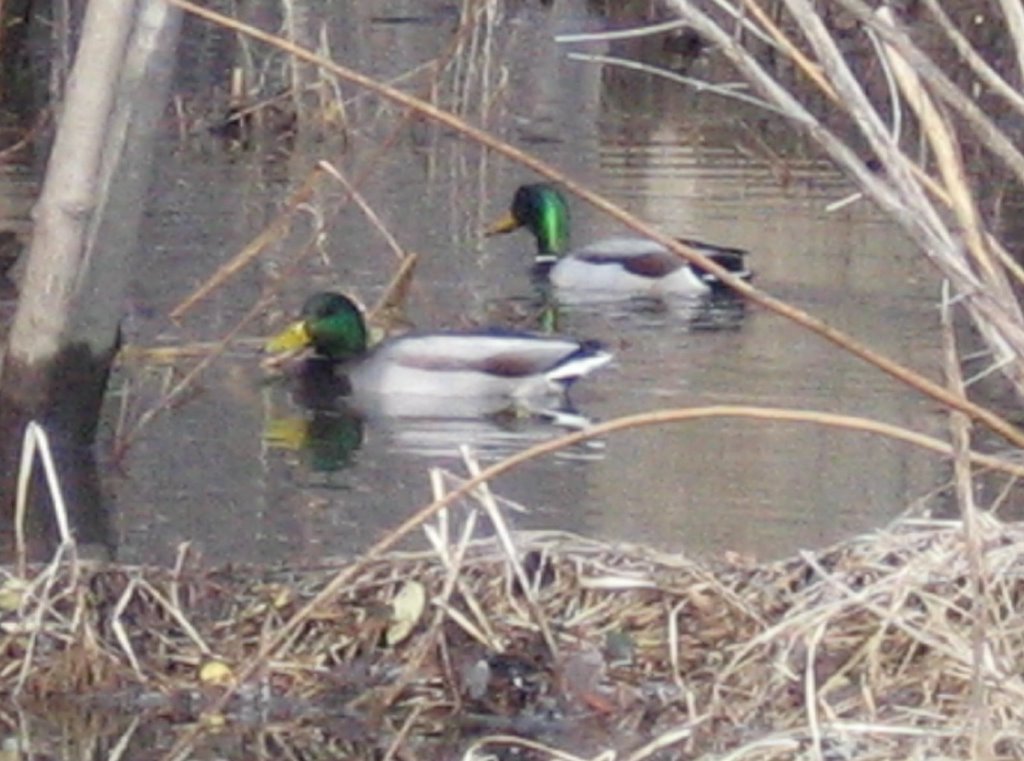
Sunday, January 08, 2006

Sunday Riverfront Birding

Since I had some free time at the beginning of this month, I resolved to get my birding for this year off to a fast start by hitting as many of DC's better birding spots as possible. I started somewhat slowly with a trip to the zoo on Wednesday, and then the birding built momentum from there. This weekend ends with only a few places - Rock Creek Park, McMillan Reservoir, and the southwest riverfront - left unvisited. As a result, I am already ahead of my 2004 pace, which was my best birding year so far.


This morning I visited Anacostia Park in southeast Washington. This quiet park tends to be good for waterbirds, and occasionally some landbirds that prefer open areas. This morning I did have some good waterbirds here. There was a handful of ruddy ducks across from the Commodore Barry; farther down, a pied-billed grebe swam in the river. All the common local gulls were represented, as well as an adult lesser black-backed gull. I also saw my first ruby-crowned kinglet of the year all the way down near the South Capitol bridge.

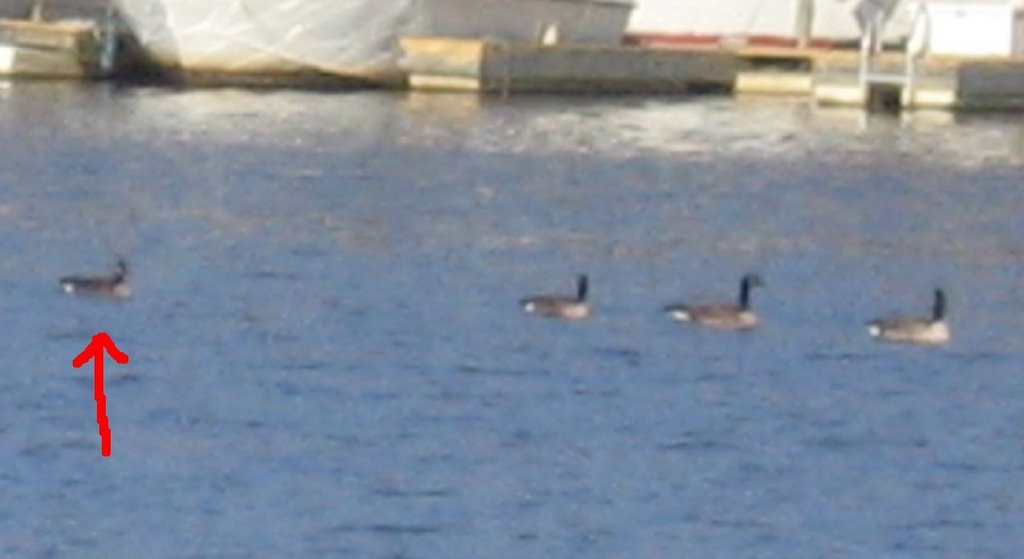
I did leave with a question, and that is whether or not I saw a cackling goose. Several cackling geese have been reported in DC so far this winter, but today was the first time I had seen a real candidate for that species. Cackling goose is a composite of several subspecies that used to be considered part of the Canada goose species until the species was split in two last year. Cackling geese look very similar to Canada geese, except that they are smaller, have proportionately shorter necks, and have stubbier bills. The subspecies most likely to be found in the eastern United States, Richardson's cackling goose, is grayer overall, with breast color matching the color of the flanks. One goose among a flock in the Anacostia River matched this description, though the viewing range was a bit too far for my judgment to be conclusive. I took some photographs of this bird; the best of the lot are shown below.

After lunch, I decided to visit the waterways on the other side of town, namely the Georgetown Reservoir and the neighboring C&O canal. The reservoir sometimes has good numbers of waterfowl in winter; today it was mostly deserted except for the gulls. There were some lesser scaup and at least one canvasback all the way on the far side of the water. One adult lesser black-backed gull was among the common gulls on the dike.

Down at Fletcher's boathouse I followed a foottrail leading west along the river instead of the towpath. This trail soon degraded into little more than a deer path, and even that was sketchy at times. Still I pressed on with that route, since I knew I would not get lost; I was in an area bounded by the Potomac and canal, and Fletcher's boathouse and the Chain Bridge. As long as I kept on in the same direction there would eventually be a way out.

The bushwhacking paid off, as I passed through some very birdy meadows. One spot had a female common yellowthroat, which perched on a tree branch at eye level and then glided down into the grass; it showed its yellow underside on the way down. Farther on, close to the Chain Bridge, there was a spot full of sparrows. These included field and savannah sparrows, in addition to the more common ones. Other birds seen along the way included eastern bluebird, belted kingfisher, and red-shouldered hawk. The deer paths, of course, also had deer, which fled before my footsteps.

When I reached the Chain Bridge I went up on the walkway to look at the ponds. These held mostly mallards, but also a hooded merganser and several common mergansers. The view from the Chain Bridge was a lovely way to end a long day of birding.

SPECIES SEEN: 45

Pied-billed Grebe
Great Blue Heron
Cackling Goose (?)
Canada Goose
Mallard
Canvasback
Lesser Scaup
Hooded Merganser
Common Merganser
Ruddy Duck
Red-shouldered Hawk
Red-tailed Hawk
Ring-billed Gull
Great Black-backed Gull
Lesser Black-backed Gull
American Herring Gull
Rock Pigeon
Mourning Dove
Belted Kingfisher
Red-bellied Woodpecker
Yellow-bellied Sapsucker
Downy Woodpecker
Hairy Woodpecker
Northern Flicker
Pileated Woodpecker
Golden-crowned Kinglet
Ruby-crowned Kinglet
Carolina Wren
Northern Mockingbird
Eastern Bluebird
American Robin
Carolina Chickadee
Tufted Titmouse
Blue Jay
American Crow
Fish Crow
European Starling
House Sparrow
American Goldfinch
Common Yellowthroat
Field Sparrow
Savannah Sparrow
Song Sparrow
White-throated Sparrow
Dark-eyed Junco
Northern Cardinal

Saturday, January 07, 2006

National Arboretum

This morning I returned to the National Arboretum for the first time in 2006. While still cold, today was much sunnier than yesterday, with only a few puffy clouds. One other birding group (probably from a local club) was working the Asian collection. Since I decided to bypass where they were, I did not walk the river trail, but that gave me time to cover some other areas.

Heart Pond produced little, but as I walked up the road I found a small flock of cedar waxwings and a few house finches in the crab apple trees. Unfortunately the angle of the sun made it difficult to see and identify birds. When I later checked this grove from the other side (where the sun did not interfere), I found a few purple finches mixed in with the house finches. During the winter months purple finches are pretty reliable here in the fruit tree groves.

I scanned both river overlooks, but found nothing to see on the river. The pines on Hickey Hill also produced little of interest. So I moved on down the road. Usually the hemlocks bordering the golf course have some goldfinch and junco action, but today they were quiet. The bushes around the gate were also deserted, or so it seemed. The reason for the silence became clear when a sharp-shinned hawk cruised past.

My last stop was the wood behind the state tree picnic grove. There were not as many blue jays and robins here as in some other parts of the arboretum, so it was easier to find the smaller birds. A faint honking sound announced the presence of a red-breasted nuthatch. I got a good look at it after it flew into one of the scrub pines. As I turned to leave the spot, a brownish bird flew up to a perch above my head - hermit thrush. Both red-breasted nuthatch and hermit thrush had been seen in this area during the Christmas bird count.

On the way back to the bus stop I had another sighting of a sharp-shinned hawk, and, further along, an adult chipping sparrow. While I was waiting for the bus, a Carolina wren postured on the other side of the road.

SPECIES SEEN: 33

Canada Goose
Sharp-shinned Hawk
Red-shouldered Hawk
Ring-billed Gull
Rock Pigeon
Mourning Dove
Red-bellied Woodpecker
Downy Woodpecker
Hairy Woodpecker
Northern Flicker
Pileated Woodpecker
Golden-crowned Kinglet
Cedar Waxwing
Carolina Wren
Northern Mockingbird
Hermit Thrush
American Robin
Carolina Chickadee
Tufted Titmouse
Red-breasted Nuthatch
White-breasted Nuthatch
Blue Jay
American Crow
Fish Crow
European Starling
Purple Finch
House Finch
American Goldfinch
Chipping Sparrow
White-throated Sparrow
Dark-eyed Junco
Northern Cardinal
Red-winged Blackbird

Friday, January 06, 2006

Loose Feathers #14

My series of links about birds, birding, and the environment returns after a several-week hiatus.

  • Overfishing has hastened the decline of the marbled murrelet and other seabirds on the west coast. Sardine fishing seems to be a particular culprit.
  • Recapture of banded birds is showing that birds can live much longer in the wild than previously believed. One Manx shearwater is known to be at least 55 years old. Oystercatchers and razorbills have been found to live into their late thirties.
  • A woman sued Lowe's after being attacked by a bird, but the suit was dismissed. No indication of the species, unfortunately.
  • A Minnesotan writer describes the pecking order at an urban birdfeeder.
  • Virginia is considering legislation for a moratorium on horseshoe crab importation. See the link for how to help.
  • DC Metro Action notes that small grants are available for community gardening projects in Washington.
  • This week's Birds in the News includes a round-up of CBC reports.
  • Visit the Friday Ark #68.

Kenilworth Aquatic Gardens

When I arrived at Kenilworth Aquatic Gardens this morning, I was greeted by a chorus of crows. Both species were represented - fish and American. Both did their best to make the gardens a noisy place. I think the crows even set the other birds on edge, because the Canada geese in one pond took off when a nearby American bittern made its pumping call. The raucous crows fit the gloomy mood of the day, which was overcast and cold. The sun tried to break through around noon, but soon was pushed back by the blanket of clouds.

While looking for the bittern, I came across an American tree sparrow. This lovely little bird with the rufous cap is fairly unusual for DC, even if it is more common further north. Today, in fact, turned out to be a good day for sparrows. In addition to the tree sparrow, there were several fox sparrows along the boardwalk, and swamp sparrows on the river trail.

The marsh at the end of the boardwalk held American black ducks and common mergansers, as well as a few killdeer. A large flock of red-winged blackbirds passed overhead and settled on the far side of the channel. At this point I began to feel very cold and realized I ought to have dressed more warmly. Still, I pressed on for the river trail. As I made my way back through the ponds, I found a yellow-bellied sapsucker (pictured above).

The river trail held several flocks of sparrows and woodpeckers. There was also one flock of tufted titmice and Carolina chickadees that held several chickadees that almost looked like black-cappeds, but were not quite convincing enough. As I walked further along, a brown thrasher disappeared into the brush on the right side of the path. At the very end of the river trail were three eastern bluebirds and a few yellow-rumped warblers. On the way back, I found a gray catbird eating poison ivy berries. That made it a three-mimid day, which is very good for January.

After finishing up at the aquatic gardens, I headed over to the neighboring Kenilworth Park to look around. The only bird I saw there that I had not seen at the aquatic gardens was a peregrine falcon. There were a few sparrows in the no-mow areas, but I could not get a good look at any of them.

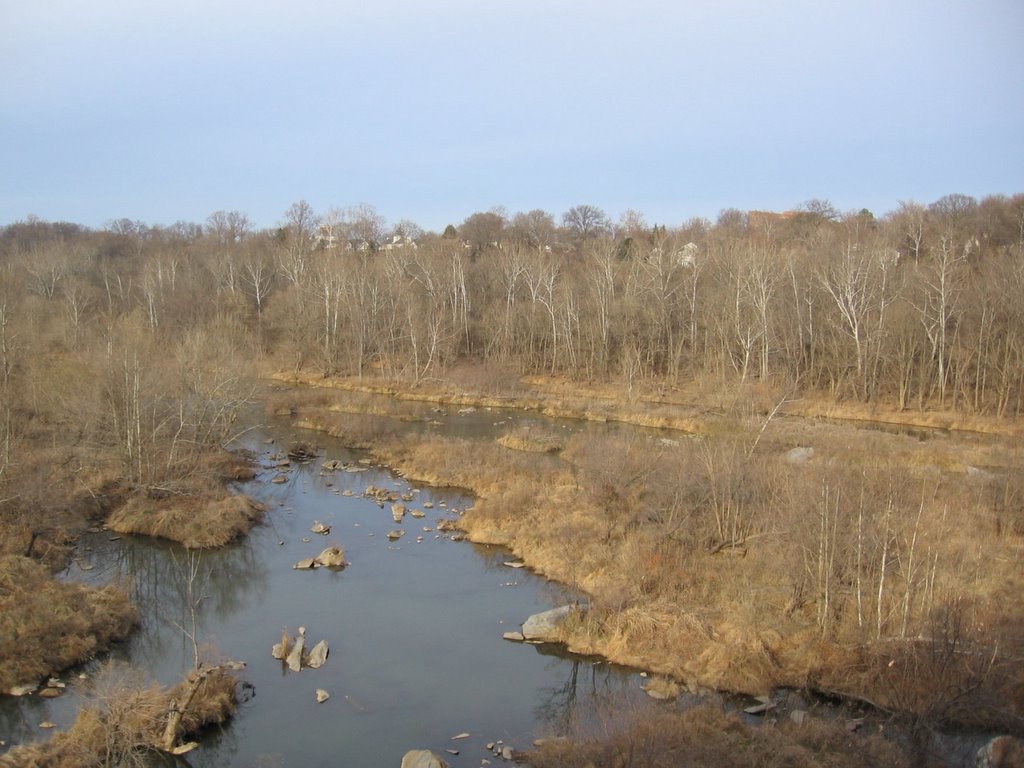
This picture of the Anacostia was taken from Kenilworth Park in the early afternoon.

SPECIES SEEN: 41

Great Blue Heron
American Bittern
Canada Goose
Mallard
American Black Duck
Common Merganser
Red-shouldered Hawk
Peregrine Falcon
Killdeer
Ring-billed Gull
Rock Pigeon
Mourning Dove
Belted Kingfisher
Red-bellied Woodpecker
Yellow-bellied Sapsucker
Downy Woodpecker
Hairy Woodpecker
Northern Flicker
Carolina Wren
Gray Catbird
Northern Mockingbird
Brown Thrasher
Eastern Bluebird
Carolina Chickadee
Tufted Titmouse
White-breasted Nuthatch
Brown Creeper
Blue Jay
American Crow
Fish Crow
European Starling
American Goldfinch
Yellow-rumped Warbler
American Tree Sparrow
Fox Sparrow
Song Sparrow
Swamp Sparrow
White-throated Sparrow
Dark-eyed Junco
Northern Cardinal
Red-winged Blackbird

Thursday, January 05, 2006

Roosevelt Island

Early this afternoon I visited Roosevelt Island for a bird walk around the marsh and wooded swamp. On a good day in winter one can observe all six local species of woodpeckers. Today was such a good day, as pileated woodpecker, yellow-bellied sapsucker, and hairy woodpecker made appearances alongside the more commonly seen red-bellied woodpecker, downy woodpecker, and northern flicker.

Early on, I turned up a couple brown creepers among the ivy tangles on the western trail. When I reached the marsh (pictured at right), several house finches and some feisty Carolina wrens were there to meet me. One red-winged blackbird - unusual for January in DC - was at the bridge, and a small flock of them was foraging on the other end of the marsh.

Water levels in the marsh and woods were quite high today, thanks to the recent rains. Mallards (pictured below) made the most of the extra water.

Near the northern end of the boardwalk there was another burst of avian activity. It started with the appearance of a yellow-bellied sapsucker, which mewed vociferously. (Yes, this woodpecker does sound a bit like a cat.) Soon the trail was full of sparrows, including a few swamp sparrows. More brown creepers appeared, along with some white-breasted nuthatches. One first-winter eastern phoebe perched on a low branch close to the water. This bird must have come north in the last week or so as insects would have been scarce during the last two weeks of December. Finally, a winter wren popped up from under a branch pile and perched on a fallen log; it stayed up long enough for me to get a good look at its delicately streaked plumage. A little later it sang a short bit of its song, one of my favorite bird songs.

The many fallen logs and overall damp conditions make Roosevelt Island an excellent spot to observe fungi, as well as birds and animals. One example is at right.


SPECIES SEEN: 31

Canada Goose
Mallard
Black Vulture
Turkey Vulture
Red-shouldered Hawk
Ring-billed Gull
Mourning Dove
Red-bellied Woodpecker
Yellow-bellied Sapsucker
Downy Woodpecker
Hairy Woodpecker
Northern Flicker
Pileated Woodpecker
Eastern Phoebe
Carolina Wren
Winter Wren
Carolina Chickadee
Tufted Titmouse
White-breasted Nuthatch
Brown Creeper
Blue Jay
American Crow
European Starling
House Finch
American Goldfinch
Eastern Towhee
Song Sparrow
Swamp Sparrow
White-throated Sparrow
Northern Cardinal
Red-winged Blackbird