Showing posts with label C and O Canal. Show all posts

Monday, January 24, 2011

A Cold C&O Canal Count

This weekend I went down to Washington so that I could participate in this year's C&O Canal Count. (My apologies for the lack of posts this weekend. I forget to schedule them before I left.) Like last year, I stayed with my friend Jed and traveled with him to cover some miles around Little Orleans in Allegany County. This year we helped Paul with his section, miles 141-143.

Allegany County has more northerly bird life than most of Maryland. For example, while most of Maryland is the land of Carolina Chickadees, Black-capped Chickadees predominate in Allegany. Birds that are common on the coastal plain, like Fish Crows, are scarce, but mountain-loving Common Ravens are present. Uncommon eastern birds like Ruffed Grouse and Golden Eagle are present but hard to find. This means that a bird count covering the area will probably produce fewer species but more interesting ones, and possibly even something unusual.

No such rarities presented themselves during Saturday's count. The Potomac River was frozen for pretty much the entire three-mile stretch, so waterbirds were scarce. There was only a single flock of Canada Geese. Only one raptor (a Red-tailed Hawk) made an appearance, and even sparrows were hard to find. Instead we had a steady stream of chickadees and titmice, with occasional nuthatches, Brown Creepers, and Carolina Wrens. The crunchy snow on the towpath did not help, as the sound of our footsteps made it difficult to listen for bird sounds. Probably our best birds on the count were a flock of Eastern Bluebirds in mile 143. Their bright blue backs were a pleasant relief from all the brown and gray.

Of course, as soon as we finished our section and left the park boundaries, we encountered a mixed species flock that included Red-breasted Nuthatches and a Hermit Thrush, neither of which we recorded for the count.

Tuesday, March 02, 2010

Historical Images of the C&O Canal

The DC Public Library has been posting images onto Flickr since last March. DCPL is one of many public institutions contributing to the Flickr Commons, a project to improve access to publicly-owned photographic archives around the world. The photostreams of the participating institutions are a great resource, and it is well worth following their streams if you are active on Flickr. DCPL has a large archive of historical images of Washington, DC. Currently they are posting images from E.B. Thompson, a photographer active in Washington in the early 20th century.

I recently found some historical images of the C&O Canal from DCPL's Thompson collection. Most of them are undated, but they appear to show the canal during its last decade or so of operation. Click through the images to go to the photo pages on Flickr.

The Key Mansion was condemned to make way for the Whitehurst Freeway.

A canal boat being towed by mules.

House boats on the canal west of Georgetown.

An abandoned lock house in about 1930.

Wednesday, January 27, 2010

Counting Birds on the C&O Canal

This Saturday was the C&O Canal Midwinter Bird Survey, an annual event is sponsored by the DC Audubon Society. For the past four years I have helped to coordinate it. Unlike Christmas Bird Counts, which survey likely bird habitat within a 15-mile circle, the canal count is confined to a single national historical park. The count area is thus more linear as it follows the canal along a 184.5-mile strip of towpath and riverbank. Every year we aim for complete coverage, and the effort requires the help of over 100 observers, each working their own short stretch of towpath. Fortunately the survey has the help of many loyal volunteers who cover their sections year after year. To standardize the survey across such a long distance, volunteers keep separate checklists for each mile.

As I have done the past two years, I traveled down to DC to participate in the canal count. This time, I went with my friend Jed to help cover a stretch of canal near Little Orleans, an area I visited during previous counts. When we reached the starting point of our territory, we found that the river valley was filled with fog. While we could see and identify birds along the towpath, it was difficult to see much beyond the far side of the canal or any but the most low-flying birds above us. So during our first mile we recorded relatively few birds, with many of the identifications coming by way of vocalizations. Despite the lack of birds, I enjoyed the first section because of the beauty of the canal in the fog.

Fog blanketing a field next to the towpath

Fortunately, most of the fog burned off after about an hour. It seemed that as the fog lifted, the birds became more active as well. In the next hour we had most of our best sightings. An Eastern Phoebe was foraging actively near the riverbank – one of many that winters along the towpath. Shortly after that, I saw my first Hermit Thrush of the year. One Winter Wren perched near eye level at close range at the same time as another launched into its complex and eerie song. A Red-shouldered Hawk glided over the towpath calling loudly. At the very end of our second mile, we encountered the biggest flock of Eastern Bluebirds I have ever seen. At first I thought it was just a dozen or so, even though bluebird calls were coming from all directions. As we crossed into our third mile, it became apparent that there were dozens more. With the help of another team, we final determined that there were at least 50 bluebirds, and possibly more spread over the two miles.

For our last mile, the sky finished clearing, and the sun reflected off the many sycamores that line the canal in that section. We had a chance to watch two Common Ravens – a species I rarely see – playing in the sky together. Once again, a Winter Wren sang.

Jed and I saw a total of 27 species on our three miles of the towpath. As of this writing, the sightings reported through the DC Audubon website are up to 81 species. Since about 40 miles have yet to be submitted, the final species tally should be a good bit higher. Some expected species such as American Coot and Great Black-backed Gull are not yet on the list, but most likely will be once the final numbers are available.

Thursday, January 29, 2009

Birding Along the C&O Canal

Last weekend, I took the train to Washington, DC, to participate in the DC Audubon Society's annual C&O Canal Midwinter Bird Survey. This is an event that I have participated in since 2004 and have helped to coordinate since 2006. Each year volunteers for the survey count birds within their assigned sections along the entire* 184.5-mile length of the C&O Canal National Historical Park. One of the attractive aspects of this count is that it crosses through multiple habitats, from the edge of the coastal plain in Georgetown, through Maryland's Piedmont, and into the Ridge and Valley region.

Of the areas covered by the count, my favorite to survey is western Maryland. The bird life is different from what one finds on the Mid-Atlantic coastal plain and the landscape is beautiful. The canal there is bordered by steep hills crowned with pines and other conifers. Moreover, the park is quiet; stand still on the towpath, and the only sounds you will hear are the wind, wild animals, and perhaps a passing train.

Western Maryland is where I headed with Jed, another former DC Audubon board member, on Saturday. Our plan called for us to cover an eight-mile section along with another volunteer. We started a mile upstream from the Paw Paw Tunnel and then worked our way downstream, alternating sections. At the south (upstream) side of the tunnel we found an active foraging flock that included at least a dozen Purple Finches. When we emerged from the downstream end of the tunnel, we were greeted by a passing Cooper's Hawk. A Barred Owl hooted softly from somewhere on the ridge above the tunnel, and several Common Ravens appeared overhead and accompanied us downstream.

A mile downstream from the tunnel, Jed and I saw a Golden Eagle! A large flock of Common Mergansers had flown past us in a hurry. As we turned to count them, I heard a audible WHOOSH as the eagle stooped in hot pursuit of one of the mergansers. It almost caught it, but when it missed, it wheeled around and started pumping towards us head-on at eye-level. It checked us out and then turned and continued upstream. Unfortunately, it was gone by the time the third member of our party caught up with us.

For the rest of the morning we counted small flocks of songbirds as we worked our way downstream. Much to my delight, each mile we covered featured at least one Winter Wren, though none were singing. We had our best results in mile 150 when we encountered one flock of sparrows after another – mostly White-throated Sparrows and Dark-eyed Juncos, with a few Song Sparrows and Swamp Sparrows mixed in. With that we finished a day of good birding. Results from other sections are trickling in here.

* Or at least as close to "entire" as we can manage. 80-90% coverage is typical.

Wednesday, January 23, 2008

Counting on the Canal

Last weekend I put the "DC" back in "A DC Birding Blog" with a return trip for the Tenth Annual C&O Canal Midwinter Bird Survey. This count is sponsored by the DC Audubon Society with the help of several regional bird clubs and many birders. (About 80 birders participate each year.) For the last two years I have helped to coordinate the count by providing web support and contacting volunteer observers from previous years.

For this year's count, I counted birds with two other coordinators, Mary and Denise, on some segments close to D.C. We spent the morning covering miles 4 and 3, which includes the Chain Bridge and Fletcher's Boathouse. Our party included some special guests, including officials from the Interior Department, National Park Service, and National Audubon Society.

We recorded 37 species in the two miles. The highlight for me was a small flock of American tree sparrows, a species I have seen only twice before in D.C. We were also treated to common mergansers, both kinglets, a yellow-bellied sapsucker, and several flocks of eastern bluebirds. Near the Chain Bridge, we picked up belted kingfisher, ring-necked ducks, and wood ducks. The last birds for the morning were two pileated woodpeckers that visited Fletcher's Boathouse while we stopped for photos and coffee. Our guests seemed to enjoy the morning. I certainly enjoyed being back at one of my old birding spots.

The afternoon session was a (slow) race against time, as Denise, Mary, and I needed to complete a four-mile stretch before the light became too dim to see birds. Starting at Edwards Ferry, we had to backtrack for almost a mile to cover all of mile 30 before heading west towards White's Ferry. Our first mile was full of woodpeckers, including four yellow-bellied sapsuckers. We also saw several red-shouldered hawks, a species I rarely see in New Jersey. As we made our way through subsequent miles, flocks included a hermit thrush and several winter wrens, one of my favorite birds.

The real highlights, though, were the owls. As the afternoon light faded, barred owls became more active. We saw our first when it flushed from close to the towpath and landed in a tree farther back in the woods. It sat and looked directly at us for a long time. The second flew in and landed at close range before flying off again. As I have remarked before, watching a barred owl at close range is one of the true privileges of bird watching. Seeing two is even better. Later, as we trudged along the towpath in the dark, a great horned owl gave its booming call. In the course of walking six miles, the three of us managed to record at least 47 species of birds, not bad for a winter day inland.

Saturday's C&O Canal Count received positive press from several Washington-area newspapers. The most notable was a Metro section article in the Washington Post, which assigned a reporter to follow our group in miles 3 and 4. Reporters from other local papers interviewed count volunteers near Williamsport, MD, in Frederick County, near Cumberland, MD, and at Edwards Ferry.

Data from the count is trickling in; a running tally is available in the right sidebar here. Totals are provisional until the data has been reviewed. We already have some good sightings confirmed, though. The highlights so far are a golden eagle in mile 152 and four chipping sparrows in mile 4. The latter is a first record for the canal count. Photos from the count are being posted here and here.

Monday, January 14, 2008

Upcoming Event: C&O Canal Count

The 10th Annual C&O Canal Midwinter Bird Survey will take place next Saturday, January 19th. This count is coordinated by the DC Audubon Society with the help of several other bird clubs and numerous individuals. Each January, teams of observers fan out along the 184.5-mile canal to count birds along short sections of the towpath. Last year, at least 80 birders participated on count day. Somewhere between 100 and 150 birders have participated at least once during the past ten years.

The count was begun to monitor the winter birdlife in the C&O Canal National Historical Park, which follows the course of the Potomac River from Washington, DC, to Cumberland, Maryland. The park's biodiversity is impressive; volunteers have recorded 113 species over nine years, and over 80 species will be found in a typical year.

We hope that the bird survey may eventually reveal how some long term trends affect the park's birdlife. Counties of Maryland and Virginia west of DC have undergone a remarkable land use transformation in the past two decades. Former agricultural areas have been paved over to create suburbs and exurbs. In addition, climate change has altered migration patterns of many species, with some wintering farther north and others not coming south in lower numbers.

Most of the mile segments have been assigned, but there is still time for DC-area birders to sign up and participate. (Currently miles 30-33, 39, and 76-80 have no volunteers at all.) Just send an email to canalcount@gmail.com and let us know your skill level and what areas of the canal interest you the most.

Thursday, May 31, 2007

Future of National Parks

The Department of the Interior outlined a plan to improve National Parks in preparation for the system's 100th anniversary. Some documents are available on the Interior website, with the Report to the President and a fact sheet in pdf files. The plan foresees a 10-year budget of $100 million in federal money and $3 billion raised from private donations.

The Post reports that the plan includes improvements to two Washington-area parks, the National Mall and the C&O Canal.

The heavily-used Mall and its monuments, which bear many signs of time and wear, could be made an international example of "excellence in park design, maintenance, and visitor services," the report said.

The idea, Kempthorne said today at the Department of the Interior, is that "any landscape architect, any horticulturist from anywhere in the world, when they come here they will see the standard of excellence . . . We have not yet achieved it, but we will."
The Mall presents special problems because of the sheer number of people who visit it every day throughout the year. There is a bit of a winter lull, but even on the coldest days, one can still find plenty of people using it. In summer it can be crowded beyond belief. In that context, it is hard to keep the grounds and facilities looking good.
The canal park, which stretches 184.5 miles along the Potomac River from Georgetown to Cumberland, Md., could at last see repairs to the 2.7 mile gap in the towpath at Big Slackwater, just below Williamsport, the report suggested.

The towpath, with its gravel surface and canopy of trees, is a haven for joggers, hikers, campers and cyclists. The gap, at a spot where the river has washed away sections of the towpath, has existed since the 1970s, according to John Noel, the park's partnerships coordinator.

It has forced park users to take a hazardous, six-mile detour along narrow country roads before rejoining the towpath. Thirty four people have been injured on the detour over the last five years Noel said. He said the gap repair would cost about $15 million.
The gap is in miles 85 to 87. That stretch of canal has been left uncovered in the annual midwinter bird survey because of the washout.

Wednesday, January 24, 2007

Western Maryland and the C&O Canal Count

As I have mentioned previously on this blog, this past Saturday was the C&O Canal Count. This count, in its ninth year, aims to survey bird life along the length of the C&O Canal, which runs parallel to the Potomac River for 184.5 miles from Georgetown in Washington, DC, to Cumberland, Maryland. I was one of several birders who traveled from the DC area to cover a stretch in Allegany County. Since the distance from Washington is so far, our group stayed in the Little Orleans Lodge both Friday and Saturday nights.

At dawn on Saturday there was a fresh coat of snow on the ground. This quickly disappeared as the day warmed. Predicted heavy winds never materialized on this stretch of the canal, though they did further downstream. The canal in the 130s through 150s is generally protected by high ridges and deep bends in the Potomac River. The Little Orleans team spread out to cover 3-6 mile sectors between mileposts 136 and 153. I paired with another birder to cover the area between mileposts 140 and 144.

The two of us encountered a typical winter birding phenomenon: long stretches with few birds and concentrated patches of mixed-species flocks. We saw six woodpecker species, brown creeper, winter wren, my first black-capped chickadees of the year, tufted titmice, dark-eyed juncos, eastern bluebirds, and a few large flocks of cedar waxwings. Eastern phoebe and belted kingfisher were two lingering warm weather species. Near the end of the count we spotted a subadult bald eagle seeking thermals; once it found one, it soared high into the air over the river valley. Oddly enough, the four miles we covered had few sparrows and no cardinals. For an urban birder like me, it was even more disconcerting to see only two rock pigeons and no starlings at all. An evening walk - not part of the official count - turned up a barred owl barking from across the Potomac.

On Sunday, our team from DC took a side trip to do some birding in the Green Ridge State Forest. Those spots turned out not to be very birdy, possibly because the morning was so raw. Three of us pushed on along the canal to see the Paw Paw Tunnel in mile 155. The 3,118-foot-long tunnel is impressive work, especially considering the technology available at the time. After its completion, the tunnel allowed canal boats to bypass some of the many deep bends in the Potomac River. The cut on the eastern end of the tunnel is itself worth seeing; on Sunday the sheer rock was lined with cascades of icicles, as well as overhanging ferns and conifers. A winter wren popped in and out along the rocky slope.

The three of us walked through the tunnel; when we emerged from the western end of the tunnel, snow was falling. Snow continued falling as we backed over the tunnel hill trail and along the canal. Despite the snow, we encountered some active flocks of birds, including more phoebes, creepers, chickadees, titmice, juncos, and a kingfisher. With few people out on the towpath, and no sound except for flowing water and our own footsteps, the walk was very peaceful. Snow made the canal all the more beautiful.

The weekend offered some great birding, but not so much in the numbers of species or individuals. Great birding can also consist of close-up looks at birds, looking for birds in a spectacular setting, or birding with skilled companions. All three were certainly the case this weekend.

Notes:

A growing list of reported species and individuals is here. If you visit that page, keep in mind that we are still in the process of collecting data from observers and not all reports have been verified. Until we release the final report, the totals listed there should be regarded as tentative. We have set up a gallery with images from the count here.

SPECIES OBSERVED (over two days): 33

Canada Goose
Mallard
American Black Duck
Common Merganser
Bald Eagle
Red-tailed Hawk
Rock Pigeon
Barred Owl
Belted Kingfisher
Red-bellied Woodpecker
Yellow-bellied Sapsucker
Downy Woodpecker
Hairy Woodpecker
Northern Flicker
Pileated Woodpecker
Eastern Phoebe
Golden-crowned Kinglet
Cedar Waxwing
Carolina Wren
Winter Wren
Northern Mockingbird
Eastern Bluebird
Black-capped Chickadee
Tufted Titmouse
White-breasted Nuthatch
Brown Creeper
Blue Jay
American Crow
Song Sparrow
White-throated Sparrow
Dark-eyed Junco
Northern Cardinal
American Goldfinch

Wednesday, January 17, 2007

C&O Canal Count Update

Most mile segments of the C&O Canal will be covered during the Mid-winter Bird Survey on Saturday. However, we still have a few open sections in western Washington County. Any birders in western Maryland or West Virginia who would be interested in covering these segments should email us at canalcount@gmail.com as soon as possible to register.

To learn more about the purposes and past results of the survey, visit the canal count homepage.

Thursday, January 11, 2007

C&O Canal Count Coming Soon

The Ninth Annual C&O Canal Mid-Winter Bird Survey will be next Saturday, January 20. The survey is coordinated by the DC Audubon Society and aims to survey bird life along the entire 184.5 miles of the canal. The canal is divided into 2-4 mile segments, each of which is covered by a small team of observers. Most miles are now assigned, but about thirty miles are still up for grabs. Any birders in the area who would like to participate should email canalcount@gmail.com as soon as possible.

Friday, November 17, 2006

C&O Canal Count Results

Each January the DC Audubon Society coordinates a one-day bird survey along the length of the C&O Canal, which runs 184.5 miles from Washington, DC, to Cumberland, MD. Last winter, I counted birds along a small section in western Maryland. My post about that section is here.

Results from last winter's count are now available at the DC Audubon website. Data from the count is presented in an Excel spreadsheet. My written report on the results from 2006 is here.

***

There will not be a "Loose Feathers" post this week because there were not enough interesting news stories to make it worthwhile.

Tags:

Sunday, May 14, 2006

Birdathon 2006

On Saturday the DC Audubon "City Flickers" toured DC birding sites to see as many birds as possible within a single day. I am still a little worn out from the full day of birding. We were lucky to have cooperative weather. Though the sky threatened ominously at several points, we never did get rain. Our goal was to see 100 species, an achievable but challenging number.

The City Flickers - Mike, Denise, and I - gathered at the nature center in Rock Creek Park at 5:30 am. Though it was still dark, many birds were already singing. From the parking lot, we heard american robin, wood thrush, eastern towhee, northern cardinal, and others. We heard an eastern phoebe calling near the horse center. In the maintenance yard, bats were still winging after insects as we began looking for birds. A lingering blue-headed vireo (my first for the year) perched out in the open. Red-eyed vireo, ovenbird, black-throated blue warbler, northern parula, and indigo bunting sang in the yard. Common yellowthroats and swamp sparrows darted in and out of the knotweed.

Back at the nature center, we found our other thrushes for the day. Veery and Swainson's patrolled the underbrush of the median strip. Eastern bluebirds flew to and from a nestbox. The loop trail produced blackpoll, blackburnian, and yellow-rumped warblers. An unusual buzzy song from deeper in the woods caused some disagreement - was it black-throated blue or black-throated green? After consulting some recordings, we decided it was neither; in reality it was a cerulean warbler song, sounding somewhat like a speeded-up black-throated blue song.

The "dog run" at Military Road was good for more warblers: magnolia, black-and-white, and redstart, as well as a baltimore oriole. Our mascot bird, a northern flicker, flew across the field with its golden underwings gleaming in the sunlight. A quick stop at Picnic Areas 17/18 revealed a chestnut-sided warbler and a fine-looking scarlet tanager. A mourning warbler reported last week failed to appear in its usual spot. Other warblers that were reported late last week failed to show themselves as well. It seems that many species in the early May wave of migrants have now moved on.

When we left Rock Creek Park around 9:30 am, we had already recorded 54 species. On the drive to our next stop, Kenilworth Aquatic Gardens, we picked up three more: great blue heron, canada goose, and rock pigeon. Kenilworth was mostly devoid of human visitors when we arrived, leaving us alone with the birds. Taking the river trail first, we quickly heard prothonotary warbler, white-eyed, and yellow-throated vireos. In fact, we would hear several prothonotary warblers singing along our route. As we rounded a bend in the trail, a small heron flushed from the ground and landed on a branch - yellow-crowned night-heron! Legions of cedar waxwings buzzed from a mulberry tree.

Several shorebirds walked the dikes between the impoundments. Most were spotted sandpipers but at least one solitary was among them. A greater yellowlegs flushed from a pond, but unfortunately it left to quickly for all of us to identify it, so it could not count for the list. The same went for a killdeer. A green heron flushed from one of them. We finally saw our first hawk for the day around noon, a red-shouldered hawk under constant harassment from crows and other birds.

Refreshed by a quick lunch, we looked for grassland species at Kenilworth Park. The back area yielded field sparrow, killdeer, and blue grosbeak. It also yielded a powerful stench in an area close to the Pepco plant. One osprey flew overhead, bringing our diurnal raptor total to 2. When we stopped at the other parking lot to check out the no-mow area, a large flock of dark birds flew in and settled in the tall grass. As we approached, the flock rose from the field and flew towards the aquatic gardens, but not before giving identifiable looks. They were males with creamy heads and white rumps, and warm orange brown females - bobolinks! The no-mow area also yielded a savannah sparrow and an eastern meadowlark.

After Kenilworth Park, our species count stood at 86. From there on, our big day was a mop-up operation to find specific species that we missed earlier. Kingman Island produced a double-crested cormorant and ring-billed gull - common birds, but to that point unseen. Poplar Point at the south end of Anacostia Park yielded laughing gull and a very late american black duck, as well as an orchard oriole and house wren. From Anacostia Park we headed west across town. A drive by MacMillan Reservoir produced nothing. Stops along the C&O Canal were more productive. The sycamores at Fletcher's Boathouse yielded warbling vireo, ruby-throated hummingbird, and (finally) a house finch. A couple black-crowned night-herons worked a nearby stream. At the Chain Bridge, we failed to find any new species, but we had the pleasure of seeing a flyover yellow-crowned night-heron.

We ended the day in the place where we began it, Rock Creek Park. A stop along Broad Branch Road produced a louisiana waterthrush, which we watched as it worked its way from one rock to the next. Elsewhere in the park, we caught sight of a barred owl. It sat and looked around as the songbirds in the area went crazy. When it departed into the deepening gloom, the chattering quieted down considerably. An evening stop at the maintenance yard brought us common nighthawks. At that point we were at 99 species. To break 100 would require some night birding. A stop in one open field produced displaying american woodcocks, who displayed in response to a great-horned owl recording. At another location, three or four eastern screech owls responded to a taped call, with all calling back and forth at the same time. Clearly the screech owl population appears to be thriving.

With that, we packed it in for the night. In sixteen hours of almost non-stop birding, we found 101 species of birds. With better luck at Rock Creek in the morning and more convenient tide times we could have seen even more than that. If you notice from the list below, we somehow missed red-tailed hawk and all other diurnal raptors, as well as black vulture, both yellowlegs, all terns, rose-breasted grosbeak, and several warbler species that are usually easy to find. Despite the misses, this was an event to celebrate Washington's avian diversity and varied habitats. As you can see from the list below, our team met that goal handily.


SpeciesLocation First Seen
Ducks, Geese, and Cormorants
Canada GooseKenilworth Aquatic Gardens
Wood DuckRock Creek Park
MallardRock Creek Park
American Black DuckAnacostia Park
Double-crested CormorantKingman Island
Herons
Great Blue HeronKenilworth Aquatic Gardens
Green HeronKenilworth Aquatic Gardens
Black-crowned Night-heronFletcher's Boathouse
Yellow-crowned Night-heronKenilworth Aquatic Gardens
Vultures and Hawks
Turkey VultureKenilworth Park
OspreyKenilworth Park
Red-shouldered HawkKenilworth Aquatic Gardens
Shorebirds
KilldeerKenilworth Park
Solitary SandpiperKenilworth Aquatic Gardens
Spotted SandpiperKenilworth Aquatic Gardens
American WoodcockRock Creek Park
Gulls
Ring-billed GullKingman Island
Laughing GullAnacostia Park
Doves and Cuckoos
Rock PigeonKenilworth Aquatic Gardens
Mourning DoveRock Creek Park
Yellow-billed CuckooKenilworth Aquatic Gardens
Owls
Eastern Screech-owlRock Creek Park
Barred OwlRock Creek Park
Nightjars and Swifts
Common NighthawkRock Creek Park
Chimney SwiftRock Creek Park
Hummingbirds and Kingfishers
Ruby-throated HummingbirdFletcher's Boathouse
Belted KingfisherKenilworth Aquatic Gardens
Woodpeckers
Red-bellied WoodpeckerRock Creek Park
Downy WoodpeckerRock Creek Park
Hairy WoodpeckerKenilworth Park
Northern FlickerRock Creek Park
Pileated WoodpeckerKenilworth Aquatic Gardens
Tyrant Flycatchers
Eastern Wood-peweeRock Creek Park
Acadian FlycatcherRock Creek Park
Eastern PhoebeRock Creek Park
Great Crested FlycatcherKenilworth Aquatic Gardens
Eastern KingbirdKenilworth Aquatic Gardens
Vireos
White-eyed VireoKenilworth Aquatic Gardens
Yellow-throated VireoKenilworth Aquatic Gardens
Blue-headed VireoRock Creek Park
Warbling VireoFletcher's Boathouse
Red-eyed VireoRock Creek Park
Crows and Jays
Blue JayRock Creek Park
American CrowRock Creek Park
Fish CrowKenilworth Aquatic Gardens
Swallows
Tree SwallowKenilworth Aquatic Gardens
Northern Rough-winged SwallowKenilworth Park
Barn SwallowKenilworth Aquatic Gardens
Chickadees and Nuthatches
Carolina ChickadeeRock Creek Park
Tufted TitmouseRock Creek Park
White-breasted NuthatchRock Creek Park
Wrens and Gnatcatchers
Carolina WrenRock Creek Park
House WrenAnacostia Park
Blue-gray GnatcatcherRock Creek Park
Thrushes
Eastern BluebirdRock Creek Park
VeeryRock Creek Park
Swainson's ThrushRock Creek Park
Wood ThrushRock Creek Park
American RobinRock Creek Park
Mimids
Gray CatbirdRock Creek Park
Northern MockingbirdRock Creek Park
Brown ThrasherRock Creek Park
Starlings and Waxwings
European StarlingRock Creek Park
Cedar WaxwingKenilworth Aquatic Gardens
Wood Warblers
Northern ParulaRock Creek Park
Yellow WarblerKenilworth Aquatic Gardens
Chestnut-sided WarblerRock Creek Park
Magnolia WarblerRock Creek Park
Black-throated Blue WarblerRock Creek Park
Yellow-rumped WarblerRock Creek Park
Blackburnian WarblerRock Creek Park
Blackpoll WarblerRock Creek Park
Cerulean WarblerRock Creek Park
Black-and-white WarblerRock Creek Park
American RedstartRock Creek Park
Prothonotary WarblerKenilworth Aquatic Gardens
OvenbirdRock Creek Park
Louisiana WaterthrushRock Creek Park
Common YellowthroatRock Creek Park
Hooded WarblerRock Creek Park
Tanagers
Scarlet TanagerRock Creek Park
Sparrows
Eastern TowheeRock Creek Park
Chipping SparrowRock Creek Park
Field SparrowKenilworth Park
Savannah SparrowKenilworth Park
Song SparrowRock Creek Park
Swamp SparrowRock Creek Park
White-throated SparrowRock Creek Park
Cardinals and Buntings
Northern CardinalRock Creek Park
Blue GrosbeakKenilworth Park
Indigo BuntingRock Creek Park
BobolinkKenilworth Park
Blackbirds and Orioles
Red-winged BlackbirdKenilworth Aquatic Gardens
Eastern MeadowlarkKenilworth Park
Common GrackleRock Creek Park
Brown-headed CowbirdRock Creek Park
Baltimore OrioleRock Creek Park
Orchard OrioleAnacostia Park
Finches
House FinchFletcher's Boathouse
American GoldfinchRock Creek Park
Old World Sparrows
House SparrowRock Creek Park
Results
Total Species Identified101
Seen81
Heard Only20


Sunday, May 07, 2006

Cerulean!

I finally caught up with a cerulean warbler, and the sighting was a great one indeed. This morning I headed out to Pennyfield Lock, in mile 19 of the C&O Canal, for a morning of springtime birding with the DC Audubon Society. The towpath west of Pennyfield Lock is good for a variety of songbirds and water birds as it combines marshy areas with bottomland woods.

The most noticeable birds on the canal were bright orange Baltimore orioles. These were so numerous in places that they seemed to drip from the trees. The males aggressively sought to stake out territories with their constant whistled song. One female was busy building a nest. Several orchard orioles, including a dark orange adult male, shared the sycamores with the Baltimore orioles.

The woods along the towpath here provide breeding grounds for prothonotary warblers. These brilliant yellow birds are cavity nesters, and frequently will use nest boxes. One that we saw was checking one out. Several prothonotaries sat out in the sun where we got great looks at them.

A little past the second impoundment, we started hearing buzzy upslurred calls that were not the same as the northern parulas that sang all along the towpath. It sounded like the cerulean call, which repeats several notes at the same pitch and ends with a rising buzz. We scanned the treetops without success until one member of the party pointed out a little blue and white bird about twenty feet off the ground on a tree behind us. It was the cerulean warbler. The bird stayed at that relatively low level long enough for most to get a satisfying look, and then it flew across the canal, where it flitted from one branch to another in full view, singing all the while. This look at the cerulean was on par with my cape may sighting last week in terms of visual quality; one could not ask for a better look at a bird.

At about the same area, someone spotted a nest high in a tulip tree. The nest owner turned out to be a yellow-throated vireo; one bird was feeding chicks in the nest while another was singing close by. Also in about the same place we heard a barred owl hooting in the distance. Lots of hawks and vultures were out by midday, including a broad-winged hawk soaring very high up. Several Louisiana waterthrushes were singing along the canal, but unfortunately none came out for a look. After hearing scarlet tanagers all day, the few of us left finally got a look at a bright red male towards the end of the walk.

BIRD SPECIES SEEN: 64

Double-crested Cormorant
Great Blue Heron
Green Heron
Canada Goose
Wood Duck
Mallard
Hooded Merganser
Black Vulture
Turkey Vulture
Osprey
Bald Eagle
Red-shouldered Hawk
Broad-winged Hawk
Red-tailed Hawk
Solitary Sandpiper
Mourning Dove
Yellow-billed Cuckoo
Barred Owl
Chimney Swift
Ruby-throated Hummingbird
Belted Kingfisher
Red-bellied Woodpecker
Northern Flicker
Pileated Woodpecker
Eastern Wood-Pewee
Acadian Flycatcher
Eastern Phoebe
Great Crested Flycatcher
Eastern Kingbird
Tree Swallow
Northern Rough-winged Swallow
Cedar Waxwing
Carolina Wren
Gray Catbird
Northern Mockingbird
Blue-gray Gnatcatcher
Carolina Chickadee
Tufted Titmouse
White-breasted Nuthatch
Blue Jay
American Crow
Fish Crow
European Starling
Yellow-throated Vireo
Warbling Vireo
Red-eyed Vireo
American Goldfinch
Northern Parula
Yellow Warbler
Yellow-throated Warbler
Cerulean Warbler
Prothonotary Warbler
Louisiana Waterthrush
Common Yellowthroat
Canada Warbler
Scarlet Tanager
Swamp Sparrow
Northern Cardinal
Indigo Bunting
Red-winged Blackbird
Common Grackle
Brown-headed Cowbird
Baltimore Oriole
Orchard Oriole

BUTTERFLY SPECIES SEEN: 3

Zebra Swallowtail
Eastern Tiger Swallowtail
Question Mark

Monday, January 23, 2006

Mid-winter Bird Count: C&O Canal Birding

On Saturday, birders fanned out along the length of the 184.5-mile C&O Canal to count birds. The C&O Canal mid-winter bird count is sponsored annually by the DC Audubon Society. This is the eighth year that this count has occurred. In that time, coverage of the canal has increased from 138 miles in 1999 to a record 181.5 miles in 2005. It will be interesting to see how many miles were covered this year as one previous coordinator has died and another left the executive board, leaving the count's leadership somewhat in flux. The extent of the coverage for 2006 will not be known until all reports have been submitted and tallied. The full results will be posted on DC Audubon's canal count webpage later in the spring.


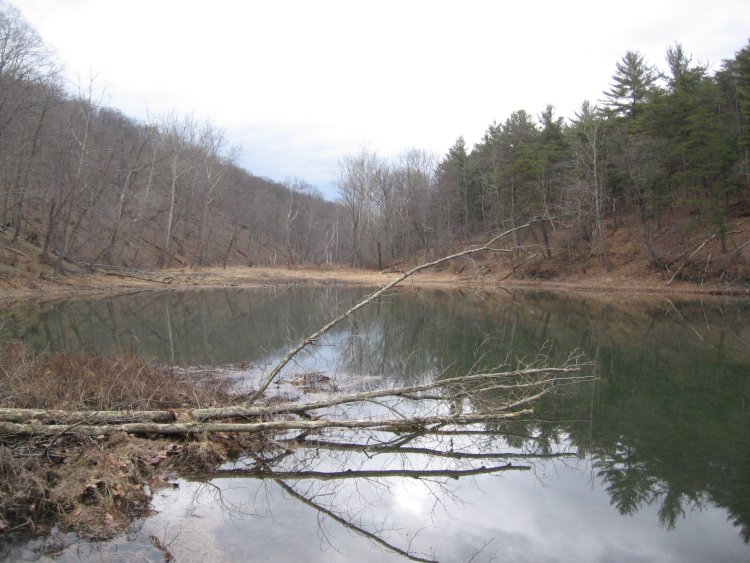
I was assigned to miles 134-137, along with another DCAS board member (who was the lead counter for this section) and my sister. On the drive to the site, we passed through some beautiful landscapes, especially once we got off the interstates and onto local roads. Where there is not forest, the land is covered by northern-type forests of mixed oak, hickory, and pine trees. The land here is very hilly, and the ridges of the Appalachians were visible in the distance. The photo above shows a lake near the start of mile 134 that illustrates a typical scene from this area.


When we arrived at our access point at the start of mile 136, we found another birder who was covering half of the area we were assigned. So rather than fighting over the territory, we simply took miles 134-135 and called it a day. The photo above shows the lock tenders' house at lock 56 in mile 136. We also passed locks 55 and 54 in mile 134. (To see how a lock works, see the animation at this British website.)

The species diversity for this stretch was not very high; we only found 26 species. (The full list is below.) I think our tally would have been higher had we been covering areas in Washington, DC, or Montgomery County, MD. However, it was still a fun walk. I saw one new species for my Maryland life list, the black-capped chickadee. While this species is ubiquitous farther north, in Maryland it is rare outside the western mountainous counties. Pileated woodpeckers, one of the more spectacular woodpeckers in this area, could be heard up and down the length of the two miles, even though we only saw one. Eastern bluebirds, brown creepers, a yellow-bellied sapsucker, and a winter wren were among the other avian highlights of this segment. In addition to bird life, we found evidence for the presence of other animals; one example is the beaver house shown below.


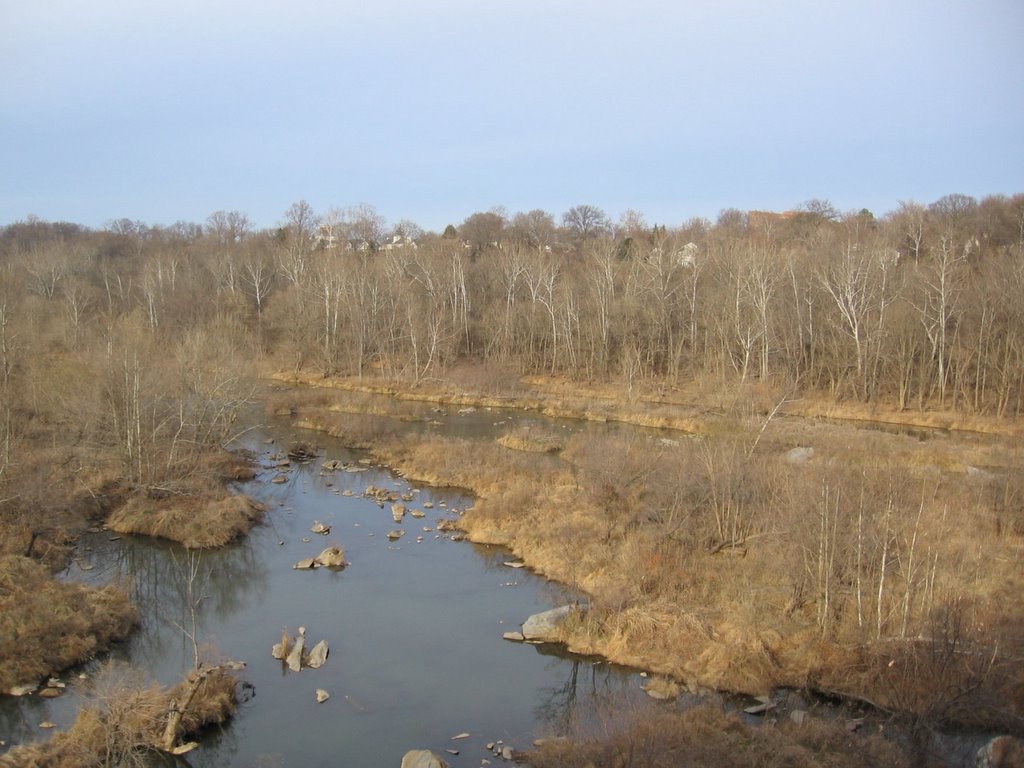
The scnery, though, was the best part of counting along this segment of the canal. For much of the day, the sky was overcast, with occasional light rain showers. At one point the sun broke through the clouds and reflected off the water of the Potomac River. An attempt to capture this beautiful moment is shown below.


Related Information:


SPECIES OBSERVED: 26

Canada Goose
Mallard
American Black Duck
Red-shouldered Hawk
Red-tailed Hawk
Mourning Dove
Belted Kingfisher
Red-bellied Woodpecker
Yellow-bellied Sapsucker
Downy Woodpecker
Hairy Woodpecker
Northern Flicker
Pileated Woodpecker
Carolina Wren
Winter Wren
Eastern Bluebird
Hermit Thrush
Black-capped Chickadee
White-breasted Nuthatch
Brown Creeper
Blue Jay
American Crow
American Goldfinch
Song Sparrow
Dark-eyed Junco
Northern Cardinal


Technorati Tags: , ,
Powered By Qumana

Wednesday, January 11, 2006

C&O Canal Midwinter Count

The Chesapeake and Ohio Canal runs parallel to the Potomac River for 184.5 miles from Georgetown in Washington, DC, to Cumberland in Maryland. The canal was originally conceived as a major transportation artery between the ports of Washington and Baltimore on the Atlantic coast and the northwest hinterland in the Appalachians and beyond. Unfortunately the construction of the canal was beset by delays, and it was obsolete before it was completed. The Baltimore and Ohio Railroad connected the start and end points of the canal sooner than the canal did. Other canals such as the Delaware and Raritan in New Jersey and the Erie in New York managed to be successful transportation systems despite competition from the railroads, but the C&O never really took off.

Fourteen years after the canal ceased operations in 1924, it was purchased by the federal government as a recreation area. In the 1950s, with the restoration project still dormant, the government proposed filling the canal and turning it into a scenic highway. This project never came to fruition, thanks in part to the efforts of Justice William O. Douglas, who led a hike along the length of the canal to publicize its natural beauty. Instead the canal was transferred to the National Park Service. It is now used for various forms of recreation: hiking, biking, canoeing, fishing - and birding.

Since 1999, the D.C. Audubon Society has sponsored a midwinter count along the length of the C&O Canal. The goals of the count are twofold. First, it seeks to establish what birds are using the national park, which could be valuable in management decisions. Second, because the canal crosses several geographic regions, it provides a cross-section of the bird population in Maryland in the depths of winter. An added benefit is that the canal cuts through some areas of Maryland that presently do not have CBCs, so there is at least partial coverage of the winter population in those areas. Past results from the survey - both numbers and analysis - may be found here.

Many of the miles are already claimed, but gaps remain. Anyone who is interested in participating should see here for further information. Counters of all levels of experience are welcome; the more eyes the better. As with Christmas Bird Counts, less experienced participants will be teamed with experienced sector leaders.

The canal, drained for the winter

Sunday, January 08, 2006

Sunday Riverfront Birding

Since I had some free time at the beginning of this month, I resolved to get my birding for this year off to a fast start by hitting as many of DC's better birding spots as possible. I started somewhat slowly with a trip to the zoo on Wednesday, and then the birding built momentum from there. This weekend ends with only a few places - Rock Creek Park, McMillan Reservoir, and the southwest riverfront - left unvisited. As a result, I am already ahead of my 2004 pace, which was my best birding year so far.


This morning I visited Anacostia Park in southeast Washington. This quiet park tends to be good for waterbirds, and occasionally some landbirds that prefer open areas. This morning I did have some good waterbirds here. There was a handful of ruddy ducks across from the Commodore Barry; farther down, a pied-billed grebe swam in the river. All the common local gulls were represented, as well as an adult lesser black-backed gull. I also saw my first ruby-crowned kinglet of the year all the way down near the South Capitol bridge.

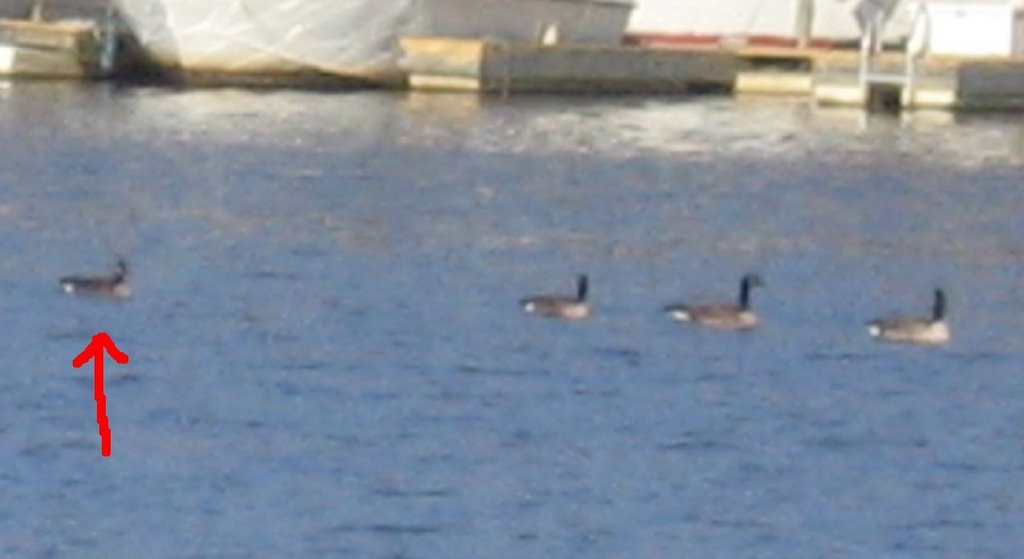
I did leave with a question, and that is whether or not I saw a cackling goose. Several cackling geese have been reported in DC so far this winter, but today was the first time I had seen a real candidate for that species. Cackling goose is a composite of several subspecies that used to be considered part of the Canada goose species until the species was split in two last year. Cackling geese look very similar to Canada geese, except that they are smaller, have proportionately shorter necks, and have stubbier bills. The subspecies most likely to be found in the eastern United States, Richardson's cackling goose, is grayer overall, with breast color matching the color of the flanks. One goose among a flock in the Anacostia River matched this description, though the viewing range was a bit too far for my judgment to be conclusive. I took some photographs of this bird; the best of the lot are shown below.


After lunch, I decided to visit the waterways on the other side of town, namely the Georgetown Reservoir and the neighboring C&O canal. The reservoir sometimes has good numbers of waterfowl in winter; today it was mostly deserted except for the gulls. There were some lesser scaup and at least one canvasback all the way on the far side of the water. One adult lesser black-backed gull was among the common gulls on the dike.

Down at Fletcher's boathouse I followed a foottrail leading west along the river instead of the towpath. This trail soon degraded into little more than a deer path, and even that was sketchy at times. Still I pressed on with that route, since I knew I would not get lost; I was in an area bounded by the Potomac and canal, and Fletcher's boathouse and the Chain Bridge. As long as I kept on in the same direction there would eventually be a way out.

The bushwhacking paid off, as I passed through some very birdy meadows. One spot had a female common yellowthroat, which perched on a tree branch at eye level and then glided down into the grass; it showed its yellow underside on the way down. Farther on, close to the Chain Bridge, there was a spot full of sparrows. These included field and savannah sparrows, in addition to the more common ones. Other birds seen along the way included eastern bluebird, belted kingfisher, and red-shouldered hawk. The deer paths, of course, also had deer, which fled before my footsteps.

When I reached the Chain Bridge I went up on the walkway to look at the ponds. These held mostly mallards, but also a hooded merganser and several common mergansers. The view from the Chain Bridge was a lovely way to end a long day of birding.


SPECIES SEEN: 45

Pied-billed Grebe
Great Blue Heron
Cackling Goose (?)
Canada Goose
Mallard
Canvasback
Lesser Scaup
Hooded Merganser
Common Merganser
Ruddy Duck
Red-shouldered Hawk
Red-tailed Hawk
Ring-billed Gull
Great Black-backed Gull
Lesser Black-backed Gull
American Herring Gull
Rock Pigeon
Mourning Dove
Belted Kingfisher
Red-bellied Woodpecker
Yellow-bellied Sapsucker
Downy Woodpecker
Hairy Woodpecker
Northern Flicker
Pileated Woodpecker
Golden-crowned Kinglet
Ruby-crowned Kinglet
Carolina Wren
Northern Mockingbird
Eastern Bluebird
American Robin
Carolina Chickadee
Tufted Titmouse
Blue Jay
American Crow
Fish Crow
European Starling
House Sparrow
American Goldfinch
Common Yellowthroat
Field Sparrow
Savannah Sparrow
Song Sparrow
White-throated Sparrow
Dark-eyed Junco
Northern Cardinal

Monday, July 25, 2005

A Sultry Evening Twitch

A report on MDOsprey last night noted the presence of a yellow-crowned night-heron and a tundra swan, two locally uncommon species, near the Chain Bridge. The latter is not made out of chains, nor is there anything about it that suggests instability. I presume the name comes from an earlier version of the bridge. The Chain Bridge crosses the Potomac River and Chesapeake and Ohio Canal just inside Washington's border with Maryland. The walkway on the north spot looks down upon a series of ponds and meadows created by the rock formations in the river gorge below.

I debated with myself about whether to go look for these two birds. As likely as not they would not be around, I thought, and it was hot and the trip through Georgetown to the canal can be long at times. But I decided that two local rarities increased the odds enough, so off I went in the early evening. The bus dropped me near Fletcher's Boathouse around 7 pm, and I walked the half-mile or so from there to the Chain Bridge. The evening was hot and hazy. The thermometer sat around 92°F when I left and was only down to 89°F when I returned home; the humidity was about 60%. I could see the humidity in the thick haze that blanketed the river valley. Even though the sun was above the horizon, it was barely visible through the mix of clouds and haze.

Not many birds were stirring. I heard one pileated woodpecker and saw a wood duck with three ducklings in the same place I have seen a wood duck family for the past three summers. More wood ducks awaited when I mounted the Chain Bridge and began looking down into the ponds. The land below the bridge presents lush green foliage contrasting with the deep grays of the ponds and rocks, with the dark brown ribbon of the Potomac coursing just beyond. Within the meadows, white-tailed deer browse. As often as I have seen them there, they still can be a startling sight when I see their heads sticking up out of the grasses. The trees were alive with red-winged blackbirds and American goldfinches, while one gaudy yellow warbler wrestled with a caterpillar. About five green herons and three black-crowned night-herons patrolled the ponds. One first-summer night-heron bent over holding its bill in the water, presumably waiting for some fish to swim past.

Though I checked each pond carefully, I could not find the yellow-crowned night-heron. If I had, it would have been a year-bird and a DC-bird for me. As it is, the yellow-crowned night-heron will have to wait. This is one reason I tend to be reluctant to twitch; the cost in time and energy is quite high if I fail to see the reported species.

However, I did see the tundra swan. Tundra swans are fairly common along the east coast in winter; in the Washington area they winter along the Chesapeake Bay and in the Eastern Shore in great numbers. But the swans rarely come all the way up to Washington itself. (Even mute swans are rarely seen here.) My only other tundra swan within the district was last summer, on June 17.

This bird apparently showed up around May 15 of this year. This is clearly not a breeding individual since only one has been seen during the past two months. Most likely this swan chose not to make the long flight back to the tundra of northern Canada and Alaska, its normal breeding ground, and settled for the summer along the Potomac. I tend to think this is a first-summer bird because the head and neck were somewhat grayish. If tundra swans wait several years before their first breeding, as several other large species do, then this individual may be too young for breeding, and thus did not need to make the flight to the tundra. Unfortunately I was not able to confirm this breeding pattern in any of my books, though Frank C. Bellrose, in his Ducks, Geese, and Swans of North America, speculates that tundra swans wait to breed until their third summer.

This swan certainly looked out of place. I am used to seeing tundra swans on wide bays and lakes choked with ice, when I am bundled to stave off the cold, not in a small pond on one of the hottest nights of the summer. Tundra swans have as their scientific name cygnus columbianus, "dove-like swan." The white feathers and graceful shape contrasted sharply with the muddy embankment upon which it stood while it preened itself; grayish head aside, this bird's whiteness stood out like a beacon. And the swan was big; it easily dwarfed the wood ducks and green herons with which it shared the pond.

So was it worth the trip? Yes, even if I missed the main species I wanted to see. I had the opportunity to watch some herons at work, saw a swan that is unusual in Washington, and did those things in a beautiful spot. And that kind of combination is what keeps me birding.

Before sending this post to the server, I have to register a complaint. Washington, D.C., has many wonderful natural areas in addition to the more familiar memorials of the Mall. However, many of these natural areas are difficult to reach, either requiring long rides with multiple connections, or in places that are otherwise difficult to reach without a car. The C & O Canal is a case in point. Someone without a car has basically three choices to reach the canal. One is at the start of the canal in Georgetown. The other two are bridges across the canal at Fletcher's Boathouse and Arizona Avenue. The first requires a walk down a steep winding road without a sidewalk, followed by crossing the busy Canal Road without benefit of a stoplight near a blind curve. The second requires walking down a steep hill on a road, again without a sidewalk; at the end one has to walk up an embankment to reach a bicycle bridge to cross Canal Road and the Canal, and then walk down a steep embankment on the other side to reach the towpath. Neither of these is pedestrian-friendly. A city should not be this way.

BIRDS SEEN AND HEARD: 22

Great Blue Heron
Green Heron
Black-crowned Night-Heron
Tundra Swan
Canada Goose
Wood Duck
Mallard
Ring-billed Gull
Rock Pigeon
Mourning Dove
Chimney Swift
Pileated Woodpecker
Eastern Kingbird
Northern Mockingbird
American Robin
European Starling
House Sparrow
American Goldfinch
Yellow Warbler
Northern Cardinal
Red-winged Blackbird
Common Grackle