Audubon has produced a new online game, Mission Migration. You have to guide birds through their migration and avoid hazards in the air and on the ground. There are four species: robin, common yellowthroat, osprey, and great egret.

 Posts
All Comments
Audubon has produced a new online game, Mission Migration. You have to guide birds through their migration and avoid hazards in the air and on the ground. There are four species: robin, common yellowthroat, osprey, and great egret.
 Analysis of data from the Christmas Bird Count and Breeding Bird Survey reveals that many common bird species have declined over the past forty years. The causes are varied, but most of the worst cases fall into two distinct groups. Grassland birds are under severe pressure due to the loss of old field habitat to suburban development and industrialized agriculture. Birds that breed in the far north face habitat changes due to climate change and deforestation of large chunks of the boreal forest. None of these birds is in danger of extinction at this time, but their rapid decline is still cause for concern.
Here are the twenty birds with the steepest losses in population:
On Saturday I helped lead a DC Audubon field trip to Little Bennett Regional Park in Montgomery County. (Go there for photos from Saturday.) Little Bennett covers 3700 acres of bottomland forest and old fields in various stages of succession. The habitats preserved in the park have become more valuable in the light of recent changes; land around the park that was open space until very recently is now occupied by subdivisions. We visited Little Bennett in search of breeding birds that can be hard to find in the DC area. We started out at the Kingsley Trail, since that winds through a mix of habitats, and then moved on to a spot on the north end of the park. About a dozen participants attended, which is a good size for a field trip.
 Prairie Warbler / Photo by Steve Maslowski (USFWS)
 Kentucky Warbler / Photo by Steve Maslowski (USFWS)
 Scarlet Tanager / Photo by Steve Maslowski (USFWS)
On Saturday I toured Bombay Hook and Delaware Bayshore with DC Audubon. Bombay Hook NWR is one of the very best birding spots within about a two-hour drive of Washington, D.C. Its 16,000 acres present a variety of habitats, each of which brims with birds. We had a small group of seven people that included two visitors from New Mexico. The regular colony of purple martins has returned to the Nature Center for another summer of breeding. The wooded edge to the meadow was full of warblers - black-and-white, black-throated green, redstart, prothonotary, Louisiana waterthrush, and the ubiquitous yellow warblers and common yellowthroats. We heard their songs and chatter from every wooded or brushy patch in the refuge. Feeders at the Nature Center were attended by ruby-throated hummingbirds, my first of the year.
Fields along the initial stretch of auto tour yielded singing chipping and swamp sparrows, a blue grosbeak, and a ring-necked pheasant. A small wooded patch held yellow-rumped and blackpoll warblers, a yellow-billed cuckoo, a singing red-eyed vireo, a veery, and nesting brown thrashers. On the boardwalk trail we saw white-eyed vireos and western sandpipers, while listening to the distinctive songs of marsh wrens, seaside sparrows, and a clapper rail.
Shorebirds were rather sparse in the impoundments and mudflats close to the auto tour route. They seem to have followed the receding tide to feeding areas on the farther reaches of the refuge's mudflats. Still, we saw representatives of the refuge's regular May visitors - short-billed dowitchers, semipalmated plovers, black-bellied plovers, willets, and graceful black-necked stilts. After seeing dunlin in basic plumage several times this winter, it was fun change of pace to see them in their colorful alternate plumage.
Our next stop after the refuge was Port Mahon Road, which has a thin strip of beach bordering Delaware Bay. This is normally a good spot to find red knots since horseshoe crabs come ashore to lay eggs; unfortunately, on Saturday no knots were present. We did see sanderling, hundreds of ruddy turnstones, a least sandpiper, and a group of oystercatchers in flight. Pickering Beach had the same shorebirds and gulls as before, with the exception of a very late Bonaparte's gull. Like at Port Mahon Road, horseshoe crabs lined the water's edge.
 View of Port Mahon Road
 Today is the birthday of John James Audubon (1785-1851). Audubon was born in Haiti (then Saint-Domingue) and educated in France. He first came to the United States in 1803 and settled near Philadelphia. In the course of his career as a naturalist and painter, he lived and worked in Louisville, Kentucky; Cincinnati, Ohio; New Orleans, Louisiana; and several other American cities. He died in 1851 and is buried in New York City.
John James Audubon was one of several naturalists who studied North American birds in the early years of the United States. Along with Alexander Wilson, Charles Bonaparte, William Bartram, and others, Audubon helped to discover and describe the continent's avifauna. Audubon himself described 34 birds (both species and subspecies) for the first time. The western subspecies of the yellow-rumped warbler still bears his name.
As with the article that I wrote about last week, reading Audubon's accounts of the birds he painted can be a reminder of the different standards for naturalists then and now. Since he worked without the benefit of binoculars, spotting scopes, or cameras, he needed to shoot birds before he could paint them. The species descriptions that accompany his illustrations usually include some notes about where and how he captured his specimens. When possible, he painted from freshly killed and mounted specimens. In the course of his work, he sometimes would sample a bird's meat and describe its quality. The American white pelican received a poor review:
Its flesh is rank, fishy, and nauseous, and therefore quite unfit for food, unless in cases of extreme necessity. The idea that these birds are easily caught when gorged with fish, is quite incorrect, for when approached, on such an occasion, they throw up their food, as Vultures are wont to do.
 The advantage of painting from recently-killed models was that Audubon could paint the birds in more lifelike positions than his predecessors managed. His paintings often show the birds in action - hunting and being hunted, foraging, and interacting with other birds. Audubon did not always achieve perfectly lifelike stances, but sometimes was quite successful. His painting of blue jays is one of his better depictions of birds in action.
Today DC Audubon made its annual spring trip to Hughes Hollow in Maryland. The choice of dates turned out of be fortuitous, as the day was absolutely gorgeous. We finally got a break from the yo-yo temperatures mixed with rainy days. The early dense fog lifted to reveal blue skies and a mild morning. Hughes Hollow is part of the McKee-Beshers WMA, a mixed-use conservation area managed for hunters, hikers, and birders. The portion we covered today comprises only about one-sixth of the WMA; in the distance we could hear dog trials in another part of the WMA and shots at a nearby gun club. Because of the hunting pressure, waterfowl in the impoundments tend to be very jumpy. Nevertheless, the refuge offers diverse habitats that attract many species of birds.
 This field trip is timed to coincide with the return of tree swallows to the area, and sure enough, swarms of tree swallows were flying over the impoundments when we arrived. A large raft of ring-necked ducks was in the left impoundment. The ring-necked ducks were joined by a pied-billed grebe and a few chicken-like American coots. Songbirds were also plentiful. Flocks of red-winged blackbirds croaked their song, while eastern bluebirds and yellow-rumped warblers foraged in the trees along the sides of the dike. Towards the end of the dike, a few of us saw a red-headed woodpecker, the first of several. I think that in total we saw four, so most attendees got a good look at this striking species by the end of the day.
 After leaving the impoundments, the main trail winds its way through fields, hedgerows, and wooded swamps. These areas are full of the characteristic wetland species. We got many good looks at all seven woodpeckers, noisily displaying red-shouldered hawks, eastern phoebes, and swamp sparrows. Some people saw rusty blackbirds, which I missed. Waterbirds, as I noted, were a little harder to see; most sightings of wood ducks, black ducks, hooded mergansers, and northern pintail were brief, at a distance, or partially obscured by brush and trees. I and a few others had great looks at green-winged and blue-winged teal when we turned down a side path.
A later (unofficial) stop at Seneca Lock turned up a singing pine warbler (not seen), a bufflehead, and a few horned grebes, which are my first for the year. (Somehow I kept missing them despite ample opportunities.) Seneca also yielded a swarm of box elder bugs.
SPECIES SEEN: 53*
Pied-billed Grebe
Horned Grebe
Double-crested Cormorant
Great Blue Heron
Canada Goose
Wood Duck
Green-winged Teal
Mallard
American Black Duck
Northern Pintail
Blue-winged Teal
Ring-necked Duck
Bufflehead
Red-breasted Merganser
Black Vulture
Turkey Vulture
Osprey
Red-shouldered Hawk
Red-tailed Hawk
American Kestrel
American Coot
Mourning Dove
Belted Kingfisher
Red-headed Woodpecker
Red-bellied Woodpecker
Yellow-bellied Sapsucker
Downy Woodpecker
Northern Flicker
Pileated Woodpecker
Eastern Phoebe
Tree Swallow
Golden-crowned Kinglet
Northern Mockingbird
Eastern Bluebird
American Robin
Carolina Chickadee
Tufted Titmouse
White-breasted Nuthatch
Blue Jay
American Crow
Fish Crow
European Starling
Yellow-rumped Warbler
Pine Warbler
Eastern Towhee
Song Sparrow
Swamp Sparrow
White-throated Sparrow
Dark-eyed Junco
Northern Cardinal
Red-winged Blackbird
Common Grackle
Brown-headed Cowbird
* These are my sightings only. The full trip list will be posted on the DC Audubon website.
 Today I went out to Ocean City on a DC Audubon Society field trip. We began the morning at the Ocean City inlet, where we quickly found common and red-throated loons, surf scoters, red-breasted mergansers, and lots of the usual gulls. The jetty on the far side was crowded with American oystercatchers, which occasionally took off as a flock to resettle on another part of the jetty. The near jetty had sanderlings, ruddy turnstones, purple sandpipers, and at least one dunlin. As we stood to watch these birds, a flock of Bonaparte's gulls flew past. Careful looking revealed two northern gannets cruising over the ocean. The stop at Ocean City included the traditional break for fries at Thrasher's.
On the drive to the next stop, we could see thousands of snow geese floating on one of the many coves to the west of the road. At Indian River Inlet we were greeted by the sight of a great cormorant flying out towards the ocean. Following the pattern from Ocean City, there was less waterfowl diversity than last year, with fewer numbers of the species that we did see. A small flock of long-tailed ducks patrolled the entrance to the inlet. Other than that we saw the same scoters, loons, and shorebirds as before.
Silver Lake in Rehobeth, the third stop, had its usual raft of canvasbacks. Alongside the canvasbacks was a large flock of ruddy ducks. Smaller numbers of black ducks, northern shovelers, and coots were also on the water here. A great blue heron worked the edges. This pond, nestled in the midst of housing developments, is a rather unremarkable location at first glance. Somehow it manages to be a waterfowl magnet year after year. We capped off the day with two stops at Cape Henlopen State Park. Gordon's Pond, on the south side of the park, had more waterfowl, including tundra swans and northern pintail. A great egret and a half-dozen greater yellowlegs braved the winter cold. Two adult bald eagles were sitting on a log in the middle of the marsh. Bushes along the side of the trail held a hermit thrush and some yellow-rumped warblers.
From there we went to the north side of the park, the point of Cape Henlopen. The nature center feeders were sparsely populated by the time we arrived, with only chickadees, titmice, and juncos, plus a red-breasted nuthatch that I missed. Venturing out to the point, we found that the day had grown much colder and windier, made more obvious by the lack of protection from the northwest winds. Going out onto the beach was worth braving the wind chill, however, because we were rewarded with a flock of snow buntings that flew in and out of the dunes.
The list below reports the species I saw today. More images from today's trip are available here.
SPECIES SEEN: 58
Red-throated Loon
Common Loon
Northern Gannet
Double-crested Cormorant
Great Cormorant
Great Blue Heron
Great Egret
Mute Swan
Tundra Swan
Snow Goose
Canada Goose
Brant
Mallard
American Black Duck
Northern Pintail
Northern Shoveler
Canvasback
Long-tailed Duck
Surf Scoter
Bufflehead
Red-breasted Merganser
Ruddy Duck
Black Vulture
Turkey Vulture
Bald Eagle
Northern Harrier
Sharp-shinned Hawk
American Kestrel
Peregrine Falcon
American Coot
American Oystercatcher
Greater Yellowlegs
Ruddy Turnstone
Sanderling
Dunlin
Purple Sandpiper
Ring-billed Gull
Great Black-backed Gull
American Herring Gull
Bonaparte's Gull
Rock Pigeon
Mourning Dove
Eastern Bluebird
Hermit Thrush
American Robin
Carolina Chickadee
Tufted Titmouse
Fish Crow
European Starling
House Sparrow
American Goldfinch
Yellow-rumped Warbler
Song Sparrow
Dark-eyed Junco
Snow Bunting
Northern Cardinal
Red-winged Blackbird
Boat-tailed Grackle
The Ninth Annual C&O Canal Mid-Winter Bird Survey will be next Saturday, January 20. The survey is coordinated by the DC Audubon Society and aims to survey bird life along the entire 184.5 miles of the canal. The canal is divided into 2-4 mile segments, each of which is covered by a small team of observers. Most miles are now assigned, but about thirty miles are still up for grabs. Any birders in the area who would like to participate should email canalcount@gmail.com as soon as possible.
 Today was the Christmas Bird Count for Washington, DC. Like last year, I joined the group surveying the National Arboretum on the Anacostia Sector. The day started with an assembly in the parking lot at Kenilworth Aquatic Gardens at 7 am, before splitting up to cover the different parts of the Anacostia Sector. While there, we witnessed a rocket launch that took place on the Eastern Shore (pictured above).
At the Arboretum we split further into teams of 2-4 to cover the ground more efficiently. The team I was with, which included two other DC Audubon members, focused on the Asian Gardens, River Trail, and the Holly and Magnolia area. These areas have a high concentration of robins during the winter; we counted at least 400 this morning.
It turned out to be a great day for raptors. We recorded six diurnal raptors, including a peregrine falcon that cruised low over Mount Olivet Cemetery, and a bald eagle high over the Arboretum. A great horned owl in the Arboretum was a personal highlight, as it was the first I have seen in DC. It perched almost motionless at the top of a tall pine and allowed great looks while it gazed back at us.
A few birds were in short supply. Sparrows were noticeable mainly by their absence. Even the juncos seemed fewer than normal. Goldfinches, too, were barely represented on our final tally.
The list below is my personal list for the day and does not include all birds seen in the Arboretum.
SPECIES SEEN: 41
Canada Goose
Mallard
Common Merganser
Turkey Vulture
Bald Eagle
Sharp-shinned Hawk
Cooper's Hawk
Red-shouldered Hawk
Red-tailed Hawk
Peregrine Falcon
Ring-billed Gull
American Herring Gull
Mourning Dove
Great Horned Owl
Belted Kingfisher
Red-bellied Woodpecker
Yellow-bellied Sapsucker
Downy Woodpecker
Northern Flicker
Pileated Woodpecker
Eastern Phoebe
Cedar Waxwing
Carolina Wren
Northern Mockingbird
Eastern Bluebird
American Robin
Carolina Chickadee
Tufted Titmouse
Red-breasted Nuthatch
White-breasted Nuthatch
Blue Jay
American Crow
Fish Crow
European Starling
House Sparrow
House Finch
American Goldfinch
Eastern Towhee
White-throated Sparrow
Dark-eyed Junco
Northern Cardinal
 Today I went out to Blackwater National Wildlife Refuge with DC Audubon. Blackwater is a large tract of land that encompasses the marshes of the Little Blackwater River just south of Cambridge, Maryland. In addition to marshes and freshwater impoundments, the refuge includes managed agricultural fields and some of the largest stands of loblolly pine on the Eastern Shore. The Fish and Wildlife Service maintains a five-mile Wildlife Drive that winds through most of the habitat types that the refuge offers. Recently two new hiking trails opened, and roads around the outside of the refuge include good birding spots as well.
The chief attractions for birders in the fall are the waterfowl that gather at Blackwater in large numbers. Canada geese, of course, were well represented, as were snow geese. A few tundra and mute swans were present as well. The first impoundment, pictured above, had about a dozen of my favorite duck - northern shoveler. Several impoundments had northern pintails, including one at close enough range for us to study the pattern of white and brown on the back of its head. Other waterfowl species were seen more sporadically today, mostly on Shorters Wharf road east and south of the refuge. There, a nice mixed group included blue-winged and green-winged teal, plus American wigeons.
Bald eagles, which breed at the refuge, are also a major attraction. Several times we had groups of up to 4 eagles circling overhead. It was about as good of a view of eagles as one could ask for. While the eagles kept our attention up high, northern harriers searched low over the fields for small rodents.
The large stands of loblolly pines offer an Eastern Shore specialty. The Eastern Shore is the northern limit of brown-headed nuthatches, which are residents of the southeastern U.S. These nuthatches are smaller cousins of the white-breasted nuthatch, have brown caps instead of black, and emit a call that sounds a bit like a squeaky toy. We caught up with about a dozen brown-headed nuthatches along the road near the Marsh Edge Trail. They flit around quickly near the tops of the pines to gather seeds from the cones, then break the seeds open against the bark of the trees. Other birds were using the same stand of pines: ruby-crowned and golden-crowned kinglets, a yellow-bellied sapsucker, and a blue-headed vireo.
We saw too many other birds for me to go into detail on all of them. Then, since we were traveling in several cars, each carload of birders had a slightly different experience. Our little group saw a juvenile black-crowned night-heron. Others saw birds that I missed, including American white pelicans.
More images from the trip are available at the DC Audubon website. The species list appended to this post is my personal list for the day.
SPECIES SEEN: 58
Double-crested Cormorant
Great Blue Heron
Black-crowned Night-Heron
Mute Swan
Tundra Swan
Snow Goose
Canada Goose
American Wigeon
Gadwall
Green-winged Teal
Mallard
American Black Duck
Northern Pintail
Blue-winged Teal
Northern Shoveler
Turkey Vulture
Bald Eagle
Northern Harrier
Sharp-shinned Hawk
Red-tailed Hawk
American Coot
Killdeer
Greater Yellowlegs
Ring-billed Gull
Great Black-backed Gull
American Herring Gull
Laughing Gull
Forster's Tern
Rock Pigeon
Mourning Dove
Belted Kingfisher
Red-bellied Woodpecker
Yellow-bellied Sapsucker
Downy Woodpecker
Hairy Woodpecker
Northern Flicker
Pileated Woodpecker
Golden-crowned Kinglet
Ruby-crowned Kinglet
Cedar Waxwing
Carolina Wren
Northern Mockingbird
Eastern Bluebird
American Robin
Carolina Chickadee
Brown-headed Nuthatch
Fish Crow
European Starling
House Sparrow
Blue-headed Vireo
House Finch
Song Sparrow
Swamp Sparrow
White-throated Sparrow
Dark-eyed Junco
Northern Cardinal
Red-winged Blackbird
Common Grackle
 Each January the DC Audubon Society coordinates a one-day bird survey along the length of the C&O Canal, which runs 184.5 miles from Washington, DC, to Cumberland, MD. Last winter, I counted birds along a small section in western Maryland. My post about that section is here.
Results from last winter's count are now available at the DC Audubon website. Data from the count is presented in an Excel spreadsheet. My written report on the results from 2006 is here.
***
There will not be a "Loose Feathers" post this week because there were not enough interesting news stories to make it worthwhile.
Today I attended a field trip with my local Audubon chapter to Point Lookout State Park in Maryland. Point Lookout is a peninsula at the confluence of the Potomac River and Chesapeake Bay. The very tip of the peninsula is occupied by a Coast Guard station; thus it is off-limits to the general public. However, just north of the station is a park with picnic groves and mixed deciduous-coniferous forest, including several large stands of loblolly pine. The park includes the site of a Civil War fort and prison camp, shown below. The peninsula acts as a funnel so that southbound migrants gather in the park before heading across the bay.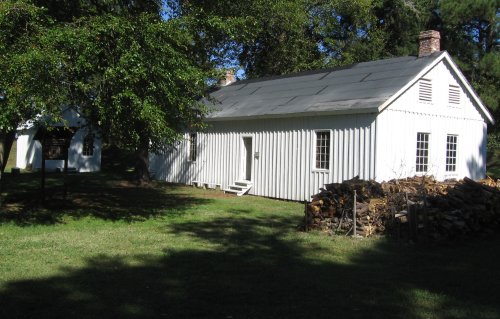 Thursday's cold front did not bring many migrants, unfortunately. However, the passing front left behind a cold, crisp autumn day. The sun was bright, the sky was deep blue, and the humidity was low, so that visibility extended far out on either side of the peninsula.
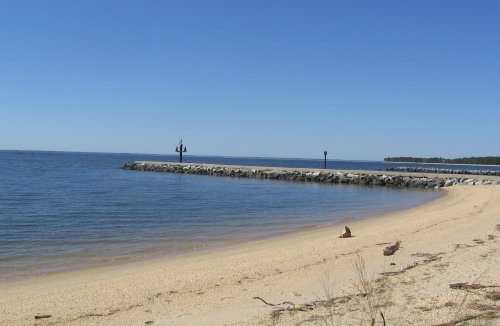 We were treated to two species in large numbers - bald eagles and brown pelicans. We first saw a group of one adult and two juveniles all flying together at close range. Later at least eight bald eagles were kettling together off in the distance, some almost at the limit of sight. Likewise, we started out seeing one brown pelican sitting on a piling. Then about ten more flew past, and then another dozen at very close range - maybe about ten yards away. At the north end of the park, another dozen or so were perched on a breakwater. There were also lots of yellow-rumped warblers, ruby-crowned and golden-crowned kinglets, brown creepers, and white-throated sparrows. Raptor flyovers included a merlin and a northern harrier.
 A full report will eventually be available on the DC Audubon website, so I will leave my blog description at that. Some pictures are available at the DC Audubon site now, and more will appear later. Below is my personal trip list.
SPECIES SEEN: 41
Brown Pelican
Double-crested Cormorant
Canada Goose
Black Scoter
Turkey Vulture
Bald Eagle
Northern Harrier
Sharp-shinned Hawk
Merlin
Virginia Rail (h?)
Ring-billed Gull
Great Black-backed Gull
American Herring Gull
Laughing Gull
Forster's Tern
Rock Pigeon
Red-bellied Woodpecker
Yellow-bellied Sapsucker
Downy Woodpecker
Northern Flicker
Eastern Wood-Pewee
Eastern Phoebe
Tree Swallow
Golden-crowned Kinglet
Ruby-crowned Kinglet
Carolina Wren
House Wren
Northern Mockingbird
Eastern Bluebird
American Robin
Carolina Chickadee
Brown Creeper
Blue Jay
American Crow
European Starling
Yellow-rumped Warbler
American Redstart
Chipping Sparrow
Song Sparrow
White-throated Sparrow
Northern Cardinal
The Nature Center at Rock Creek Park has a small plot planted with milkweed in front of the building. Milkweed is now past its prime and is going to seed. On Sunday, during the DC Audubon field trip, these milkweed plants held monarch butterflies in all stages of their life cycle.
Several caterpillars munched on the leaves. Underneath at least one leaf was a chrysalis, a cocoon-like structure that holds the pupa as it grows into an adult.
 One adult sat still on a leaf, despite the close attention of several observers with cameras.
 Finally, here is one ex-monarch. I am not sure how it met its demise, but something has already eaten most of this insect's body.
 Monarch butterflies, like many of the birds we saw, are making their annual migration south. Migrating monarchs can be seen high in the sky over the tree canopy. Sometimes they will appear as tiny fluttering specks to the naked eye. At some coastal concentration points, like Point Lookout, migrating monarchs may gather in the hundreds or thousands.
 Tricolored Heron / Photo by USFWS
There has been a discussion over at Wildbird on the Fly about whether a recent membership mailing from the National Audubon Society is misleading. Here is the mailing in question, for anyone who has not seen it.
Amy argues that it is misleading because bald eagles have actually largely recovered from their midcentury losses. I also found this mailing strange when I first received it. Christmas Bird Counts show a steady growth in the bald eagle population over the past fifty years. In the DC area, at least, it seems that some breeding eagles are running out of elbow room because of competition from others. So it is hard to claim that eagles are running out of time.
At the same time, there are plenty of other birds that are in serious danger. As one commenter at Amy's blog noted, Audubon just published a list of the Top Ten Endangered Birds in the Continental United States, none of which was a bald eagle. Two other birds not on that list, red knot and cerulean warbler, are also in more serious trouble than eagles. So it does seem that there could have been a better choice of images.
On Saturday, July 15, Kenilworth Aquatic Gardens in northeast Washington celebrated its annual Waterlily Festival and Founders Day. The festival included traditional Asian music and dance, food, a photography exhibit, and displays by local conservation organizations, including the DC Audubon Society. Today I led a short bird walk for the society to contribute to the occasion.
On Saturday I went with DC Audubon out to Bombay Hook on the Delaware coast. Bombay Hook, part of the National Wildlife Refuge system, is the best birding spot that I have visited in the mid-Atlantic. The refuge consists of a series of fresh water impoundments, surrounded by woods, fields in various stages of growth, and tidal salt marshes and mudflats.
The diversity and quality of habitats in around Bombay Hook attracts many birds - and birders. Claudia Wilds, in her classic Finding Birds in the National Capital Area, states that "there must be few avid birders in these parts whose life lists have not been substantially lengthened by happily remembered expeditions" there. My own experiences would bear her comment out; in four trips I have seen sixteen life birds. These include beautiful American avocets and black-necked stilts, as well as the rare and declining red knots. On Saturday my one life bird was a clapper rail, which I identified not by sight but by its "clappering" call shortly after a few others saw two swim across a creek. (Yes, I do count heard birds for species that are hard to see.) Our Audubon group as a whole found over 100 species, remarkable for one of our field trips, and possibly a record for recent years.
As one might guess from the timing of our trip, the best reason to make a two-hour trip from Washington to the refuge is to see shorebirds. That mission was accomplished on Saturday as we saw sixteen species of shorebirds, from the tiniest semipalmated plovers to the chunky short-billed dowitchers and graceful willets. The mudflats were enlivened with colorful dunlin and ruddy turnstones; these two species put to lie their family's reputation for being dull and difficult to identify. I spotted one pectoral sandpiper among the other peeps at Shearness Pool; this bird stood out from the others by its more heavily streaked breast and prominent white stripes above the eye and along the back.
The woods and fields were full of songbirds. Blackpoll warblers sang everywhere, a sure sign of late May. A prothonotary warbler greeted us at the entrance to the boardwalk trail; a northern waterthrush skulked in the reeds of Bear Swamp. Graceful purple martins and barn swallows hawked insects around the visitors center. (I think that purple martins are among my favorite swallows, though they are also one that I see very rarely.) Finally, two characteristic birds of coastal salt marshes were present in good numbers: marsh wrens and seaside sparrows added their bubbling and hissing songs from among the reeds.
Port Mahon Road is the follow-up to Bombay Hook on the traditional spring birders' route. This is a good spot to pick up red knots, and sure enough, we saw two standing on a chunk of concrete with about thirty ruddy turnstones. More experienced birders with our group recalled years ago when numbers of red knot at the site equalled that of the turnstones and sanderlings that crowded the beach.
A few of us went on from Port Mahon Road to Little Creek and Pickering Beach. The birds there were pretty much the same as at the previous stops, with two exceptions. One was a northern harrier coursing over an old field. The second was a white-crowned sparrow that flew up from the side of a path and perched in full view, my first for the year.
I would highly recommend a visit to this refuge for anyone in the Mid-Atlantic or for any birder visiting the area. For directions to the refuge, see the FAQ on the refuge website. To learn what birds have been seen there recently, check the de-birds listserve (also available at Birdingonthe.net).
On Saturday the DC Audubon "City Flickers" toured DC birding sites to see as many birds as possible within a single day. I am still a little worn out from the full day of birding. We were lucky to have cooperative weather. Though the sky threatened ominously at several points, we never did get rain. Our goal was to see 100 species, an achievable but challenging number.
The City Flickers - Mike, Denise, and I - gathered at the nature center in Rock Creek Park at 5:30 am. Though it was still dark, many birds were already singing. From the parking lot, we heard american robin, wood thrush, eastern towhee, northern cardinal, and others. We heard an eastern phoebe calling near the horse center. In the maintenance yard, bats were still winging after insects as we began looking for birds. A lingering blue-headed vireo (my first for the year) perched out in the open. Red-eyed vireo, ovenbird, black-throated blue warbler, northern parula, and indigo bunting sang in the yard. Common yellowthroats and swamp sparrows darted in and out of the knotweed.
Back at the nature center, we found our other thrushes for the day. Veery and Swainson's patrolled the underbrush of the median strip. Eastern bluebirds flew to and from a nestbox. The loop trail produced blackpoll, blackburnian, and yellow-rumped warblers. An unusual buzzy song from deeper in the woods caused some disagreement - was it black-throated blue or black-throated green? After consulting some recordings, we decided it was neither; in reality it was a cerulean warbler song, sounding somewhat like a speeded-up black-throated blue song.
The "dog run" at Military Road was good for more warblers: magnolia, black-and-white, and redstart, as well as a baltimore oriole. Our mascot bird, a northern flicker, flew across the field with its golden underwings gleaming in the sunlight. A quick stop at Picnic Areas 17/18 revealed a chestnut-sided warbler and a fine-looking scarlet tanager. A mourning warbler reported last week failed to appear in its usual spot. Other warblers that were reported late last week failed to show themselves as well. It seems that many species in the early May wave of migrants have now moved on.
When we left Rock Creek Park around 9:30 am, we had already recorded 54 species. On the drive to our next stop, Kenilworth Aquatic Gardens, we picked up three more: great blue heron, canada goose, and rock pigeon. Kenilworth was mostly devoid of human visitors when we arrived, leaving us alone with the birds. Taking the river trail first, we quickly heard prothonotary warbler, white-eyed, and yellow-throated vireos. In fact, we would hear several prothonotary warblers singing along our route. As we rounded a bend in the trail, a small heron flushed from the ground and landed on a branch - yellow-crowned night-heron! Legions of cedar waxwings buzzed from a mulberry tree.
Several shorebirds walked the dikes between the impoundments. Most were spotted sandpipers but at least one solitary was among them. A greater yellowlegs flushed from a pond, but unfortunately it left to quickly for all of us to identify it, so it could not count for the list. The same went for a killdeer. A green heron flushed from one of them. We finally saw our first hawk for the day around noon, a red-shouldered hawk under constant harassment from crows and other birds.
Refreshed by a quick lunch, we looked for grassland species at Kenilworth Park. The back area yielded field sparrow, killdeer, and blue grosbeak. It also yielded a powerful stench in an area close to the Pepco plant. One osprey flew overhead, bringing our diurnal raptor total to 2. When we stopped at the other parking lot to check out the no-mow area, a large flock of dark birds flew in and settled in the tall grass. As we approached, the flock rose from the field and flew towards the aquatic gardens, but not before giving identifiable looks. They were males with creamy heads and white rumps, and warm orange brown females - bobolinks! The no-mow area also yielded a savannah sparrow and an eastern meadowlark.
After Kenilworth Park, our species count stood at 86. From there on, our big day was a mop-up operation to find specific species that we missed earlier. Kingman Island produced a double-crested cormorant and ring-billed gull - common birds, but to that point unseen. Poplar Point at the south end of Anacostia Park yielded laughing gull and a very late american black duck, as well as an orchard oriole and house wren. From Anacostia Park we headed west across town. A drive by MacMillan Reservoir produced nothing. Stops along the C&O Canal were more productive. The sycamores at Fletcher's Boathouse yielded warbling vireo, ruby-throated hummingbird, and (finally) a house finch. A couple black-crowned night-herons worked a nearby stream. At the Chain Bridge, we failed to find any new species, but we had the pleasure of seeing a flyover yellow-crowned night-heron.
We ended the day in the place where we began it, Rock Creek Park. A stop along Broad Branch Road produced a louisiana waterthrush, which we watched as it worked its way from one rock to the next. Elsewhere in the park, we caught sight of a barred owl. It sat and looked around as the songbirds in the area went crazy. When it departed into the deepening gloom, the chattering quieted down considerably. An evening stop at the maintenance yard brought us common nighthawks. At that point we were at 99 species. To break 100 would require some night birding. A stop in one open field produced displaying american woodcocks, who displayed in response to a great-horned owl recording. At another location, three or four eastern screech owls responded to a taped call, with all calling back and forth at the same time. Clearly the screech owl population appears to be thriving.
With that, we packed it in for the night. In sixteen hours of almost non-stop birding, we found 101 species of birds. With better luck at Rock Creek in the morning and more convenient tide times we could have seen even more than that. If you notice from the list below, we somehow missed red-tailed hawk and all other diurnal raptors, as well as black vulture, both yellowlegs, all terns, rose-breasted grosbeak, and several warbler species that are usually easy to find. Despite the misses, this was an event to celebrate Washington's avian diversity and varied habitats. As you can see from the list below, our team met that goal handily.
| Species | Location First Seen |
| Ducks, Geese, and Cormorants | |
| Canada Goose | Kenilworth Aquatic Gardens |
| Wood Duck | Rock Creek Park |
| Mallard | Rock Creek Park |
| American Black Duck | Anacostia Park |
| Double-crested Cormorant | Kingman Island |
| Herons | |
| Great Blue Heron | Kenilworth Aquatic Gardens |
| Green Heron | Kenilworth Aquatic Gardens |
| Black-crowned Night-heron | Fletcher's Boathouse |
| Yellow-crowned Night-heron | Kenilworth Aquatic Gardens |
| Vultures and Hawks | |
| Turkey Vulture | Kenilworth Park |
| Osprey | Kenilworth Park |
| Red-shouldered Hawk | Kenilworth Aquatic Gardens |
| Shorebirds | |
| Killdeer | Kenilworth Park |
| Solitary Sandpiper | Kenilworth Aquatic Gardens |
| Spotted Sandpiper | Kenilworth Aquatic Gardens |
| American Woodcock | Rock Creek Park |
| Gulls | |
| Ring-billed Gull | Kingman Island |
| Laughing Gull | Anacostia Park |
| Doves and Cuckoos | |
| Rock Pigeon | Kenilworth Aquatic Gardens |
| Mourning Dove | Rock Creek Park |
| Yellow-billed Cuckoo | Kenilworth Aquatic Gardens |
| Owls | |
| Eastern Screech-owl | Rock Creek Park |
| Barred Owl | Rock Creek Park |
| Nightjars and Swifts | |
| Common Nighthawk | Rock Creek Park |
| Chimney Swift | Rock Creek Park |
| Hummingbirds and Kingfishers | |
| Ruby-throated Hummingbird | Fletcher's Boathouse |
| Belted Kingfisher | Kenilworth Aquatic Gardens |
| Woodpeckers | |
| Red-bellied Woodpecker | Rock Creek Park |
| Downy Woodpecker | Rock Creek Park |
| Hairy Woodpecker | Kenilworth Park |
| Northern Flicker | Rock Creek Park |
| Pileated Woodpecker | Kenilworth Aquatic Gardens |
| Tyrant Flycatchers | |
| Eastern Wood-pewee | Rock Creek Park |
| Acadian Flycatcher | Rock Creek Park |
| Eastern Phoebe | Rock Creek Park |
| Great Crested Flycatcher | Kenilworth Aquatic Gardens |
| Eastern Kingbird | Kenilworth Aquatic Gardens |
| Vireos | |
| White-eyed Vireo | Kenilworth Aquatic Gardens |
| Yellow-throated Vireo | Kenilworth Aquatic Gardens |
| Blue-headed Vireo | Rock Creek Park |
| Warbling Vireo | Fletcher's Boathouse |
| Red-eyed Vireo | Rock Creek Park |
| Crows and Jays | |
| Blue Jay | Rock Creek Park |
| American Crow | Rock Creek Park |
| Fish Crow | Kenilworth Aquatic Gardens |
| Swallows | |
| Tree Swallow | Kenilworth Aquatic Gardens |
| Northern Rough-winged Swallow | Kenilworth Park |
| Barn Swallow | Kenilworth Aquatic Gardens |
| Chickadees and Nuthatches | |
| Carolina Chickadee | Rock Creek Park |
| Tufted Titmouse | Rock Creek Park |
| White-breasted Nuthatch | Rock Creek Park |
| Wrens and Gnatcatchers | |
| Carolina Wren | Rock Creek Park |
| House Wren | Anacostia Park |
| Blue-gray Gnatcatcher | Rock Creek Park |
| Thrushes | |
| Eastern Bluebird | Rock Creek Park |
| Veery | Rock Creek Park |
| Swainson's Thrush | Rock Creek Park |
| Wood Thrush | Rock Creek Park |
| American Robin | Rock Creek Park |
| Mimids | |
| Gray Catbird | Rock Creek Park |
| Northern Mockingbird | Rock Creek Park |
| Brown Thrasher | Rock Creek Park |
| Starlings and Waxwings | |
| European Starling | Rock Creek Park |
| Cedar Waxwing | Kenilworth Aquatic Gardens |
| Wood Warblers | |
| Northern Parula | Rock Creek Park |
| Yellow Warbler | Kenilworth Aquatic Gardens |
| Chestnut-sided Warbler | Rock Creek Park |
| Magnolia Warbler | Rock Creek Park |
| Black-throated Blue Warbler | Rock Creek Park |
| Yellow-rumped Warbler | Rock Creek Park |
| Blackburnian Warbler | Rock Creek Park |
| Blackpoll Warbler | Rock Creek Park |
| Cerulean Warbler | Rock Creek Park |
| Black-and-white Warbler | Rock Creek Park |
| American Redstart | Rock Creek Park |
| Prothonotary Warbler | Kenilworth Aquatic Gardens |
| Ovenbird | Rock Creek Park |
| Louisiana Waterthrush | Rock Creek Park |
| Common Yellowthroat | Rock Creek Park |
| Hooded Warbler | Rock Creek Park |
| Tanagers | |
| Scarlet Tanager | Rock Creek Park |
| Sparrows | |
| Eastern Towhee | Rock Creek Park |
| Chipping Sparrow | Rock Creek Park |
| Field Sparrow | Kenilworth Park |
| Savannah Sparrow | Kenilworth Park |
| Song Sparrow | Rock Creek Park |
| Swamp Sparrow | Rock Creek Park |
| White-throated Sparrow | Rock Creek Park |
| Cardinals and Buntings | |
| Northern Cardinal | Rock Creek Park |
| Blue Grosbeak | Kenilworth Park |
| Indigo Bunting | Rock Creek Park |
| Bobolink | Kenilworth Park |
| Blackbirds and Orioles | |
| Red-winged Blackbird | Kenilworth Aquatic Gardens |
| Eastern Meadowlark | Kenilworth Park |
| Common Grackle | Rock Creek Park |
| Brown-headed Cowbird | Rock Creek Park |
| Baltimore Oriole | Rock Creek Park |
| Orchard Oriole | Anacostia Park |
| Finches | |
| House Finch | Fletcher's Boathouse |
| American Goldfinch | Rock Creek Park |
| Old World Sparrows | |
| House Sparrow | Rock Creek Park |
| Results | |
| Total Species Identified | 101 |
| Seen | 81 |
| Heard Only | 20 |
I finally caught up with a cerulean warbler, and the sighting was a great one indeed. This morning I headed out to Pennyfield Lock, in mile 19 of the C&O Canal, for a morning of springtime birding with the DC Audubon Society. The towpath west of Pennyfield Lock is good for a variety of songbirds and water birds as it combines marshy areas with bottomland woods.
The most noticeable birds on the canal were bright orange Baltimore orioles. These were so numerous in places that they seemed to drip from the trees. The males aggressively sought to stake out territories with their constant whistled song. One female was busy building a nest. Several orchard orioles, including a dark orange adult male, shared the sycamores with the Baltimore orioles.
The woods along the towpath here provide breeding grounds for prothonotary warblers. These brilliant yellow birds are cavity nesters, and frequently will use nest boxes. One that we saw was checking one out. Several prothonotaries sat out in the sun where we got great looks at them.
A little past the second impoundment, we started hearing buzzy upslurred calls that were not the same as the northern parulas that sang all along the towpath. It sounded like the cerulean call, which repeats several notes at the same pitch and ends with a rising buzz. We scanned the treetops without success until one member of the party pointed out a little blue and white bird about twenty feet off the ground on a tree behind us. It was the cerulean warbler. The bird stayed at that relatively low level long enough for most to get a satisfying look, and then it flew across the canal, where it flitted from one branch to another in full view, singing all the while. This look at the cerulean was on par with my cape may sighting last week in terms of visual quality; one could not ask for a better look at a bird.
At about the same area, someone spotted a nest high in a tulip tree. The nest owner turned out to be a yellow-throated vireo; one bird was feeding chicks in the nest while another was singing close by. Also in about the same place we heard a barred owl hooting in the distance. Lots of hawks and vultures were out by midday, including a broad-winged hawk soaring very high up. Several Louisiana waterthrushes were singing along the canal, but unfortunately none came out for a look. After hearing scarlet tanagers all day, the few of us left finally got a look at a bright red male towards the end of the walk.
BIRD SPECIES SEEN: 64
Double-crested Cormorant
Great Blue Heron
Green Heron
Canada Goose
Wood Duck
Mallard
Hooded Merganser
Black Vulture
Turkey Vulture
Osprey
Bald Eagle
Red-shouldered Hawk
Broad-winged Hawk
Red-tailed Hawk
Solitary Sandpiper
Mourning Dove
Yellow-billed Cuckoo
Barred Owl
Chimney Swift
Ruby-throated Hummingbird
Belted Kingfisher
Red-bellied Woodpecker
Northern Flicker
Pileated Woodpecker
Eastern Wood-Pewee
Acadian Flycatcher
Eastern Phoebe
Great Crested Flycatcher
Eastern Kingbird
Tree Swallow
Northern Rough-winged Swallow
Cedar Waxwing
Carolina Wren
Gray Catbird
Northern Mockingbird
Blue-gray Gnatcatcher
Carolina Chickadee
Tufted Titmouse
White-breasted Nuthatch
Blue Jay
American Crow
Fish Crow
European Starling
Yellow-throated Vireo
Warbling Vireo
Red-eyed Vireo
American Goldfinch
Northern Parula
Yellow Warbler
Yellow-throated Warbler
Cerulean Warbler
Prothonotary Warbler
Louisiana Waterthrush
Common Yellowthroat
Canada Warbler
Scarlet Tanager
Swamp Sparrow
Northern Cardinal
Indigo Bunting
Red-winged Blackbird
Common Grackle
Brown-headed Cowbird
Baltimore Oriole
Orchard Oriole
BUTTERFLY SPECIES SEEN: 3
Zebra Swallowtail
Eastern Tiger Swallowtail
Question Mark
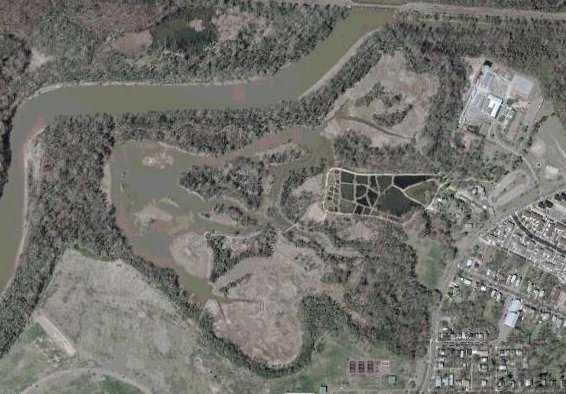
This morning, the DC Audubon Society made a trip down to two sites in Prince William County, Virginia. The first, Cockpit Point Road, runs through power company land that is a mix of open fields and upland forest. The second, the Julie Metz Wetlands near Leesylvania State Park, consists of bottomland forest and marsh habitats. The combination of habitats at the two sites made for a good morning of birding.
We saw far too many birds today for me to talk about all of them, or even all of the highlights. Migration does appear to be picking up, even if the numbers of individuals are still somewhat low. The morning started off cool and overcast when we gathered at the intersection of Possum Point and Cockpit Point Roads, but by late morning the clouds burned off, and a blue sky appeared.
 Cockpit Point Road
 Julie Metz Wetlands